
Parents help boost speech in young children with cerebral palsy, Swedish study finds
A recent study by Swedish scientists reveals ways that parents of children with cerebral palsy can support and enhance their children’s speech development.
Communication disorders are frequently observed in individuals with cerebral palsy (CP) and may result from motor speech impairments, language impairments, or a combination of both. A new study published in the International Journal of Speech-Language Pathology suggests that parents can play a powerful role in improving their young children’s speech and language development — even in cases of cerebral palsy (CP), a condition often associated with severe communication challenges.
The research, conducted by researchers at the Karolinska Institutet and the Gillberg Neuropsychiatry Centre, University of Gothenburg, evaluated a five-week, parent-delivered vocabulary program known as focused stimulation. The approach encourages parents to repeatedly model specific “target” words in natural play situations, without pressuring the child to repeat them.
A small but pioneering study
The team used a single-case A-B design — a method often used in early-stage intervention research — involving four boys between 2 and 3 years old with CP and significant speech and language delays. All four had expressive vocabularies of fewer than 50 words when the study began.
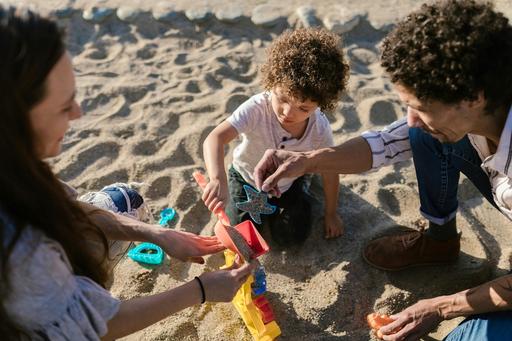
Parents were trained over three sessions to use focused stimulation at home for 10–15 minutes a day, over five weeks. Speech-language pathologists provided weekly coaching visits.
Researchers tracked children’s spoken use of “target” words (those practiced during the intervention) and “control” words (untrained) through structured play sessions, while parents completed a Swedish Early Communicative Development Inventory (SECDI) before and after the intervention, and again seven weeks later.
Measurable gains in expressive vocabulary
Two children showed clear gains in the number of target words they could say by the end of the intervention. A third child made smaller gains, and one showed little measurable progress. However, all four children increased their total expressive vocabulary according to parent reports — and for two of them, these improvements were substantial.
For example:
- Child 1, age 27 months, went from 11 to 279 expressive words, an increase of more than 250 words over the course of the study and follow-up
- Child 2, age 35 months, increased from 43 to 307 words
- Child 3 and Child 4 also showed growth — from 43 to 125 words, and from 17 to 98 words, respectively — though their progress was more modest.
Why are these gains so meaningful

Speech and language disorders affect up to 80% of children with cerebral palsy. While traditional therapies often focus on clinician-led exercises, such direct methods can be challenging for very young children or those with limited motor control. Parent-led approaches, by contrast, integrate language practice into everyday routines and interactions.
“Parent-delivered focused stimulation may lead to gains in expressive vocabulary in children with CP and speech and language difficulties,” says Professor Carmela Miniscalco, Speech and Language Pathologist and researcher at the Gillberg Neuropsychiatry Centre, adding that such interventions “would be suitable for larger single-case studies with more experimental control”.
Establishing the framework for further research

Although the study’s small sample size limits broad conclusions, it provides early evidence that home-based language interventions can work for children with neurological conditions. The researchers emphasized that results were likely influenced by factors such as training time, parental involvement, and the child’s type of CP. For example, the two children with bilateral spastic CP — both born prematurely — showed the largest improvements.
The team noted the need for future studies with stronger experimental designs (e.g., multiple-baseline setups) and more precise measurement of parental technique and intervention “dose.” They also suggested incorporating alternative communication methods, such as manual signing or assistive devices, into future versions of the program.
Key takeaway
This small but hopeful study adds to growing evidence that empowering parents with targeted speech-language strategies can make a measurable difference for children with cerebral palsy — even at very young ages.

Text by Anna Spyrou, Communications Officer
Link to article
Nyman A, Miniscalco C, Lohmander A, Strömbergsson S. Expressive vocabulary intervention for four 2- to 3-year-old children with cerebral palsy and speech/language difficulties: A single-case A-B study. Int J Speech Lang Pathol. 2025 Oct;27(5):759-773. doi: 10.1080/17549507.2024.2373259. Epub 2024 Sep 1. PMID: 39218006.