
New study revises relationships among over 300 species
Tropical plants in the legume genus Senna have been used by humans for over a thousand years, both as medicines and ornamental plants. But how the species are actually related has long been unclear. Now, new research shows that the traditional classification is inaccurate – and several new species have also been discovered.

In his doctoral thesis, researcher Alexandre Gibau de Lima investigated the evolution relationships, and taxonomy within the plant genus Senna. The group comprises more than 300 species and is mainly found in tropical regions worldwide, with particularly high diversity in the Americas.
“Despite their long-standing importance to humans, both as medicinal plants since at least the 9th century and as popular garden plants, their relationships have remained poorly understood”, says Alexandre Gibau de Lima who recently completed a PhD at the Department of Biological and Environmental Sciences and the Botanical Garden in Rio de Janeiro.
By combining genetic analyses with studies of herbarium specimens from major collections around the world, along with several years of fieldwork, the researcher conducted the most comprehensive study of Senna to date. The results show that the traditional classification, largely based on plant morphology, does not reflect their true evolutionary relationships.
”Species that look similar are not necessarily closely related, which means we have had to rethink how the genus is classified”, says Alexandre Gibau de Lima.
The study has led to a major revision of the classification within Senna. At the same time, the research has provided new insights into so-called species complexes – groups of species that are difficult to distinguish. By combining DNA data with morphology and ecological information, several new species have been identified, including from biodiversity-rich regions such as the Andes, the Amazon, and the Atlantic Forest.
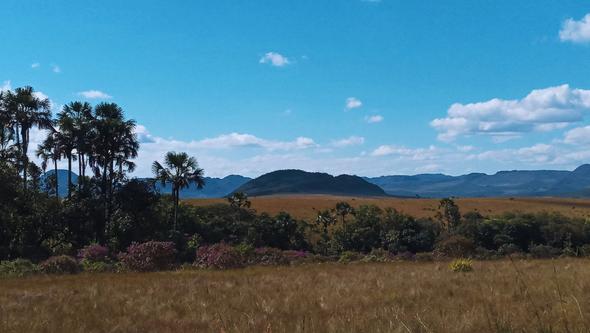
The research also provides new insights into how Senna species have spread across the world. The results suggest that these species spread relatively recently in Earth’s history, between 20 and 3 million years ago.
”The dispersal likely occurred over long distances, probably aided by ocean currents, with fruits and seeds able to float between continents”, Alexandre Gibau de Lima continues.
This may explain how species within the same genus are today found in widely separated regions such as South America, Africa, and Australia.
Taken together, the findings provide a completely new foundation for understanding the evolution relationships, and taxonomy within the genus Senna. This knowledge could be important for future research, conservation, and the sustainable use of these plants.
