
New method aims to improve dating precision
A new archaeological research project at the University of Gothenburg aims to develop methods for dating human remains with significantly greater precision than is possible today. The project has received more than SEK 16 million from the European Research Council.
The Viking Age is known for long-distance travel, trade and conquests. However, much remains unknown about how people moved between different communities in Scandinavia.
One reason is that archaeological finds can often only be dated to periods spanning several decades or even centuries. This makes it difficult to determine whether people moved between different places within the same generation or whether contacts developed over longer periods.
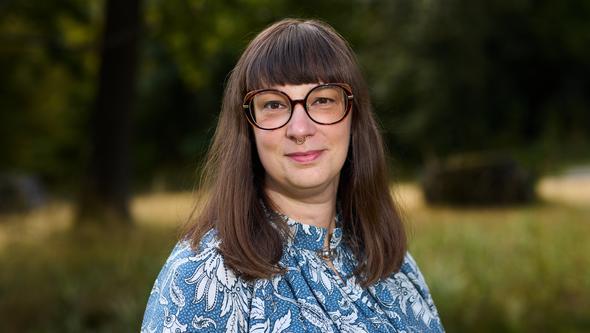
Archaeologist Helene Agerskov Rose at the Department of Historical Studies has now been awarded an ERC Starting Grant from the European Research Council, one of the most prestigious grants available to early-career researchers in Europe. The five-year WIGGLE project will develop new methods for dating people who lived during the Viking Age.
– Being able to link a specific point in a person's life to an exact calendar year would be a major breakthrough for archaeology. It is an ambitious goal that presents considerable scientific challenges, but even without achieving annual precision, the new methods could provide significantly more precise dates, says Helene Agerskov Rose.
Teeth can reveal when people lived
The project is based on the fact that different parts of the human body develop at different stages of life. Teeth form during childhood, while bone tissue continues to change throughout life.
By combining radiocarbon analyses of teeth and skeletal remains with DNA analyses and advanced statistical models, Helene Agerskov Rose hopes to significantly reduce the uncertainty associated with dating. Preliminary models show that, in some cases, the dating range could be reduced by more than half.
A particularly promising opportunity lies in so-called Miyake events. These are rapid changes in atmospheric radiocarbon levels, probably caused by powerful solar storms. Such changes have previously made it possible to date wood to exact calendar years.
– The most groundbreaking result would be if we succeeded in identifying a Miyake event in a human tooth, allowing us to date a specific point during that person's childhood to an exact calendar year. This has never been achieved before and would represent a major methodological breakthrough for archaeology.
Studying 200 people from the Viking Age
With five years of funding, Helene Agerskov Rose now has the opportunity to establish an international research team and further develop the methods and research questions she has been working on for several years.
The research team will analyse the remains of approximately 200 individuals from three burial sites in Denmark: Sebbersund in Jutland, and Galgedil and Åsum on Funen. There are also plans to explore the possibility of including burial sites in Sweden.
Isotope analyses of teeth can help determine whether individuals grew up in the same area where they were later buried. DNA analyses provide information about genetic relationships between individuals.
At Sebbersund, previous analyses have shown that some people came from other areas. However, it remains unclear whether they were buried there during a relatively short period or whether people from different geographical backgrounds were present in the community over several generations.
Could change our understanding of the Viking Age
By comparing burial practices and artefacts with isotope analyses and genetic relationships, Helene Agerskov Rose aims to investigate how different forms of contact between people and communities developed and changed during the Viking Age.
– With more precise dating, we can investigate when these people lived and whether the patterns changed during the Viking Age, says Helene Agerskov Rose.
The findings could provide new insights into how social networks, trade and religious changes developed during the Viking Age.
The methods could also have implications for research into other historical periods. If it becomes possible to date individuals with annual precision, this would open up entirely new opportunities to link archaeological finds to historical events.
Text: Johanna Hillgren
Project: WIGGLE – Wiggle Matching People: High-Precision Dating Reveals Annual Mobility Structures in Viking Age Scandinavia
Funder: European Research Council (ERC Starting Grant).
Funding: Approximately SEK 16.3 million (€1,472,535).
Duration: Five years.