
New cell therapy for liver metastases shows promising results
A new approach to cell therapy in liver metastases from uveal melanoma has for the first time been tested in Gothenburg. The treatment is based on the patient’s own immune cells and is delivered locally near the tumors. In a phase I study now published in the Journal for ImmunoTherapy of Cancer, it was shown to be both feasible and safe.
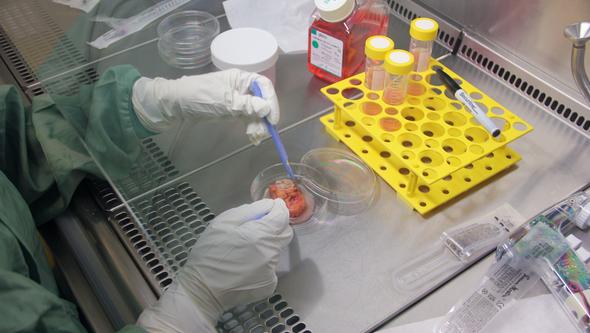
The approach uses tumor-infiltrating lymphocytes (TILs) – the patient’s own immune cells extracted from a liver tumor. These cells are expanded outside the body and then reinfused to target cancer cells.
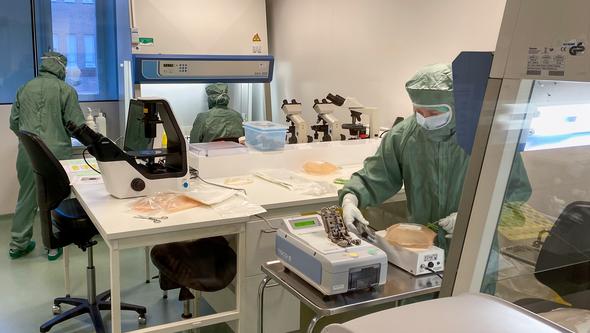
What distinguishes this study is that the cells were manufactured using a semi-automated bioreactor and administered locally via hepatic arterial infusion, rather than intravenously.
“In all six patients, the disease stabilized and tumor-related symptoms were reduced. This is important, as these patients have a condition for which no curative treatment currently exists,” says Lars Ny, professor of oncology at the Institute of Clinical Sciences and senior consultant at Sahlgrenska University Hospital.
First step towards larger studies
This is a phase I trial, meaning that the primary objectives are to determine whether the treatment is feasible and safe. In this study, both criteria were met.
Another key aspect is that patients received preconditioning chemotherapy before the cell therapy, followed by immune-stimulating treatment with IL-2 (a signaling molecule in the immune system that stimulates immune cells) after TIL infusion. The aim was to reduce toxicity and improve tolerability by using a milder chemotherapy regimen and a lower dose of IL-2.
From lab to patient
The study is the result of long-standing collaboration between researchers at Sahlgrenska Academy and Sahlgrenska University Hospital, carried out in close connection with patient care and without involvement from a pharmaceutical company.
“What is unusual here is that we have taken a treatment from the university lab to the clean room and then directly to patients in the hospital within the same academic collaboration. That is rarely done,” says Jonas Nilsson, professor of experimental cancer surgery at the Institute of Clinical Sciences and group leader at Sahlgrenska Center for Cancer Research.
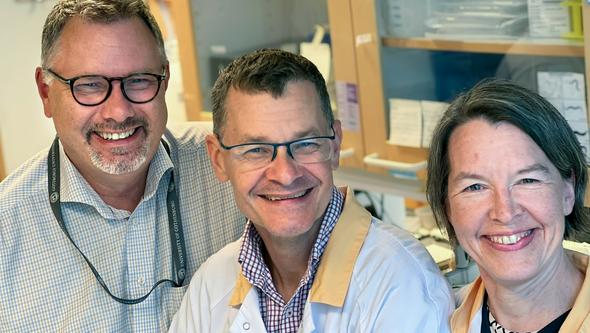
The research team included immunologists Rebecca Riise and Samuel Alsén, tumor biologists Lisa and Jonas Nilsson, and oncologists Axel Nelson and Lars Ny, as well as radiologists, surgeons, and pharmacists.
“This study shows that we can deliver this cell therapy safely. The next step is to improve the treatment to achieve higher efficacy and more durable effects,” says Lars Ny.
New method aims to increase T-cell yield
A known limitation of the published approach is the number of T cells that could be produced – around one billion. Jonas Nilsson’s group has already developed a new method that can generate substantially higher numbers of immune cells.
Between 2021 and 2025, Jonas and Lisa Nilsson worked in Perth, Australia, where they developed a new manufacturing protocol for TILs. This protocol is intended for use in the next study.
This will be a larger study with more patients, designed to prepare for a randomized trial in which the treatment effect can be evaluated more robustly.
Text: Jakob Lundberg
TIL stands for tumor-infiltrating lymphocytes – T cells that are already present in the tumor and can recognize and attack cancer cells.
The treatment was carried out in five steps:
• A sample of the liver tumor was removed.
• A few thousand T cells were isolated and expanded to approximately one million.
• A semi-automated bioreactor increased the number to around one billion.
• The cells were then delivered locally to the liver via a catheter inserted through an artery in the groin.
• Daily immune-stimulating treatment with IL-2 for up to 14 days.
The aim is for the expanded T cells to attack the tumor more effectively than the body’s natural immune response.