
Martin Rutegård appointed adjunct professor of surgery
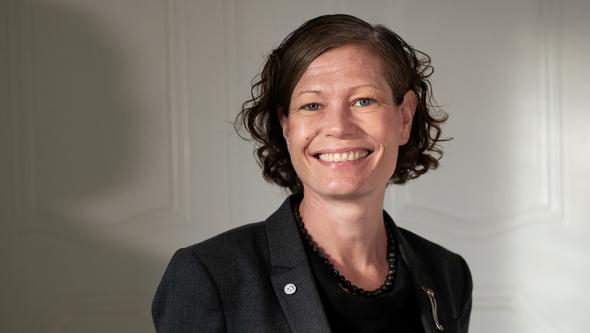
On February 17, Martin Rutegård will take up his position as adjunct professor of surgery at the University of Gothenburg. Currently a senior consultant at Sahlgrenska University Hospital, he will now combine his clinical work with a more formal role in research and education.
Martin Rutegård is a university hospital senior consultant at the Department of Surgery at Östra Hospital and has until now been affiliated as a researcher with the Institute of Clinical Sciences. His new adjunct appointment means that 40 percent of his working time will be allocated to research and teaching at the university.
“In practice, this is not a dramatic change from before. But being assessed as having professorial competence and having a stronger affiliation with the University of Gothenburg makes it likely that my responsibilities in teaching and in the organization more broadly will increase over time,” he says, and continues:
“It is, of course, a feather in my cap and a confirmation of many years of hard work, and especially gratifying since I am relatively new in Gothenburg. In applications for research funding, for example, it is also a clear advantage to be able to demonstrate professorial competence.”
Collaboration with northern Sweden
Martin Rutegård was recruited to Sahlgrenska University Hospital from Umeå and continues to maintain research links there.
“I still supervise a couple of doctoral students and a postdoctoral researcher in Umeå, while developing my research here in Gothenburg. Much of the work can now be managed remotely, and the doctoral students in Umeå are expected to defend their theses in the coming years. My background there has also facilitated national collaboration, with patients from northern Sweden now included in clinical studies led from Gothenburg.”
Multiple research threads
His research focuses on reducing the risk of leakage at intestinal anastomoses following surgery for colon and rectal cancer.
“There are many threads now coming together in this research. We are well advanced in an international clinical trial examining whether diverting stomas can be avoided for certain patient groups. At the same time, we are preparing a new study of a novel type of intestinal anastomosis aimed at reducing the risk of leakage. In parallel, projects are ongoing on issues such as cancer recurrence after leakage and whether patients with diabetes face an increased risk.”
A year in Wales offered new perspectives
You lived and worked in Wales in 2022–23. What did you take away from that time, both professionally and personally?
“I spent a year in Swansea to deepen my expertise in surgery for advanced colon and rectal cancer. There were many long and complex operations, but it was also an adventure for the whole family. The children attended Welsh schools and thrived, my wife worked part-time remotely, and we were still able to enjoy family life. Experiencing another country and a different way of working in depth was extremely rewarding and something I can truly recommend.”
”Invaluable for developing care”
Sahlgrenska University Hospital holds a national highly specialized care assignment (NHV) in advanced pelvic surgery.
“That involves both expanded clinical and scientific responsibilities and also makes us more attractive as a unit. It has likely contributed to our ability to recruit Martin Rutegård to Gothenburg,” says Eva Angenete, professor and head of research area for surgery, and adds:
“Strengthening the unit with a scientifically accomplished and clinically skilled surgeon is invaluable for continuing to develop care for patients with colorectal cancer.”
Text: Jakob Lundberg