
Jonas Zimmerman to defend PhD thesis on collaboration in disasters and war
In major incidents, disasters and wars, the resources of a single organization are often insufficient. Healthcare providers, authorities and voluntary organizations therefore need to collaborate quickly and effectively. Jonas Zimmerman’s doctoral thesis explores how collaboration and health systems can be improved within disaster medicine and emergency preparedness.
On 18 September, CKM doctoral student Jonas Zimmerman will defend his thesis Alignment and Interoperability in Disaster Health Systems. Alongside his research, Jonas works as a physician in anaesthesiology and intensive care at Sahlgrenska University Hospital. He has also worked as a volunteer physician in war- and disaster-affected areas, including Ukraine.
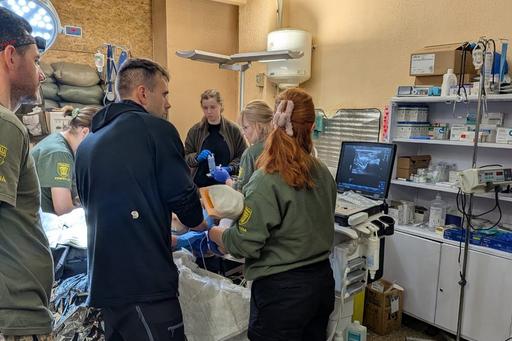
“My experiences from both clinical work in Sweden and international crisis and conflict settings sparked my interest in research on preparedness and disaster medicine. Being able to combine theory and practice has been especially valuable,” says Jonas Zimmerman.
Collaboration and systems perspectives are crucial
Disaster medicine has developed rapidly over the recent decades due to improved logistics, international cooperation, specialized teams and new communication technologies. Despite this, major challenges can still arise during disasters and wars, including fragmented information flows, competing priorities and overlapping responsibilities between actors.
“During my first trip to Ukraine, I encountered large amounts of aid and resources, but also challenges related to leadership and coordination. It became clear to me that effectiveness not only depends on access to resources and expertise, but also on how well different actors function together as a system,” says Jonas Zimmerman.
Jonas Zimmerman's thesis is based on several different methods, including literature reviews, conceptual analyses, simulations and studies of civil-military coordination as well as disaster medical systems in both theory and practice.
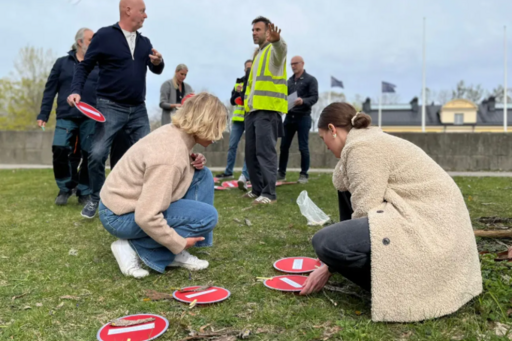
One study compared groups that had undergone training focused on systems perspectives and leadership in disaster medicine with groups that had not received similar training. The results showed that healthcare professionals who participated in the training were better able to create structure, coordinate activities and establish a shared situational awareness during simulated disaster scenarios.
A growing field of research
Disaster medicine is still a relatively young research field where the need for scientific knowledge remains substantial, wich brings several methodological challenges.
“It has been difficult to study contexts where conditions change rapidly and where data collection must be adapted to practical and ethical considerations. At the same time, this work has created opportunities to develop more flexible research methods,” says Jonas Zimmerman.
As part of his doctoral project, Jonas has developed a conceptual framework and educational models aimed at strengthening leadership, coordination and joint decision-making during crises and disasters.
The ambition is for the thesis to contribute to the development of education, planning and policy within disaster medicine and preparedness, both nationally and internationally, including within organizations such as the World Health Organization (WHO).
“Many of today’s challenges require organizations to work together rather than independently. I hope my research can contribute to stronger collaboration and preparedness for future crises and disasters and, in that way, help save more lives,” concludes Jonas Zimmerman.
Text: Annia Garcia
Time and Place: 18 September 2026, 09:00, Sahlgrens Aula
Doctoral Thesis: Alignment and Interoperability in Disaster Health Systems
Research Area: Disaster Medicine / Total Defence Medicine.
More information can be found here.