
Facts alone are not enough to teach about the climate crisis
The climate crisis is often discussed in terms of figures, reports and scientific projections. But if people are to change the way they live, more facts alone are not enough. In the new book Paradise Lost? Love and Care: Narratives for and in Sustainability Education, researchers highlight stories, relationships and care as central elements of sustainability education.
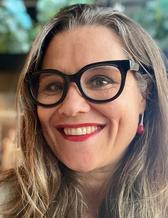
– We already know a great deal about climate change. We know why it is happening and what the consequences are. But more facts in themselves will not solve the problems, says Sally Windsor, Associate Professor at the University of Gothenburg and one of the book’s editors.
The book grew out of work on an international course on ethics and sustainability education, led by Sally Windsor together with Professor Olof Franck. In conversations with students from around the world, the same question kept returning: how should we live in a world shaped by climate crisis, social unrest and an uncertain future?
– Students spoke about climate anxiety and about the feeling that the world is facing multiple crises at once. That made us reflect on how education can help people understand and respond to this situation, she says.
More than facts
According to Sally Windsor, scientific knowledge is essential, but not sufficient.
– We need facts to understand what is happening. But if we stop there, there is no way forward. We also need respect, trust and care for one another and for the world.
The book therefore emphasises narratives as important pedagogical tools. Narratives may include stories, metaphors, cultural traditions or lived experiences.
– Narratives open up new perspectives. They allow us to imagine a different future and different ways of living in the world.
Love for the world
A central theme in the book is also the concepts of love and care. One source of inspiration is philosopher Hannah Arendt’s idea of amor mundi, love for the world. This concept has been further developed in another course, Teaching Sustainability from a Global Perspective, which Sally Windsor and her colleague professor Dawn Sanders, have worked with for many years.
– If we do not love the world, we cannot expect our children to do so either. We are not talking about romantic love, but about love for people, for animals and for the planet.
At a time when many young people express climate anxiety, Sally Windsor argues that education must acknowledge these emotions without reinforcing a sense of hopelessness.
– Young people have lived with a sense of crisis for much of their lives. As educators, we must take their concerns seriously, but also give them strategies to act and to make a difference.
Experiencing the world together
For teachers, sustainability education is not only about teaching climate science. It is also about building relationships with the world around us.
– I hope more teachers will feel confident taking students out into the world, away from screens and PowerPoint presentations. We need to experience the world together. If we do not feel connected to the world around us, it is difficult to feel responsible for it.
At the same time, she emphasises that sustainability education is not something reserved for specialists.
– All teachers can be sustainability educators. It is about how we help young people experience the world, think critically and develop care for it.
text: Ragnhild Larsson
- Editors: Sally Windsor, Olof Franck and Dawn Sanders
- Publisher: Springer Nature, 2026
- The book brings together researchers from several countries and explores how narratives, ethics and care can contribute to sustainability education.
- It focuses on how education can help people develop responsibility and relationships with the world in a time of ecological and social crises.