
Emojis Key to Including Students to Music Creation
Emojis can be an effective tool for unlocking creative processes and including participants with different levels of prior knowledge in collaborative music creation. This is shown in a thesis from the University of Gothenburg.
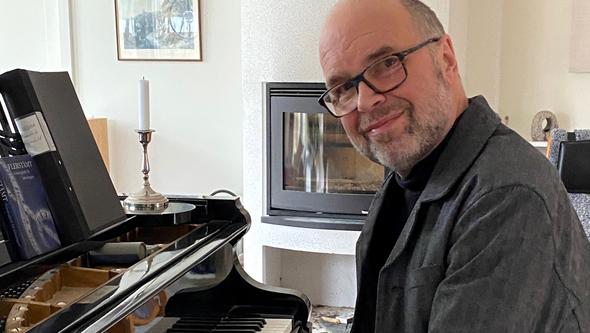
A laughing yellow face with tears. Another face, with a gaping mouth and a light bulb hovering above it. Sparkling stars. These are a few examples of emojis, simple little images that express different emotions, used in text messages and other forms of communication. In his doctoral thesis in music education, composer and educator Dan Alkenäs explored how these symbols can be used as a tool to give participants greater influence in collective music-making, thereby allowing new artistic expressions to take shape.
During one school year, Dan Alkenäs conducted ten experimental workshops with a primary school class, where the pupils created music together without instruments, using their bodies as sound sources. When they started using emojis as a kind of notation system, the dynamics of the group changed.
‘When the emojis took centre stage instead of the students themselves, they dared to be bold and come up with lots of exciting sounds using their mouths or hands, for example,’ says Dan Alkenäs.
'Everyone understands them'
He explains that emojis became a common language that allowed even students with no prior knowledge to express themselves musically.
'The clever thing about emojis is that everyone understands them. We didn't need to use words to describe different musical expressions.'
The experiment was part of his doctoral thesis, which examines how authorship – that is, the question of who has influence in the creative process – can be shifted and shared in collective music-making.
'When we create music together, there is always someone who has authority. This may be decided in advance, or it may happen spontaneously that someone takes the lead in the creative process. I came to these workshops with authority. I am older and work at a university. I had to work very hard to show that I wanted to give the students space', says Dan Alkenäs.
A magic room
Part of the solution was to create a kind of ‘magic room’ in the classroom, where everyday social interaction is replaced by common rules, and the use of emojis is an example of this. In order to include all participants in the creative process, it is also important that the songwriter, composer or teacher is open and takes in the culture that prevails in the group. This could, for example, be what kind of music the participants like or dislike.
‘I wanted to investigate what happens when people with different backgrounds really meet and take in each other's ideas. The answer, in these workshops, was that innovation was created, a new and playful way of making music together where participants did not need to use language to express their ideas,’ says Dan Alkenäs.
He hopes that his thesis will contribute important perspectives on how educators, composers and ensemble leaders can include participants in different types of collective music-making.
'Including people in the process is the most important thing. Instead of making all the decisions over the heads of other participants, which I consider both unethical and artistically uninteresting in today's music world.'
Full text of the thesis: Authorship and musical resources – experimental music creation in collaboration