
Bethanie Carney Almroth appointed UN Special Rapporteur
Bethanie Carney Almroth, professor in ecotoxicology at the University of Gothenburg, has been appointed UN Special Rapporteur on toxics and human rights. In this role, she will take on an international mandate to examine how chemicals, pollution and waste affect human rights and contribute to solutions that protect people and the environment.
Professor Bethanie Carney Almroth took up her mandate as UN Special Rapporteur on toxics and human rights in August 2026. UN Special Rapporteurs are independent experts appointed by the UN Human Rights Council to examine and report on specific human rights issues or situations. Bethanie Carney Almroth’s mandate is one of the UN’s 46 thematic human rights mandates.
The mandate has existed since 1995. It is based on the recognition that people’s exposure to hazardous substances is not only an environmental and health issue, but also a human rights issue.
“As a researcher and environmental scientist, I want to strengthen the links between science, environmental impacts and people’s living conditions. Chemicals and materials can cause harm throughout their entire life cycle, from resource extraction to production, use and waste. States and businesses have a responsibility to protect both people and our right to a clean and healthy environment. I also want to help ensure that the solutions we develop for greater sustainability genuinely lead to improvements – and to ways of living that do not harm people or the environment.” says Bethanie Carney Almroth.
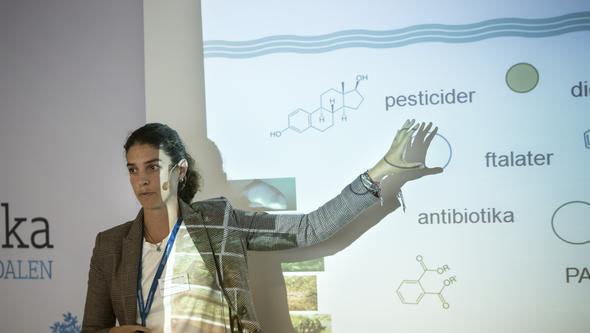
Research at the intersection of environment and society
Bethanie Carney Almroth’s research at the University of Gothenburg focuses on chemicals, pollution and waste and their impacts throughout their life cycles. Among other things, she studies how hazardous substances affect biological and planetary systems, the risks they pose, and solutions that can reduce their impacts on people and the environment.
An important part of her work takes place at the interface between science and policy. For several years, she has participated in international processes within the UN and other multilateral collaborations, including the United Nations Environment Assembly (UNEA) and UN Ocean Conferences. She has also been involved in negotiations on a global treaty to end plastic pollution and is co-chair of an expert group on plastics and microplastics within GESAMP, the Joint Group of Experts on the Scientific Aspects of Marine Environmental Protection.
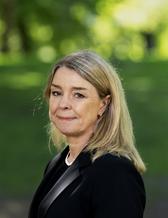
The appointment means that her experience from research at the University of Gothenburg will now take on a new role in international efforts relating to the environment and human rights.
“I am delighted and proud that Bethanie Carney Almroth has been entrusted with this important international mandate. The appointment is a strong recognition of the research and international engagement at the University of Gothenburg. It also demonstrates how the University’s knowledge can contribute to understanding and addressing the major societal challenges of our time. I am very pleased to see Bethanie’s research now taking on a more prominent role in global efforts on the environment and human rights,” says Vice-Chancellor Malin Broberg.
Examining issues and making recommendations
As Special Rapporteur, Bethanie Carney Almroth will act independently of both the UN and governments. Her mandate includes examining how hazardous substances and waste affect human rights, conducting country visits, engaging in dialogue with states, businesses and civil society, and presenting reports and recommendations to the UN Human Rights Council.
The issue encompasses everything from exposure to toxic chemicals and industrial pollution to the ways in which production, consumption and waste management affect people in different parts of the world. Environmental justice is a central principle – protection from hazardous substances and pollution should apply to everyone.
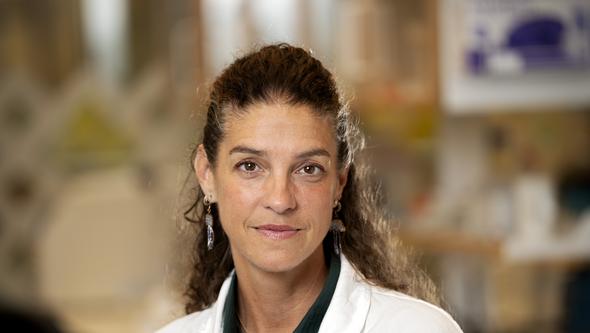
A UN Special Rapporteur is an independent expert appointed by the UN Human Rights Council. The mandate is to examine how hazardous substances, pollution and waste affect human rights. The Special Rapporteur conducts reviews and country visits, among other activities, and submits reports and recommendations to the UN. The mandate was established in 1995, with the formal title “Special Rapporteur on the implications for human rights of the environmentally sound management and disposal of hazardous substances and wastes.”
