3D-bioprinted fat tissue tested for breast reconstruction
In a new study, researchers in Gothenburg will test whether customized, 3D-bioprinted fat tissue made from a patient’s own cells can be used for breast reconstruction after cancer. The goal is to develop a gentler, more individualized method with improved long-term outcomes.
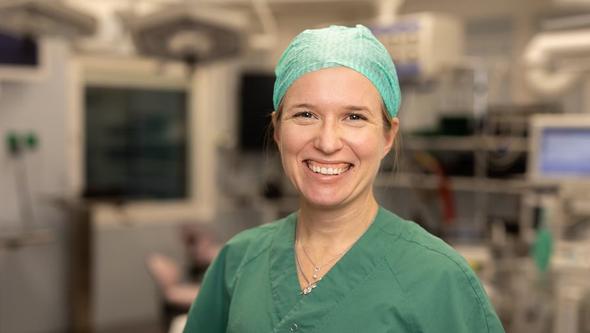
Karin Säljö, associate professor of plastic surgery at the Institute of Clinical Sciences and senior consultant at Sahlgrenska University Hospital, leads the part of the research that is now moving from the laboratory to the first studies in humans.
“The overall goal is to bring 3D-bioprinted autologous tissue from the lab bench into clinical practice. Conventional methods, such as silicone implants or transferring tissue from the abdomen, have limitations in terms of outcomes and often involve discomfort,” says Karin Säljö.
Autologous tissue with better survival
The project, carried out in collaboration with Chalmers University of Technology, is based on nine years of basic research and animal studies. A key discovery is that fat tissue obtained through liposuction and then processed for 3D bioprinting contains structures that can integrate with surrounding tissue. This enables the transplanted tissue to more readily form new blood vessels, which is essential for long-term survival in the body.
Unlike traditional fat grafting, where a large proportion of the injected fat is often resorbed, 3D bioprinting allows the creation of stable tissue constructs with precise shape and volume. This offers greater control of the result and improves the conditions for the tissue to function over time.
Less invasive surgery – greater benefit
One major advantage of the new method is that it can replace extensive tissue transfer procedures with a simpler liposuction. This results in a less demanding intervention for the patient and may make reconstruction with autologous tissue available to more women who today either refrain from reconstruction or opt for implants.
A pilot study is planned to begin in the spring. In this study, small constructs – 3D-printed pieces of tissue – will be implanted under the skin of the upper arm. The aim is to study how the tissue behaves in the body and how well it maintains its shape and volume over time.
“We are using 3D printing to tailor surgery, and we have now finally received approval to move forward with a first-in-human study after extensive review by the relevant authorities in the EU and Sweden,” says Karin Säljö.
Broader potential applications
A grant of SEK 1.3 million from the IngaBritt and Arne Lundberg Research Foundation has been essential in enabling the study. The funding has been used, among other things, to purchase a 3D bioprinter adapted for use in an operating room environment, as well as measurement equipment that allows comparison of tissue shape and volume before and after implantation.
In the longer term, the technique is also expected to be applicable to other types of soft tissue reconstruction following cancer and trauma. This could lead to shorter surgical procedures and reduced time away from work.
The text is based on a press release from the IngaBritt and Arne Lundberg Research Foundation