
Doctoral thesis in archaeology
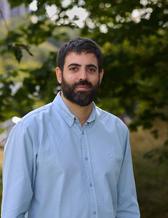
"Masters of water and stone. Exploring the social role of rock art carvers in Nordic Bronze Age societies". Julián Moyano Di Carlo, Department of Historical Studies, defends his thesis in archaeology.
Title of the thesis: Masters of water and stone. Exploring the social role of rock art carvers in Nordic Bronze Age societies
Examining committee
- Professor Fredrik Fahlander, Stockholms universitet
- Associate professor Heidrun Stebergløkken, Norwegian University of Science and Technology
- Associate professor Jens-Bjørn Riis Andresen, Aarhus University
- Substitute if member in the committee is missing: Professor Håkan Karlsson, Göteborgs universitet
Opponent: Associate professor Lene Melheim, University of Oslo
Chair: Docent Christian Horn, Göteborgs universitet
This is the gupea link: http://hdl.handle.net/2077/89796
Pressrelease: www.gu.se/en/news/the-masters-behind-bronze-age-rock-art
More info
For over two centuries, Nordic Bronze Age rock art (ca. 1700–500 BC) has been central to debates on religion, mythology, ideology, warfare, and economy in prehistoric Scandinavia. However, far less attention has been given to the carvers themselves.
Consequently, our understanding of how these individuals acquired, performed, and transmitted their social role remains limited.
This dissertation draws on role theory and the epistemological framework of behavioral archaeology to conceptualize how roles operate within chiefdom-like societies and how these roles can be inferred from the archaeological record. These theoretical models are then linked to the carvings through a quantitative analysis of four dimensions of variability: formal, spatial, quantitative, and associational.
These analyses are supported by high-resolution 3D documentation of panels at Aspeberget (Tanum), legacy data from Bohuslän, and the application of univariate, bivariate, and multivariate statistical methods to identify patterns in the data. The results suggest that rock art production in Bohuslän was overseen by master carvers operating within ritual sodalities that formed political networks on a Scandinavian scale. These individuals controlled both the technical and ritual knowledge associated with carving and its transmission to future generations.
Therefore, in mediating between the secular and ritual spheres of their communities, carvers were not only able to use the figures as a medium for symbolic expression or interaction with the supernatural but also as a tool for exerting political influence within their societies.
Personal info
Julián Moyano Di Carlo is a maritime archaeologist associated with the Swedish Rock Art Research Archives (SHFA) and the Department of Historical Studies (GU). His research is focused on the intersections between social learning, technology, rituality, and political economy in prehistoric societies.