
Driving change for the future: Amanda Thynell on her role as Head of Sustainability
Amanda Thynell is the Head of Sustainability at Catena AB, where she is also a member of the management team. With a background at the School and a passion for 'good business', she is leading the work to reduce climate impact and create long-term value. Here, she discusses the challenges and driving forces, and explains why sustainability issues are more relevant than ever.
The path to becoming a Head of Sustainability
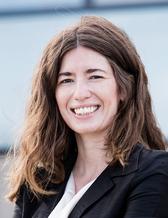
Amanda knew from an early age that she wanted to work in a business that makes a difference.
“Even at secondary school, I knew I wanted to work for a company that treats people and nature well and creates a win-win situation for everyone involved,” she says.
After obtaining dual degrees in business administration and environmental science, she went on to complete a master's degree in management with a focus on sustainability courses. This was a stepping stone to her current role.
“During my master's degree, I took several courses in sustainability and governance that provided insights that I could immediately apply. This quickly made me a valuable asset in the workplace, particularly in sustainability reporting, which was still relatively new to many in 2021. That's what made me a good fit for the role at Catena,’ says Amanda.
Taking the lead on sustainability work in a listed company
As Head of Sustainability, Amanda has a wide range of responsibilities, both strategic and operational.
“I drive sustainability work by coordinating efforts across regions to ensure the company is constantly improving in this area,” she explains.
The role involves dealing with complex issues and conflicting goals.
'The most challenging thing is always having to be well-informed in order to resolve conflicts constructively,' says Amanda.
The best thing about the job: making a difference
For Amanda, it is clear what makes her work meaningful.
“Being able to contribute to reducing real climate impact, as well as other important issues such as biodiversity, and developing colleagues and seeing them grow,” she says with enthusiasm.
She views sustainability work as an ongoing process of change, where every step counts.
“We are facing major societal challenges, not least the challenge of achieving a fossil-free society. I want to contribute to and be part of that development,’ she continues.
Future sustainability work is more than just reporting
When Amanda started as ESG controller in 2021, sustainability reporting was still new to many companies. "I was quickly given plenty of scope to develop ideas on how a large company can work with sustainability – a real dream," she says.
Today, sustainability issues are an integral part of the business strategy, but Amanda believes that the work must go even further.
“It’s not just about complying with laws and frameworks, but about creating real change,” she says.
Amanda's tips for students who want to work with sustainability
Amanda has several pieces of advice for anyone considering studying business administration with a focus on sustainability:
"Apply! It's fantastic to be able to delve into both specific issues such as reporting and broader issues such as organisational change," she says.
She also emphasises the importance of networking during your studies:
"Use your bachelor's or master's thesis to get into the companies you're curious about. I wrote my bachelor's thesis for IKEA Foods and my master's thesis for Volvo Cars – both gave me valuable insights and a broader network", says Amanda.
And finally:
"If you want to connect ecological and societal challenges and understand the role of business in this, SMIL (Social Science Environmental Studies Programme) and a master's degree in Management are a strong foundation," she says.
The best – and most challenging – aspects of being Head of Sustainability
The best:
-Being able to contribute to reducing real climate impact and other important issues such as biodiversity, and being a driving force in this work.
-Being able to develop colleagues and see them grow.
The most challenging:
Dealing with conflicting goals and always needing to be well-informed in order to handle them in a constructive, informed way.
Courses Amanda particularly enjoyed
BSc Social Science Environmental Science Programme (SMIL)
-Basic Course in Environmental Science - Social Science Focus SMG110
-Processes in the Environment - SMG120
-Strategies for Sustainable Development - SMG131
-Natural Resource Management - SMG200
Master's Programme in Management
-Managing Sustainability Accounting and Regulation in Practice - GM1418
-Sustainability Assessment - Integrating Environment and Economics in Strategic Decision-making - GM1225
-Preparation for Leadership – GM0819
-Change Management – GM0836
-Organisation of Markets – GM0827