West Sweden Asthma Study – advancing research in asthma, allergy and respiratory health
Short description
The West Sweden Asthma Study (WSAS) is a multidisciplinary, population-based longitudinal research program investigating asthma, chronic obstructive pulmonary disease (COPD), allergies, and respiratory health in adults of Western Sweden. Since its launch in 2008, WSAS has followed multiple cohorts to understand how these conditions develop, progress, and impact health over time. By combining epidemiological surveys, detailed clinical investigations, biological sampling, and linkage to Swedish national health registers, WSAS provides a unique platform for translational research. The knowledge generated through WSAS supports improved prevention, diagnosis, treatment, and public health strategies for respiratory and allergic diseases in Sweden and beyond.
Understanding respiratory health across the life course
Asthma, chronic obstructive pulmonary disease (COPD), and allergic diseases affect millions of people worldwide and remain among the leading causes of ill health. The West Sweden Asthma Study (WSAS) is a long-term, multidisciplinary research program dedicated to improving our understanding of these conditions and ultimately contributing to better prevention, diagnosis, and treatment.
Established in 2008, WSAS is one of Sweden's largest population-based studies of respiratory health in adults – based in Västra Götaland region of Sweden. By following participants over many years and combining epidemiological research with detailed clinical investigations and laboratory studies, WSAS provides unique insights into how respiratory diseases develop, progress, and affect people's lives.
Our research
WSAS investigates respiratory health from multiple perspectives. We study how common asthma, COPD, and allergic diseases are in the population, how these conditions change over time, and which environmental, lifestyle, genetic, and biological factors influence disease risk and outcomes. Our research spans the full translational spectrum—from population health and clinical phenotyping to molecular and cellular mechanisms—creating opportunities to translate scientific discoveries into improved patient care.
Our main objectives are to:
- Monitor trends in the prevalence, incidence, and remission of asthma, allergies, COPD, and other respiratory diseases.
- Identify risk factors and prognostic factors that influence disease development and progression.
- Characterize clinically meaningful disease phenotypes and their evolution over time.
- Advance mechanistic, genetic, genomic, and translational research to improve prevention, diagnosis, and treatment.

A unique longitudinal resource
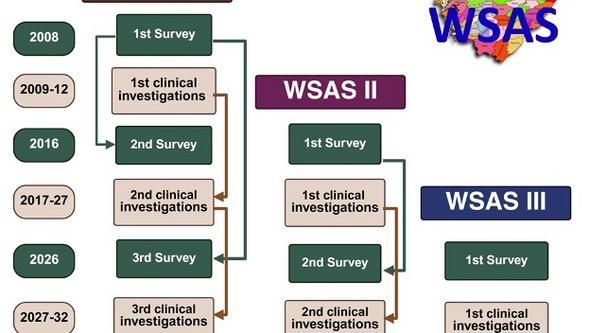
WSAS was launched with the recruitment of its first population cohort in 2008, followed by re-examinations in 2016 and 2026. A second cohort was established in 2016 and followed up in 2026, and a third cohort was recruited in 2026. Together, these cohorts form a growing longitudinal resource that will continue to be followed through repeated population surveys and comprehensive clinical investigations. This design enables researchers to study changes in respiratory health over time, compare different generations, and identify factors associated with healthy ageing and disease development.
Linking population, clinical, and register data
A major strength of WSAS is the integration of multiple sources of information. Participants contribute questionnaire data, clinical measurements, lung function testing, biological samples, and detailed phenotypic information. These data can also be linked to Swedish national health and social registers, enabling long-term follow-up of healthcare utilization, disease outcomes, medication use, comorbidities, and socioeconomic factors. Together, these resources provide an exceptional platform for high-quality epidemiological, clinical, and translational research.
Building knowledge for better respiratory health
Over nearly two decades, WSAS has become an internationally recognized research platform that supports collaborations across disciplines and institutions. By combining long-term follow-up with comprehensive clinical characterization and biological investigations, the study continues to generate new knowledge about asthma, COPD, allergies, and respiratory health. Our goal is to provide evidence that informs public health, improves clinical care, and contributes to better respiratory health for current and future generations.
Research Impact
Since its launch in 2008, WSAS has become one of Sweden's leading research platforms in respiratory health. The study has generated more than 120 peer-reviewed scientific publications and supported 20 completed doctoral theses, with several additional PhD projects currently underway. WSAS also serves as an important resource for national and international collaborative research. In addition to numerous collaborations worldwide, the study contributes to major Nordic and European initiatives, including EpiLung, FinEsS, and the European Respiratory Society's CADSET project.
Leading a National Research Network
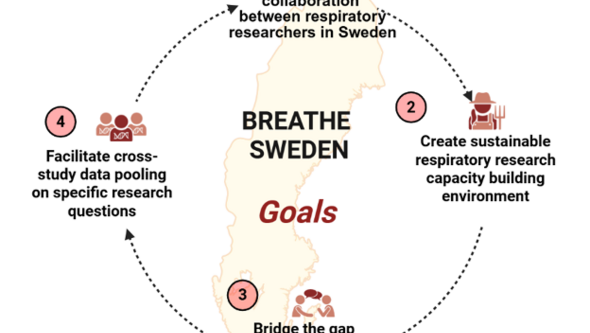
Through its host institution, the Krefting Research Centre, WSAS coordinates Breathe Sweden, Sweden's largest national consortium for respiratory research. The consortium brings together leading researchers, cohorts, and research infrastructures from across the country to strengthen collaboration, promote multidisciplinary research, and facilitate data sharing and joint analyses. Beyond advancing research, Breathe Sweden is committed to increasing public engagement and improving science communication. This mission led to the creation of Andas Sverige, a Swedish-language public outreach platform that communicates respiratory research in an accessible and engaging way. The platform connects researchers with patients, research participants, healthcare professionals, journalists, funders, and the general public, helping to bridge the gap between scientific discovery and society.
Participating researchers
Researchers in WSAS
- Bright Nwaru , Professor, PI for WSAS, Breathe Sweden, and Andas Sverige (External link)
- Madeleine Rådinger – Professor, Chairman Krefting Research Center (External link)
- Hannu Kankaanranta – professor, MD (External link)
- Linda Ekerljung – Associate Professor (External link)
- Saliha Selin Özuygur Ermis – Postdoc Researcher, MD (External link)
- Lowie Vanflateren – Associate Professor, Director Sahlgrenska COPD Center (External link)
- Roxana Mincheva – PhD, MD (External link)
- Reshed Abohalaka – PhD student (External link)
- Selin Ercan - PhD student, MD (External link)
- Eivind Borna – PhD student, MD (External link)
- Lina Rönnebjerg – PhD student (External link)
Ongoing Research Projects
WSAS provides a unique research platform spanning population health, clinical medicine, epidemiology, and translational science. Our research addresses the burden, causes, mechanisms, and outcomes of asthma, COPD, allergies, and related respiratory diseases.
Key publications
- Suzuki S, Nwaru BI, Ekerljung L, Sjolander S, Mincheva R, Ronmark EP, Ronmark E, Lundback B, Borres MP, Lotvall J. Characterization of sensitization to furry animal allergen components in an adult population. Clin Exp Allergy. 2019;49(4):495-505.
- Nwaru BI, Ekerljung L, Radinger M, Bjerg A, Mincheva R, Malmhall C, Axelsson M, Wennergren G, Lotvall J, Lundback B. Cohort profile: the West Sweden Asthma Study (WSAS): a multidisciplinary population-based longitudinal study of asthma, allergy and respiratory conditions in adults. BMJ Open. 2019;9(6):e027808.
- Borna E, Nwaru BI, Bjerg A, Mincheva R, Radinger M, Lundback B, Ekerljung L. Changes in the prevalence of asthma and respiratory symptoms in western Sweden between 2008 and 2016. Allergy. 2019;74(9):1703-15.
- Hedman L, Backman H, Stridsman C, Bosson JA, Lundbäck M, Lindberg A, Rönmark E, Ekerljung L. Association of electronic cigarette use with smoking habits, demographic factors, and respiratory symptoms. JAMA Network Open. 2018;1(3):e180789.
- Ekerljung L, Mincheva R, Hagstad S, Bjerg A, Telg G, Stratelis G, Lotvall J. Prevalence, clinical characteristics and morbidity of the Asthma-COPD overlap in a general population sample. J Asthma. 2018;55(5):461-9.
- Bjerg A, Ekerljung L, Eriksson J, Naslund J, Sjolander S, Ronmark E, Dahl A, Holmberg K, Wennergren G, Toren K, Borres MP, Lotvall J, Lundback B. Increase in pollen sensitization in Swedish adults and protective effect of keeping animals in childhood. Clin Exp Allergy. 2016;46(10):1328-36.
- Wennergren G, Ekerljung L, Alm B, Bjerg A, Lotvall J, Lundback B. Alarmingly high prevalence of smoking and symptoms of bronchitis in young women in Sweden: a population-based questionnaire study. Prim Care Respir J. 2013;22(2):214-20.
- Ekerljung L, Bossios A, Lotvall J, Olin AC, Ronmark E, Wennergren G, Toren K, Lundback B. Multi-symptom asthma as an indication of disease severity in epidemiology. Eur Respir J. 2011;38(4):825-32.
- Eriksson J, Ekerljung L, Lotvall J, Pullerits T, Wennergren G, Ronmark E, Toren K, Lundback B. Growing up on a farm leads to lifelong protection against allergic rhinitis. Allergy. 2010;65(11):1397-403.