Three voices on: AI and democracy
Three experts offer their perspectives on a current topic.
What risks do you see with public
authorities using AI?
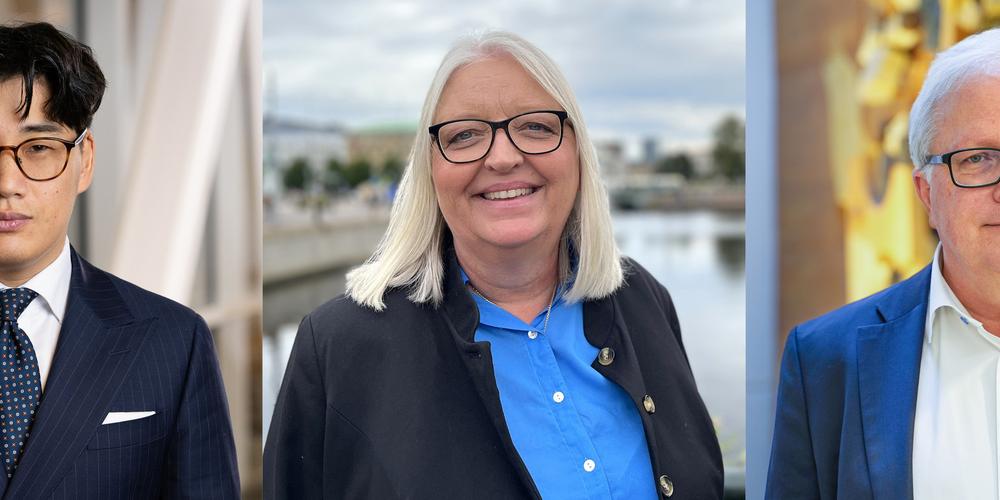
David Suh
Legal Advisor at Innovation Hub. Swedish Authority for Privacy Protection works to protect citizens’ personal data so that it is processed correctly and does not fall into the wrong hands.
“AI can make work more efficient, cut down on administration and support employees. This can contribute towards faster, more consistent and more accessible administration, which is a good thing. At the same time, there are also risks. If dependencies on certain suppliers are created, issues such as lock-in effects, data security and personal data need to be addressed, especially if the supplier is from a non-EU country. The exercise of public power also requires legality, legal security and transparency. The area where AI has the greatest impact on the individual is when systems are used in or near decision-making. The authority must then understand how the system works, be able to explain the results, and take responsibility for the outcome. Otherwise, there’s a risk that efficiency will be improved at the expense of the authority’s main task, which is to serve the individual and society.”
Anna Ståhlbröst
Head of the City of Gothenburg’s Department of Innovation, Digitalisation and Leadership.
“From a democratic point of view, we as a city see several risks with the use of AI. A key challenge is digital inclusion. Not everyone has access to – or the ability to use – AI, which risks reinforcing existing gaps. At the same time, AI raises questions about power and control, where a small number of actors can have a large influence over technology and information. We also see an increased risk of disinformation, not least during election periods, where AI can be used to create credible but false content. This makes it increasingly difficult to tell what is true. AI can also facilitate targeted advocacy campaigns against specific groups, which can threaten democratic debate and trust in society. We need to continue developing our use of AI with a strong awareness of its impact on democracy, trust and inclusion.”
Staffan Truvé
Co-founder and CTO of Recorded Future, an AI-based private intelligence service that helps businesses, organisations and nations to protect themselves against geopolitical and cyber threats.
“AI offers excellent opportunities for authorities to automate routine processes and to streamline virtually all their workflows. When doing so, privacy and security are fundamental issues that need to be addressed. A combination of commercial cloud-based AI services and models that operate within authorities will be needed to guarantee security in critical applications. To ensure objectivity and legal security, AI will need to be supplemented by human supervision, both when training AI models and when using them. For a long time to come, ‘centaurs’ – humans and machines working closely together – will therefore be the most important form of work. AI brings risks that need to be managed, and transparency is essential in order to build trust, but at the same time it would be irresponsible for authorities not to take advantage of the opportunities offered by new technology.”
