Melting Boundaries – Revealing Greenhouse Gas Emissions from Emerging Arctic Landscapes
Short description
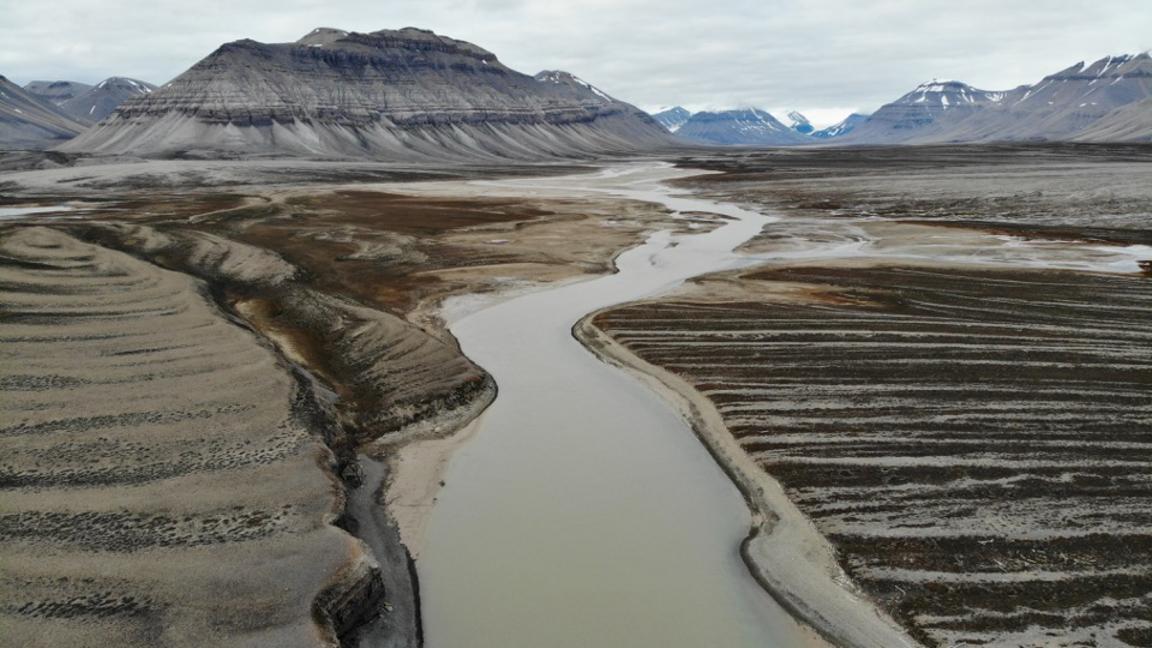
Melting glaciers have created over 500 coastal lakes, 200 lagoons, and countless ponds, wetlands, and waterways on Svalbard. Although greenhouse gas emissions from these newly formed fresh- and brackish water ecosystems may have a significant impact on the Earth's atmosphere, we still lack sufficient knowledge about the processes taking place there.
The project will therefore conduct large-scale measurements along the land-to-sea transition zones of Svalbard's coasts to fill the knowledge gaps in emissions of the three important greenhouse gases: carbon dioxide, methane, and nitrous oxide.
The overall goal is to identify spatial and temporal variations in net emissions. The research will also identify the ecological and biogeochemical processes linked to these areas.
Collaboration partners
UNIS-University Centre in Svalbard, Aarhus University (Denmark) and IOPAN-Institute of Oceanology Polish Academy, and will establish a stronger collaboration with the Department of Biology and Environmental Science, University of Gothenburg.