Leadership, Growth, and Career Development. Reflections from a former Future Faculty Chair
Future Faculty had the opportunity to interview Elisabet Jerlhag Holm, former member and chair, who is now a full professor in pharmacology at the Department of Pharmacology, to gain insight into how her time with Future Faculty shaped her career trajectory.
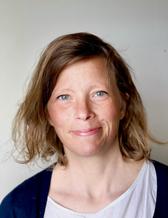
Elisabet Jerlhag Holm was an active member of Future Faculty (FF) for six years, first serving on the board from 2013 to 2015 before taking on the role of co-chair from 2016 to 2018. At the time of her involvement, she was a researcher supported by the Swedish Research Council starting grant and the Swedish Society for Medical Research. She highlights that FF was also instrumental in providing part of the financial support during the early stages of her independent research career. Today, she is a professor of pharmacology and principal investigator at Sahlgrenska Academy, attributing part of her professional growth to the experiences and opportunities gained through FF.
Motivation to join and key contributions
Elisabet's initial motivation to join FF stemmed from multiple interests: the desire to connect with fellow scientists, the drive to improve conditions for young researchers, and a curiosity about how the Academy operates and how researchers can actively influence decisions. Another important aspect was to continue with the educational seminars for early career researchers, fostering an environment of knowledge-sharing and skill-building.
Professional growth and leadership development
One of the most valuable aspects of her time in FF was the opportunity to understand the structure of the faculty, where decisions are made and how researchers can engage in institutional governance. Developing leadership skills was particularly transformative; gaining experience in steering committees and advocacy prepared her for future roles, including applying for a lectureship. Participating in leadership and coaching initiatives, such as the SA PhD Coach Network (SA-CONE), had a profound impact on her career and influenced her perspective on mentoring and team management.
Challenges and lessons learned
FF played an important role in preparing her for the challenges of leading a research group. She emphasises that leadership and administrative experience are essential skills for securing faculty positions, yet they are often overlooked in early career development. FF helped bridge this gap by providing structured leadership training and exposure to university decision-making processes.
Reflecting on her career path, she shared that early on, she applied for various positions, simply to understand how applications were evaluated, helping her identify weaknesses in her CV and work towards filling those gaps. She advises young researchers to be proactive in learning about institutional structures and focusing on how they can create optimal conditions for their careers rather than just identifying problems.
Future Faculty's impact and suggestions for growth
Among the most impactful initiatives was the establishment of the SA-CONE coaching network, a project of the entire FF board, which provides leadership training for young researchers and professional development support for PhD students. She recalls frequent discussions about launching a structured mentorship program, but the initiative never materialised.
Elisabet encourages FF to consider developing a formal mentorship program to further strengthen career support for its members.
She also underscores the importance of networking, recommending that young researchers engage in FF seminars, participate in institutional meetings, and attend national junior faculty events. The annual Sahlgrenska Academy Junior Researcher Symposium (SAJRS) is particularly valuable for networking and professional growth, providing an excellent platform for communicating research and establishing collaborations.
Advice for Future Faculty Members
For current and aspiring FF members, her advice is clear:
- Learn how the academic system works and how decisions are made.
- Focus on how to create positive change rather than just identifying challenges.
- Engage in coaching networks like SA-CONE to develop leadership skills.
- Take every opportunity to present research, network, and contribute to institutional discussions.
She concludes by reflecting on her time in FF as an enriching experience, emphasising that it is not merely a platform for voicing concerns but a proactive space where early career researchers can learn how to influence institutional policies and build a foundation for a successful career in academia.
We conclude with a quote from her that we found particularly inspiring: 'FF is not a complaining club but a good chance to learn how to change things that don't work'.
Interview by Francesco Longo and Martina Sundqvist, members of the Future Faculty board.
Future Faculty at Sahlgrenska Academy is a vital platform for early career researchers, offering career development programs, mentorship opportunities, and avenues for professional networking.