Journalism professor Jesper Strömbäck warns against confusing opinions with facts
Jesper Strömbäck is Professor of Journalism and Political Communication at the University of Gothenburg. His research focuses, among other things, on how disinformation, social media, and changing media landscapes affect democracy – issues that are highly relevant ahead of elections.
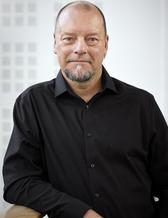
With a background as both a political activist and a journalist, Jesper Strömbäck understands that politics and the media exert a strong mutual influence on one another.
“That, and the fact that democracy is affected by the interaction between politics, the media, and citizens, made me want to research these issues,” he says.
At present, he is conducting three research projects. One examines how conspiracy theories spread digitally and how people’s media use interacts with conspiratorial thinking. Another focuses on men who hate women online. The project explores how misogyny is expressed and spread, primarily in digital media, and how misogyny both affects and is affected by people’s media consumption.
In the third project, Jesper Strömbäck investigates how the changing media landscape contributes to the global weakening of democracy and what consequences this has for news media and journalism.
“Among other things, I examine how journalists believe situations should be handled when politicians spread false or misleading information digitally and through social media,” he says.
Distinguishing between opinions and facts
According to Jesper Strömbäck, it has become both easier and more difficult for voters to access accurate information during election campaigns. On the one hand, more high-quality information is available than ever before, making it easier for those who seek reliable information to find it. On the other hand, the amount of false and misleading information has never been greater.
“Election campaigns have increasingly moved to digital and social media. This has led to a more divided and fragmented campaign environment. Depending on which media people use, they encounter different descriptions of reality, issues, and political perspectives, and there is a significant risk that people will be exposed to and influenced by inaccurate information,” says Jesper Strömbäck.
Ahead of the Swedish election in September, he therefore believes that voters need to think critically about sources and carefully consider which media outlets and information they choose to consume and trust. He argues that many people prefer information that confirms their own views over information that is actually accurate, emphasizing the distinction between opinions and facts.
“It has been said that everyone is entitled to their own opinions, but not to their own facts. Voters who want accurate information should therefore be cautious about relying on actors, for example politicians and alternative media, driven by political agendas. Instead, they should rely on established news media, researchers, and other actors whose mission is to describe reality based on evidence and fact-based knowledge. In that sense, source criticism needs to be balanced with trust in credible sources.”
The media have considerable influence
Jesper Strömbäck says that the media have considerable influence over both which issues people perceive as important and how people interpret various events, social problems, and politicians. According to him, simplified somewhat, two main factors determine which political issues receive the greatest media attention ahead of elections.
“First, it depends on which issues the major political parties emphasize. They have a significant influence over what the election campaign will revolve around and what the media pays attention to. Second, it depends on what is happening in society and the wider world. During major events, both politicians and news media must respond to what is taking place.”
Highly ranked in his field
Recently, the company Research.com published its latest ranking of the world’s and Sweden’s leading researchers in the social sciences and humanities. The rankings are primarily based on bibliometric indicators, especially the number of publications and citations. In this year’s ranking, Jesper Strömbäck advanced from 1,050th to 881st place globally and from 12th to 7th place in Sweden.
He says he has mixed feelings about this type of ranking.
“Of course, it is very gratifying to be highly ranked, but rankings never provide the full picture of which researchers are truly skilled and successful. Success can take many forms. There are many researchers whom I consider more talented than myself but who are not as productive or as frequently cited."
What is the best part of your job?
“Having the opportunity to immerse myself in and try to understand important societal phenomena, and being able to work with so many fantastic colleagues, both at the Department of Journalism, Media and Communication (JMG) and internationally,” says Jesper Strömbäck.
Three researchers from JMG appear on Research.com’s list of Sweden’s leading researchers in the social sciences and humanities:
- Jesper Strömbäck, Professor: ranked 7th
- Mats Ekström, Professor: ranked 87th
- Adam Shehata, Professor: ranked 107th