In Memoriam: Gunnar Wikholm – the first in the world to perform thrombectomy in acute stroke
Physician Gunnar Wikholm was the first in the world to perform a thrombectomy—that is, to mechanically remove a clot from the brain’s blood vessels—during an acute stroke in 1994. A method that has since gone on to save many lives. In December, he passed away after a period of illness, at the age of 77.
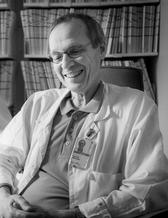
Gunnar was born and raised in Örebro. He began his medical studies in Lund and continued in Gothenburg after meeting his future wife. He earned his PhD in diagnostic radiology and later became a senior consultant in interventional neuroradiology at Sahlgrenska University Hospital in Gothenburg.
The first neurointerventional unit in the Nordic countries
Gunnar completed his internship in Nyköping and then chose specialist training in radiology. Early in his career, he joined the interventional unit at Sahlgrenska University Hospital, which had been established by the pioneer Pål Svendsen in collaboration with neurospecialty care during the 1980s.
This was the first neurointerventional unit in the Nordic countries, working in collaboration with internationally leading centers such as those in Boston and Paris. Patients with vascular malformations of the brain and spinal cord came from neighboring Nordic countries to be treated with embolization, a procedure in which supplying blood vessels could be occluded, often in combination with neurosurgical and/or targeted radiation therapy at the “embo unit.”
A positive outlook and an exceptional ability to collaborate
Gunnar earned his PhD in 1995 in diagnostic radiology. The title of his thesis was – Role of transarterial embolization in the management of cerebral arteriovenous malformations (*).
Local dissolution of clots via thin catheters was a technique Gunnar used with great success in acute stroke. This work led to the development of a method to mechanically retrieve the clot. He became the first in the world to perform this form of thrombectomy during an acute stroke procedure in 1994.
This type of intervention has great potential to restore threatened blood circulation so that injury is either completely avoided or significantly reduced, and it has become a game changer and a milestone in acute stroke care.
Gunnar’s technical skill, combined with a positive outlook and a natural ability to collaborate, played a major role in this rapid development. His technical expertise was matched by sound judgment and a strong ethical compass. He passed on his knowledge and skills to today’s neurointerventional unit—an innovative and highly efficient unit of the highest international standard.
A friend has left us, but the memories are strong. We cherish the memory of a highly skilled and truly brilliant professional, an invaluable colleague, and a remarkable person who loved life, the sea, and the wind.
Quietly a human brain goes out after years of joy and struggle. A flower, a human being, a star each has its appointed time.
(by Hjalmar Gullberg)
Text: Alexandros Rentzos, MD, senior consultant at Neuroradiology/Neurointervention, Sahlgrenska University Hospital, together with colleagues in Neurospecialty Care, Neuroradiology and Neurointervention, Sahlgrenska University Hospital, and in Radiology, Clinical Sciences, Sahlgrenska Academy, Gothenburg.
- * Thesis 1995: Role of transarterial embolization in the management of cerebral arteriovenous malformations
In Swedish media - DagensMedicin 2019: Den svenske pionjärens förutsägelse slog in
- Hjärtlungfonden 2025: Han gjorde världens första trombektomi
- Sahlgrenskaliv 2025: Vi har verkligen jagat minuter
- DagensMedicin 2025: Trombektomins upphovsman har avlidit
- DagensMedicin 2025: Blixtbeslut om propp tog hela världens strokevård med storm