
ERC project investigates the political consequences of disappearing occupations
Political scientist Johannes Lindvall has been awarded an Advanced Grant from the European Research Council (ERC). His new project will investigate what happens to people’s political participation, attitudes and voting behaviour when their occupations decline or disappear.
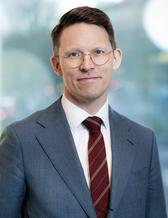
Today, many people are concerned that their occupations may be replaced by automation and artificial intelligence. To understand the political consequences of disappearing occupations, we need to look to the past, says Johannes Lindvall, Professor of Political Science at the University of Gothenburg.
“We should not forget that many occupations have declined and even disappeared entirely over the past century, and that our democracies have managed to cope with these changes. By learning from that historical experience, we can better prepare for the future,” he says.
Johannes Lindvall has now received one of the European Union’s most prestigious research grants – the ERC Advanced Grant – for the project Dying Occupations and Political Change (OCCPOL). The project examines what happens to people’s political participation, political attitudes and party preferences when their occupations experience a significant decline or disappear altogether.
“Having an occupation is not only about earning an income. It is also about identity, social status, community and how we perceive our place in society. When an occupation disappears, it can therefore affect people in many ways.”
Political consequences may vary
In the project, Johannes Lindvall and his team will compare Sweden, Germany, the United Kingdom and the United States from the late nineteenth century to the present day. The first step will be to identify occupations that have declined or disappeared. The researchers will then analyse the political consequences during different historical periods: the emergence of democracy in the early twentieth century, the post-war era, and our own time, which is largely shaped by automation, robotics and artificial intelligence.
“Sometimes these kinds of changes lead to major protests and a loss of trust in political representatives. In other cases, they are managed in ways that people accept and in which they feel included. I hope we can provide a more nuanced understanding of why the effects differ across countries, historical periods and occupations. Such differences may be related to factors such as social status, gender, economic growth, party strategies or the effectiveness of political institutions.”
The ERC grant provides time and resources
Ever since earning his PhD more than twenty years ago, Johannes Lindvall has been interested in how major societal transformations affect political systems. According to him, politics is not only about what happens within political institutions, but also about how people perceive their present circumstances and prospects.
With this new project, he hopes to contribute to a better discussion about the future of work at a time when automation and AI are leading many people to wonder what will happen to their occupations and to their children’s opportunities in the labour market.
“Receiving this research grant is, of course, both exciting and a great honour. At the same time, it provides my colleagues and me with the time and resources needed to work on these questions. I am also fortunate to be part of the strong political science research environment in Gothenburg, which has contributed to my receiving the grant. I hope that more ERC grants will come our way in the future. Several of my colleagues have exciting projects underway, both among our professors and our younger researchers,” says Johannes Lindvall.
The ERC Advanced Grant is one of Europe’s most prestigious research grants and is awarded by the European Research Council (ERC) under the European Union’s Horizon Europe research and innovation program.
The grant is awarded to established researchers seeking to pursue bold and innovative projects with the potential to lead to major scientific breakthroughs.
An ERC Advanced Grant typically provides up to €2.5 million (approximately SEK 28 million) over five years.
For more information: ERC Advanced Grants: Nearly €840 million to support Europe’s leading researchers |ERC