
Ellen Kupka: How preeclampsia and preterm birth can be prevented
Preeclampsia and preterm birth cause significant morbidity and mortality worldwide. Ellen Kupka’s research highlights the need for both population-level measures and targeted interventions for women at increased risk.
ELLEN KUPKA
Dissertation defense: 16 October 2026 (click for details)
Doctoral thesis: Preventing preeclampsia and preterm birth
Research area: Obstetrics and Gynecology
Sahlgrenska Academy, The Institute of Clinical Sciences
Preeclampsia, also called toxemia of pregnancy, is characterized in part by high blood pressure during pregnancy. Preterm birth means that a baby is born before 37 weeks of pregnancy.
“Every year, around ten million women develop preeclampsia, and approximately one million babies die from complications related to preterm birth. Since there is no cure for either condition, prevention is key,” says Ellen Kupka, specialist in obstetrics and gynecology at the Department of Obstetrics and Gynecology in Falun and doctoral student at the Institute of Clinical Sciences.
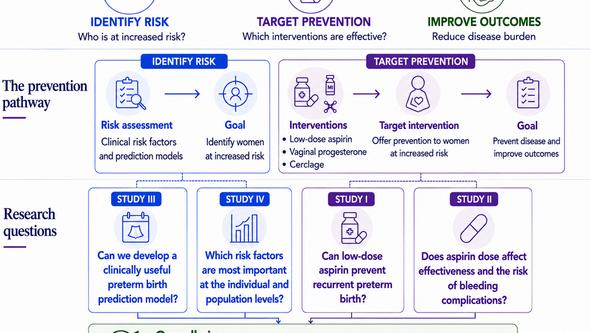
Prevention at two levels
The thesis investigates how preeclampsia and preterm birth can be prevented. Low-dose aspirin is an established preventive treatment for preeclampsia, and the findings suggest no difference in effectiveness or bleeding risk between doses of 75 mg and 150–160 mg. The results also indicate a potential role for aspirin in preventing preterm birth.
“However, prevention is not only about identifying high-risk women and offering them treatment. We also need to understand which risk factors contribute most to the burden of disease in the population.”
The final study therefore examined preeclampsia risk factors at both individual and population levels. Obesity emerged as an important individual risk factor and the largest modifiable contributor to the population burden of preeclampsia.
“The findings point to two complementary approaches: targeted prevention for women at increased risk and population-level strategies addressing modifiable risk factors, particularly obesity.”
“Research requires patience”
What have been the most enjoyable and the most challenging parts of your doctoral project?
“There have been so many enjoyable aspects, where should I start? Being part of a research group, the international collaborations, scientific writing, and having the opportunity to really immerse myself in a subject,” says Ellen Kupka and continues:
“At the same time, research requires patience. Things sometimes take longer than planned, analyses do not always turn out as expected, and manuscripts get rejected.”
Text: Jakob Lundberg