
On prothrombotic pathways and blood biomarkers in ischemic stroke
Short description
Stroke is one of the leading causes of death and the main cause of long term disability in adults. Most strokes happen when a blood clot blocks blood flow in the brain — a condition known as ischemic stroke. The Stroke Research Group works to uncover the biological mechanisms that drive ischemic stroke and influence recovery. By studying biomarkers, we aim to understand why ischemic strokes occur and reoccur, why outcomes differ so widely, and how treatments can be better tailored to each individual. Ultimately, our goal is to help pave the way for precision medicine for ischemic stroke.
The global burden of stroke is high. Stroke will affect one in four people worldwide, and remains a leading cause of death and long‑term disability. Ischemic stroke, which accounts for ~85% of all strokes, is caused by blood clot formation (Fig. 1). Therefore, part of our research is focused on prothrombotic pathways.
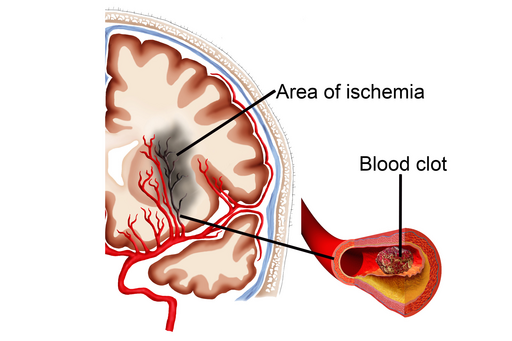
Although blood clot formation is a common denominator in ischemic stroke, the underlying pathophysiology is very heterogenous. The most common causes are cardioembolism (~25%), large-artery atherosclerosis (~20%; most commonly due to an emboli/thrombus from an atherosclerotic plaque in the carotid or vertebral artery), and small-artery occlusion due to a local thrombus in an end-artery (~20%). Notably, in as large a proportion as about one fourth of ischemic stroke cases, the cause of stroke cannot be determined despite a comprehensive clinical work-up, denoted cryptogenic stroke. Despite modern treatments, ischemic stroke survivors face the risk of persistent impairments and/or vascular recurrence. Thus, there remain many gaps of knowledge with regards to underlying molecular mechanisms for both ischemic stroke etiology and outcomes. Furthermore, there is no blood-based biomarker that can be used in the clinic to guide diagnostics, treatments, or prognostication.
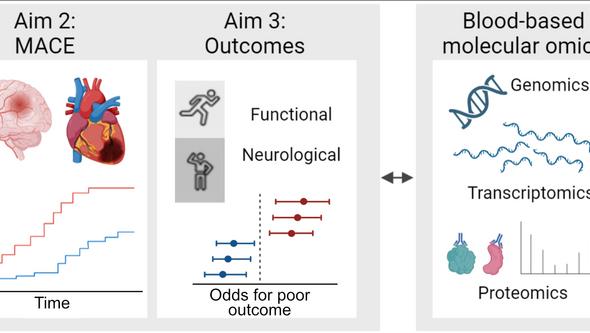
Therefore, the overall aim of our research is to uncover biological mechanisms behind the main etiologic subtypes of ischemic stroke - especially cryptogenic strokes - and to identify biomarkers that influence risk of vascular recurrence or poor post-stroke outcomes.
Clinical Studies
The Sahlgrenska Academy Study on Ischemic Stroke (SAHLSIS)
Our research is built on two of the largest and most carefully documented stroke cohorts in Sweden: SAHLSIS and SAHLSIS phase 2. These studies follow people who have experienced a stroke, along with matched individuals from the community, giving us a rich foundation for understanding why strokes happen and how people recover. Since 2015, we have included all types of strokes: both those caused by blood clots and those caused by bleeding.
A key part of our work is collecting and storing blood samples in a highly standardized way. From these samples, we analyze DNA, RNA, and proteins to uncover molecular signatures linked to different stroke subtypes and recovery patterns. To do this, we combine targeted studies of known pathways (i.e. hemostasis and inflammation) with broad, exploratory multi‑omics using the latest state-of-the-art technologies (e.g. highly multiplexed affinity-based protein profiling with Olink, non-affinity-based protein profiling using a novel nanoparticle-based mass-spectrometry proteomic strategy, RNA sequencing, and whole genome genotyping) that can reveal entirely new mechanisms.
FIND Stroke Recovery
Data on the time course of recovery and biomarkers after stroke are scarce, and thus we are also performing a prospective longitudinal study, The FIND Stroke Recovery Study. The protocol for this study includes repeated measurements of outcomes to allow for objective measurements of changes in impairments in different domains over time. Neurological deficits as well as cognition, depression, participation, and quality of life are monitored. We also biobank blood, plasma, and serum samples at these set time points to enable evaluation of the time course of blood biomarkers (e.g. protein and RNA) in relation to the time course of recovery.
Outreach and International Collaborations
We collaborate with research teams across Sweden and around the world. We are active members of the International Stroke Genomics Consortium (ISGC, https://www.strokegenetics.org/), and hosted the ISGC Workshop 2025. Christina Jern is also a member of the Steering Committee of Stroke Centrum Väst (SCV, https://www.gu.se/strokecentrumvast), Fellow of the European Stroke Organisation (FESO https://eso-stroke.org/about-eso/), and member of the at Genomic Medicine Sweden Complex Diseases Coordinating Group (GMS https://genomicmedicine.se/en/complex-diseases/). Through these networks, all group members have plenty of opportunities to interact with other researchers.
Group members
The Stroke Research Group is interdisciplinary, with complementary competencies. It includes stroke neurologists, clinical geneticists, physicians in training, molecular biologists, engineers, and bioinformaticians. The team is co-led by Professor and Senior Consultant Christina Jern, who specializes in hemostasis, genetics, and clinical studies of ischemic stroke (Christina Jern | University of Gothenburg ) and Associate Professor Tara Stanne, who specializes in molecular biology and gene regulation mechanisms (Tara Stanne | University of Gothenburg).

Christina Jern
Principal Investigator
Affiliation:
Department of Laboratory Medicine,
Institute of Biomedicine

Tara Stanne
Associate Professor (docent), PhD
Co-principal investigator
Affiliation:
Department of Laboratory Medicine,
Institute of Biomedicine
Group members
Björn Andersson, statistician, PhD
Cecilia Brännmark, MSc, MD, PhD
Cecilia Lagging, MD, PhD student
Malin Dorvall, MSc, PhD student
Jesper Olsson, MScEng, DDLS PhD student (DDLS Research school - SciLifeLab)
Björn Granelli, MD, PhD student
Sofia Furutjäll, MSc, research engineer
Kara Tai, MSc, research engineer
Fabian Baniameri, medical student
Co-workers at the Institute of Neuroscience and Physiology
Katarina Jood, Professor, MD, PhD, group leader
Lukas Holmegaard, MD, MScEng, PhD