
What if Gothenburg could feed itself?
Climate change, biodiversity loss and fragile global supply chains are raising urgent questions about the future of food production. In her master project Rehearsing Resilience, HDK-Valand student Kata Virag explores how design, urban cultivation and community practices could help cities become more resilient.
Kata Virág’s master project explores how design can help cities become more resilient in the face of climate change and future food shortages. In the design project Rehearsing Resilience, developed within the Embedded Design master’s programme at HDK-Valand, she imagines what Gothenburg might look like if local food production became a natural part of everyday urban life.
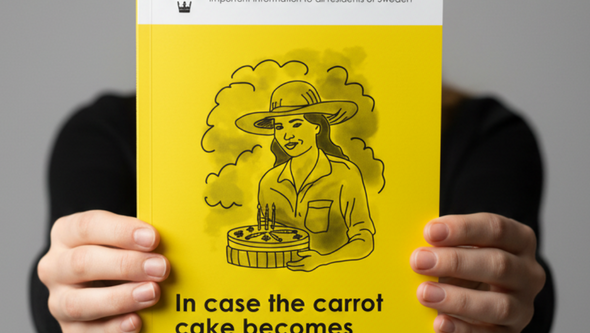
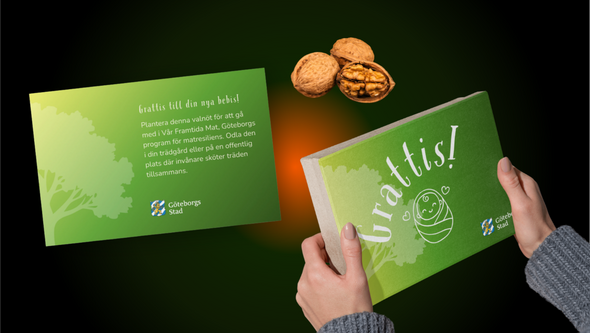
The project takes inspiration from Matskog, a grassroots movement in Gothenburg that plants nut trees in public spaces to feed future generations. By using Matskog’s vision as speculative material, Virág explores how simple practices such as cultivation, seed saving and urban food production can help people prepare for ecological and societal change.
– Sweden is currently self-sufficient in only a handful of food products, including carrots, cereals such as wheat, barley and oats, eggs, and sugar – which happen to be some of the ingredients in a carrot cake. But that is not enough to withstand disruptions to global supply chains. Even though we produce large quantities of these products, we still depend on imports of, for example, seeds, fertilisers and pesticides, says Kata Virág.
Not just a hobby
Her work comes at a time when questions of food security and ecological resilience are becoming increasingly urgent. But for Virág, resilience is not only about practical preparedness, but also about relationships, imagination and collective learning.
– We need spaces where we can rehearse different ways of living and relating to each other and our environment. Growing food is not just a hobby. It teaches patience, care and attentiveness — qualities that are also necessary for societal transformation.
The project also explores cultivation as a political act. By growing food locally, people can regain influence over how food is produced while reducing dependence on industrial systems where profit is prioritised over ecological health. Virág believes design can play an important role in enabling such transitions.
– I believe we can only create the futures that we are capable of imagining. Design can help us test new social norms, create new narratives and make alternative ways of living imaginable.
Start small
In her vision of a future Gothenburg, rooftop greenhouses capture waste heat, food is grown in abandoned urban spaces, neighbours cultivate together, and supermarkets are replaced by local markets where people know who produced their food. Public spaces are reclaimed from cars and transformed into environments that support both people and biodiversity.
Although some of these ideas may sound utopian, Virág points out that many already exist on a small scale today.
– I think societal change often begins through everyday practices. Many people are already experimenting with these ways of living — often despite resistance.
As a first step, she encourages people to start small.
– If you have space for a few pots, buy heritage seeds from local producers such as Nordfrö or Runåbergs Fröer and plant them. Save the seeds after harvest and use them again next year.
