
Unusually large numbers of butterflies in Sweden – while their world is changing
Have you noticed unusually large numbers of butterflies in recent weeks? This year, large numbers of painted lady butterflies have reached Sweden after a long journey from southern Europe and North Africa. At the same time, new research shows that climate change is altering the distribution of butterflies around the world.
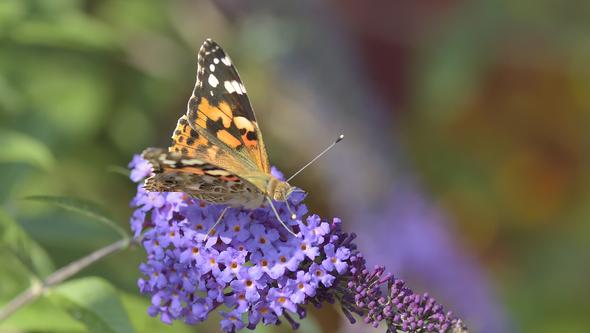
The painted lady (Vanessa cardui) cannot overwinter in Sweden and instead migrates north from southern Europe and North Africa each year. The number reaching Sweden varies greatly from year to year. In 2026, unusually large numbers have arrived. Since 2000, similar large-scale migrations have been recorded in 2009 and 2019.
This year’s abundance may be linked to favourable conditions further south. Heavy rainfall in North Africa during the spring may have boosted butterfly reproduction, while warm weather across Europe may have facilitated their migration northwards.
Butterflies on the move as the climate changes
While year-to-year fluctuations in the number of painted ladies are a natural consequence of their migratory behaviour, such large variations are not expected for most other butterfly species. Yet a new international study shows that butterfly distributions are changing on a large scale. An international research team, including Patrice Pottier, compiled more than 6,000 documented range changes involving 1,758 butterfly species across 105 countries. Nine out of ten species included in the study have shifted their geographical ranges.
As the climate warms, some species are becoming established further north or at higher elevations. For others, suitable habitats are shrinking. Species adapted to cold environments are particularly vulnerable, as rising temperatures leave them with fewer places to go.
Climate change is not the only factor. Changes in land use, deforestation, pesticides and nitrogen deposition can combine to make species more vulnerable. Because butterfly distributions are relatively well documented, butterflies can serve as indicators of broader changes in nature.
About the study
The study covers 1,758 butterfly species from 105 countries and is based on 565 scientific studies as well as expert assessments by 68 butterfly researchers. Published in Nature Ecology & Evolution, it is the most comprehensive global assessment to date of how climate change is affecting butterfly distributions.
If you want to look for painted ladies, thistles are a good place to start. Females lay their eggs on various species of thistle (Carduus and Cirsium), and in Sweden also on mugwort (Artemisia vulgaris). Where these plants grow, there may therefore be a good chance of finding both butterflies and caterpillars.
Sightings of painted ladies and other species can be reported to the Swedish Species Observation System (Artportalen) or iNaturalist.. These observations contribute to our understanding of how species occurrence, distribution and migration vary from year to year.

