Stefania Galli new Associate Professor in Economic History
Stefania Galli has been appointed Associate Professor (docent) in Economic History at the School of Business, Economics and Law at the University of Gothenburg.
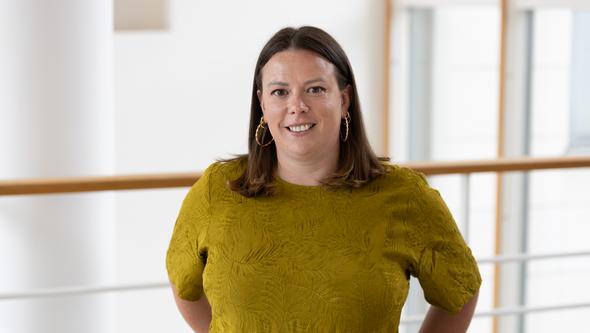
Congratulations! What does this appointment mean to you?
For me, being appointed Associate Professor represents an important recognition from my colleagues of my journey and my development as an academic. It means a lot to have my efforts and achievements acknowledged, especially since I do not come from an academic background. It is also a way of honouring all those who have helped me along the way, not least those who saw potential in me before I did. This recognition is as much a recognition of me as of the people who have supported me and been crucial to my development. We tend to see academia as a competitive and individualistic environment, but my experience is that it also contains strong elements of generosity, collegiality and shared learning, where the support and trust of others play a crucial role.
What is your main research interest?
My main research interest is how inequality arises, develops and persists over time. I am interested in how historical processes and institutions, such as colonialism and various forms of discriminatory social structures, continue to shape people's living conditions well into the present. By studying inequality in a longer time perspective, I aim to contribute to a better understanding of the mechanisms and institutions that create and reproduce conditions in which different groups have differential access to resources and opportunities.
How can your research be used by society?
Ultimately, my research aims to explain how inequality emerge, why it can persist across generations and how societal structures influence who is at the top and who is at the bottom, with the ambition to contribute knowledge that is relevant to creating more just and sustainable societies. By making visible the historical and institutional roots of today's inequalities, research can provide a better basis for political decisions and societal planning and help identify which policy interventions can actually make a difference across contexts and over time. I also aim to contribute to nuance how we understand inequality, by showing that it is not just a result of individual choices but of long-term structures and processes, which in turn can promote more informed and inclusive societal debates.
What can you say about your future research?
My future research takes its starting point from broad questions about inequality and power distribution, and how these are shaped and changed over time. I am particularly interested in why inequality can persist, but also in how marginalized groups in some cases manage to break such patterns and rise to positions of influence. I plan to study long-term socio-economic mobility patterns and the mechanisms that enable them, such as education, professional careers, social networks and collective organization, in interaction with the institutional contexts in which they operate. At the same time, I intend to examine how different types of institutional “experiments” affect inequality dynamics, from colonial societies where new marginalised groups grew to become part of the economic and political elite, to systems that explicitly aimed to reduce inequality.
The goal of my current and future research is to further our understanding of how inequality is shaped, challenged and changed, shedding light on the conditions that can foster more inclusive societies.