
Investment in a national polar research school – PhD positions now open
The next generation of polar researchers will soon see the light of day as the University of Gothenburg, together with four other Swedish universities, launches the polar research school SEAL – School of Excellence in Arctic and Antarctic Learning. PhD positions are now announced, with the aim to advance polar research in Sweden.
The SEAL research school will begin in the autumn semester of 2026 with funding from the Swedish Research Council and the University of Gothenburg serving as host institution. PhD candidates admitted to the program will address the challenges facing polar regions within a context that spans natural sciences, engineering, law, and the humanities.
“We look forward to welcoming doctoral students who want to work across disciplinary boundaries,” says Hans Lindholm, Professor of Physical Geography at the University of Gothenburg and Director of the SEAL research school.
"Today, a holistic perspective is required to understand the implications of climate change in polar regions. Processes in the ocean, on land, and in the atmosphere affect both climate and societies globally. The polar regions also hold significant geopolitical importance for international transport routes and natural resources."
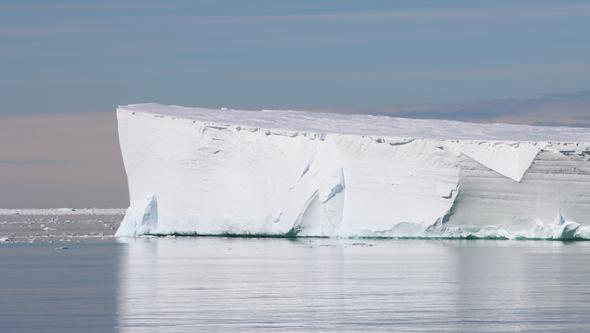
Collaboration between leading research environments
SEAL is a field-based research school built on close collaboration between some of Sweden’s strongest research environments in polar science. In cooperation with Uppsala University, KTH Royal Institute of Technology, Chalmers University of Technology and Mid Sweden University, the research school offers polar expertise from glaciology, oceanography and climate modelling, to remote sensing, technological development, social sciences and Indigenous perspectives.
Practical training in polar environments
An important part of the program is summer and field courses that provide practical training in polar environments and research methods. These courses will take place in locations including Bydalen and Abisko in the Swedish mountains, as well as Corsica and Greenland.
In total, the research school will include around 15 doctoral students from Swedish universities. In addition, individual courses will be available, subject to space, for all doctoral students with an interest in polar research.
Apply for a PhD position within SEAL – calls for applications will be published on an ongoing basis
