Population geneticist Linda Laikre appointed Honorary Doctor
Linda Laikre, Professor of Population Genetics at Stockholm university, has been appointed Honorary Doctor at the Faculty of Science and Technology. Laikre’s pioneering research has had a significant impact on the conservation genetic of several species, including wolf, moose, salmonids, herring and pike.
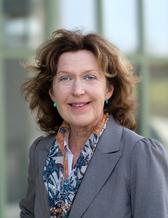
Congratulations to the Honory Doctor title, how does it feel?
“Thank you very much. It feels truly rewarding and honoring, and at the same time completely unexpected. I had no idea that I had been nominated.”
What do you consider your primary contribution to the research field of population genetics?
“My primary contribution is that I have helped link population genetic theory and empirical research to issues of species conservation and to practical action. Genetic variation is the foundation of all biological diversity, yet this is often overlooked. My focus has been to highlight this fundamental dimension of biological life. I have also contributed to demonstrating that genetic problems do not only arise in very small populations, but they can also develop in large populations affected by human use.”
Your research focuses on genetic variation in species such as wolf and herring. Why is this important to study?
“To shed light on different issues related to the conservation of genetic diversity. The wolf is an example of a species with a very small and isolated population. As early as the late 1980s, I demonstrated, in contrast to the prevailing view at the time, that the species is sensitive to inbreeding and shows clear negative effects. The fish species we study represent different types of population structure, which affects both conservation status and how monitoring should be designed. We have recently shown that the herring in the Baltic Sea has a previously unknown genetic structure, with different groups of spring spawners adapted to local environmental conditions.”
What is the next important step in your field of research?
“The most important is to translate knowledge into practical action. Today, we have a solid scientific understanding of genetic diversity, why it is important, and how it can be monitored and conserved. However, it is not yet fully applied in practice. I therefore work closely with authorities and other stakeholders to strengthen the link between research and implementation.
What have been the highlights in your collaboration with the University of Gothenburg?
“There have been many highlights, but the interdisciplinary and multidisciplinary projects led by Professor Kerstin Johannesson at the Tjärnö Marine Laboratory have been particularly significant. At an early stage, researchers in ecology, marine biology, population genetics and social sciences came together with a focus on genetic diversity in marine environments. The combination of different areas of expertise enabled us to take a leading role in the field and contribute to new knowledge and concrete solutions. What we did ten years ago is now being followed by researchers in several European countries and globally.”
The promotion ceremony will take place on 23 October 2026.