
New Project Boosts Small-Scale Ocean Farming
Interest in small-scale ocean farming is growing. Researchers at the University of Gothenburg now want to take the next step by developing blue community gardens together with associations, restaurants and municipalities.
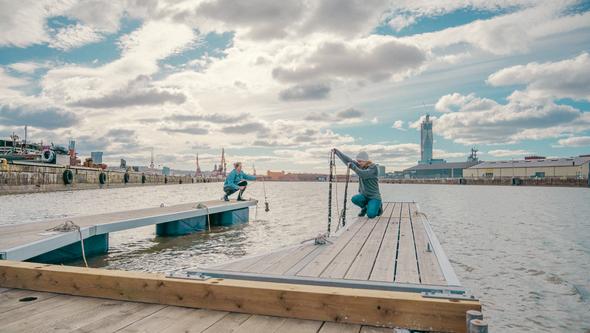
Blue community gardens are a concept that involves small-scale cultivation of, for example, mussels and seaweed. Since 2022, Frihamnen in Gothenburg has been home to Flytevi – a prototype marine allotment garden where, for instance, school classes can come to learn more about ocean farming. In a new project, the researchers involved will further develop the concept.
“We have noticed strong interest, both from private individuals, associations and restaurants that want to start their own marine farms. In this project, we will explore how we can make blue community gardens accessible to more people,” says Per Knutsson, director of the Centre for Sea and Society at the University of Gothenburg.
Collaboration with restaurant
Part of the project involves establishing a blue community garden on Styrsö in Gothenburg's southern archipelago in collaboration with the City of Gothenburg. The location offers good conditions for cultivation and local commitment to build on.
"We want to investigate how to organize a marine allotment so that it is open and accessible to more people. How do you get started? How do you run it in the long term?" says Per Knutsson.
The experiences from Styrsö will serve as a pilot and source of inspiration for others along the west coast. At the same time, a collaboration is being initiated with Stenungsbaden Yacht Club in Stenungsund. Here, small-scale cultivation will be linked to the hotel's restaurant, where ingredients such as mussels, oysters, and algae can eventually be used on the menu.
"We want to test how small-scale cultivation can be linked to restaurant operations. This could involve theme nights, tastings, or other activities where guests gain insight into how the food is grown and why it is sustainable," says Per Knutsson.
The ambition is to develop a model that other restaurants and hotels could also use as part of their sustainability efforts.
Research leads to practical results
A key part of the project is to ensure that marine allotments are not only available to a limited group.
“If we want small-scale cultivation in the sea to contribute to a sustainable transition, we must consider inclusion from the outset. It should not only be for those who already live by the sea or have special resources, but something that more people can participate in and engage with,” says Per Knutsson.
The project is not a traditional research project where new data is collected. Instead, it is about putting previous research results into practice through collaboration with municipalities, companies, and civil society.
“This is a way of putting knowledge into practice. By testing and developing concrete examples, we can take steps toward spreading the concept more widely,” he says.
Communication and events
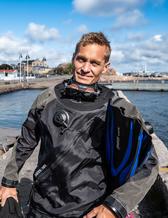
To reach a wider audience, the project is collaborating with the Fragile Hope Foundation, which works to raise awareness and mobilize action around the future of the ocean. Together with the Transition Lab, run by the City of Gothenburg, experiences, events, and films are being developed to make marine allotments understandable, relevant, and accessible to a wider audience.
“A marine allotment can be a clear gateway to larger issues concerning the marine environment, sustainable food production, and our shared responsibility. By creating meeting places where people do things together, commitment to the future of the ocean can be strengthened,” says Joakim Odelberg, founder of the Fragile Hope Foundation.
Text: Karl-Johan Nylén
Project title: Making Blue Community Gardens accessible through Inclusive Action
Project period: 2025–2027
Funder: Formas
Project owner: Centre for Sea and Society, University of Gothenburg
Collaborating partners: City of Gothenburg, Fragile Hope, Stenungsbaden Yacht Club
Aim: To develop inclusive models for small-scale, regenerative ocean farming and make marine allotment gardens more accessible to different groups in society.
Three pilot environments:
Styrsö – association-driven marine allotment garden.
Stenungsbaden – cultivation linked to restaurant operations.
Flytevi, Frihamnen – activities and events to increase ocean awareness.


