New CERGU Postdoctoral Researcher
Meet the next new postdoc, Tobias Wuttke! CERGU introduces the three new international postdoctoral researchers who were recruited during 2025.
In 2025, CERGU announced a call for new postdoctoral researchers in European Studies. The response was remarkable: more than 140 applicants from around the world applied for the opportunity to work at the Centre for European Research at the University of Gothenburg (CERGU).
In the previous interview, we met Ben Rosher who is employed by the School of Global Studies, at the Faculty of Social Sciences. Today, we are introducing Tobias Wuttke, employed at the Department of Business Administration within the School of Business, Economics, and Law. CERGU's research administrator Angie Sohlberg spoke with Tobias about what brought him to CERGU and what comes next for him. Each week we will introduce you to one of the new postdocs who has joined the network. Next week, you'll meet Natalia Volvach, our third a final new postdoc. Welcome!
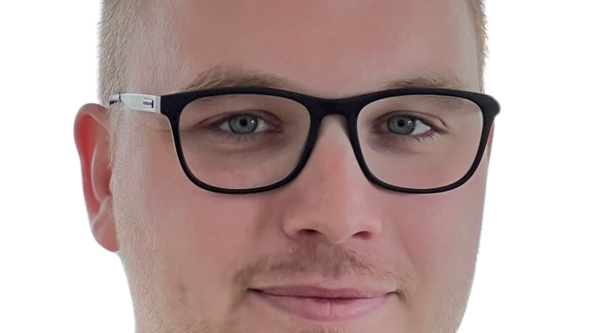
Angie Sohlberg: Welcome to CERGU and congratulations! Could you tell us how you heard about CERGU and what made you apply for a postdoc here?
Tobias Wuttke: I am originally from Germany, but for personal reasons have been living in Sweden for some time now. In recent years, I have been working on EU industrial policy for semiconductors and EV batteries. When I was looking for a position in Sweden to deepen this research, CERGU seemed like the ideal place. As far as I am aware, it is the only truly interdisciplinary research center on the EU in Sweden and thus represents the perfect home for my multi-disciplinary research project.
AS: Where were you before you became a CERGU postdoc, and what were you doing?
TW: I did my PhD in International Studies at Roskilde University in Denmark from 2019 to 2022, which I successfully defended in early 2023. My thesis focused on economic development via global value chains (GVCs), with a case study of the automotive industry. From 2023 until 2025, I was based at Bard College Berlin as a research fellow on a research project studying geographical reconfigurations of global production networks in a post-COVID-19 global economy (funded by the German Research Fund), driven by industrial policy and geopolitics, with a focus on the semiconductor industry in Europe and Southeast Asia.
AS: Okay, so you went from Germany to Denmark, back to Germany, and now to Sweden, so international environments are nothing new to you. The CERGU network is very international and multidisciplinary. What do you hope to contribute to and gain from being a part of a centre with a large, international group of researchers from lots of different disciplines?
TW: I have a quite interdisciplinary background myself, spanning economic geography, development studies, innovation studies, and political science. While disciplinary boundaries are important for developing robust theories and maintaining coherent research communities, I strongly believe that drawing on theories, concepts, and insights from different disciplines to answer complex research questions has huge benefits. The EU industrial policy challenges I'm studying—involving economics, law, firms, politics, technology, history and geography—really demand this kind of multidisciplinary approach. I'm genuinely excited to learn from CERGU colleagues working in different fields and to contribute my own perspective to ongoing discussions at the center.
AS: Onto your postdoc project. Tell us briefly what your plan is for your two years as a CERGU postdoc.
TW: Batteries are the heart of electric vehicles, and Europe is investing heavily to build its own battery industry. The EU has launched ambitious industrial policies since the mid-2010s to become a global leader in sustainable battery production. Yet European battery companies like Northvolt have struggled to compete with leading firms from China and South Korea. This is a serious concern—if European firms can't compete in battery technology, the entire automotive industry could suffer, and Europe risks becoming dependent on foreign technology. So why haven't these policies succeeded in making European battery firms competitive? My research tackles this puzzle by connecting two fields: industrial policy (how governments support industries), with a particular focus on the process of industrial policy-making in the EU, and technological catch-up (how latecomer firms can reach the level of global leaders). To answer these questions, I'll interview policymakers and industry stakeholders across Europe, and analyze industry data, company reports and policy documents.
AS: We are excited to follow your project progress over these two years, Tobias! Last but not least, when you're not working, what do you like to do in your free time?
TW: In my free time, I love to travel, play tennis, and spend time with friends and family.