
How can universities create greater public value?
At a recent U-GOT KIES research seminar, Professor Donald Siegel from Arizona State University explores how technology transfer and academic entrepreneurship can be better aligned with societal needs.
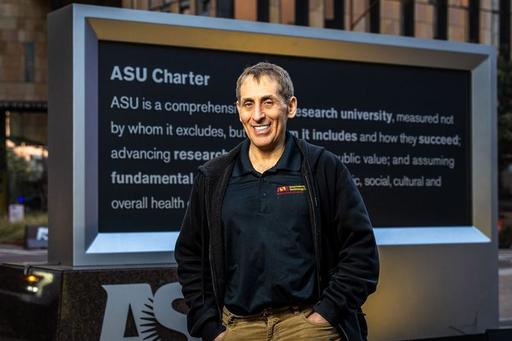
Social impact matters. During his talk, Professor Siegel reviews the evolving landscape of Technology Transfer and Academic Entrepreneurship (TT-AE), focusing on the institutions and actors that shape these processes. He highlights key findings from the literature, emphasizing how both managerial practices and public policy frameworks play a crucial role in determining the effectiveness and societal impact of TT-AE activities.
“Pro-social” technology transfer
A central theme is the concept of “pro-social” technology transfer—an approach that places greater emphasis on generating benefits for society. Drawing on his recent article in the Academy of Management, co-authored with Professor Maribel Guerrero, Professor Siegel demonstrates how TT-AE contributes to the development of shared technological resources. These are categorized into public interest goods and public interest technologies, which address social challenges and serve broader public needs beyond commercial outcomes.
Current systems do not fully realize this potential. Professor Siegel argues that significant changes are needed in how technology transfer and academic entrepreneurship are governed and managed. In particular, he calls for redesigned frameworks that more explicitly prioritize the public interest, enabling innovation systems to deliver both economic and societal value.
Future directions for research and policy
Looking to the future, Professor Siegel identifies a range of important issues for research spanning micro, meso, and macro levels, and also encouraging scholars from different disciplines to engage more deeply with TT-AE. He emphasizes the need to study specific actors and institutions within innovation and entrepreneurial ecosystems, including universities, public research organizations, and national laboratories, and to better understand their roles in promoting pro-social outcomes. The micro-level of individuals is also vital to better understand.

Professor Maureen McKelvey, University of Gothenburg, moderates the seminar, and they discuss insights from research and policy to examine how universities’ new roles within innovation systems can create greater public value. By tackling a more multi-level and interdisciplinary research approach to societal impact, this seminar also highlights opportunities to impact decision-makers responsible for innovation policy and the management of technology transfer activities.
About Donald Siegel
Professor Siegel serves as Regents Professor and Foundation Professor of Public Policy and Management at Arizona State University, as well as Co-Executive Director of the Global Center for Technology Transfer. His recent recognition as co-recipient of the 2026 Global Award for Entrepreneurship Research further underscores the significance of his contributions to the field. More information: Winner 2026 – Global Award for Entrepreneurship Research