
Growing as Leaders: Building Supportive Teams for Stronger Research
This semester, WCMTM principal investigators participated in a leadership course exploring how to lead teams in academia and support collaboration. Here, we asked two of the course participants to share their reflections.
Antonio Molinaro, Associate Senior Lecturer at the Institute of Medicine, reflected on the importance of growing together with his team.
“My group started less than a year ago, so we are still a small team in the lab, and my leadership journey is just beginning. As the group grows, I will face new challenges in leading and supporting a larger team, and this course gave valuable insights into leadership in science.”
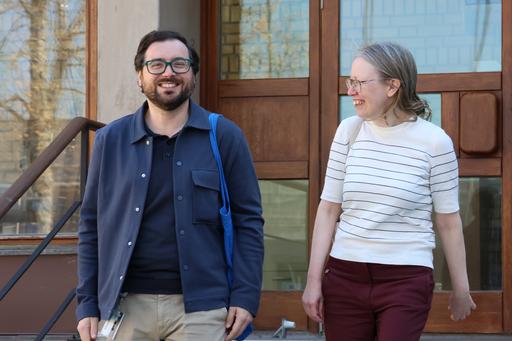
Creating a supportive work environment
Antonio highlighted the importance of setting clear, shared goals while creating a positive and supportive work environment.
“Over the coming year, I want to continue developing as a leader by improving communication skills, continue supporting my team, and help everyone work toward our common goals. I know there will be challenges along the way, but I hope to grow into the role and navigate them well.”
Independence vs micromanagement
Karolina Sjöberg Jabbar, Associate Senior Lecturer at the Institute of Medicine, pointed out the value of finding the right balance between giving team members independence and providing guidance when needed.
“I think most leaders are rightly afraid of being either too passive or micromanaging. During the course, it became clear that there is no fixed middle-path to always follow, I need to navigate and adapt my leadership strategies to different contexts and people, and of course to myself.”
Karolina also reflected on how her team benefits from diversity.
“I have been fortunate to hire very talented people at different stages of their academic career paths. Over the next year, I look forward to seeing them consolidate as a team and benefit from each other’s different skills and experiences.”
Both Antonio and Karolina emphasized the value of having opportunities like this course to exchange experiences with peers at a similar career stage as well as with more senior colleagues.
In line with its ambition to help build strong translational environments within life science, WCMTM once again completed a leadership course focused on skills that are essential in the role of a research group leader. The course complements existing leadership development opportunities provided at the University and offers perspectives on leading teams in an academic environment and fostering collaboration.
The final session of the course explored the value of psychological safety.
“Creating an environment where team members feel safe to share ideas, ask questions, and learn from mistakes is not just beneficial for the individuals and the team—it is fundamental to strong research and innovation,” says Camilla Skånberg, research coordinator at WCMTM.
The course was held together with lecturers from the Department of Psychology.


