
Greenland's hidden mineral pillars mapped by researchers
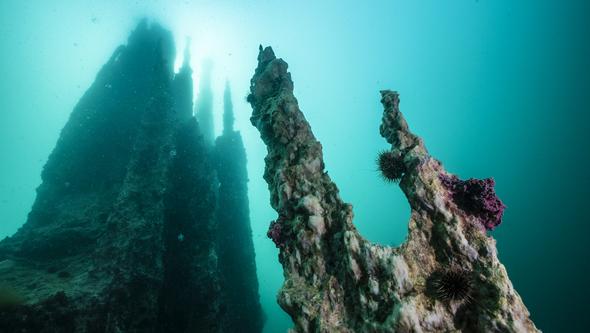
With all eyes on Greenland, a natural treasure lies hidden beneath the surface. A thousand white mineral pillars rise like ghostly statues from the bottom of a fjord. They have long puzzled researchers – and now the picture is becoming clearer thanks to research from Gothenburg University, among others.
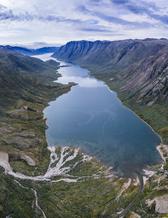
The columns on the seafloor of the 12‑kilometre‑long Ikka Fjord in southwest Greenland can reach heights of up to 20 metres. They are made of ikaite, a mineral so rare that it forms only under very specific conditions. Geologist and researcher Gabrielle Stockmann has been fascinated by the site for many years, and in 1995 she joined the research expedition that carried out the first mapping of the fjord floor.
“We discovered that there are at least 1,000 mineral columns growing on the fjord floor. That was far more than we expected,” says Gabrielle Stockmann, who grew up in Greenland and Denmark.
Dead Vikings in the fjord
The ikaite columns are steeped in legend and form part of Greenland’s oral tradition. According to the tale, it was during a battle with the Inuit that the Norse settlers — descendants of the Vikings — were driven out onto the ice and drowned in the fjord. The white stone pillars glimpsed beneath the surface were said to be Norse ghosts waiting for revenge. If you saw them through the water, someone would die.
The fjord in southwest Greenland is the only place on Earth where ikaite columns grow. The explanation lies in the surrounding mountains of Ikka Fjord, with steep slopes and rocks rich in volcanically formed calcium minerals and sodium silicates. As meltwater slowly seeps through the rocks around the fjord, it carries with it substances that are pushed up through cracks on the fjord floor. There, they meet the cold seawater, and the rare mineral ikaite forms. The result is an underwater landscape of columns in every imaginable size, from metre‑wide structures to needle‑thin stone pillars.
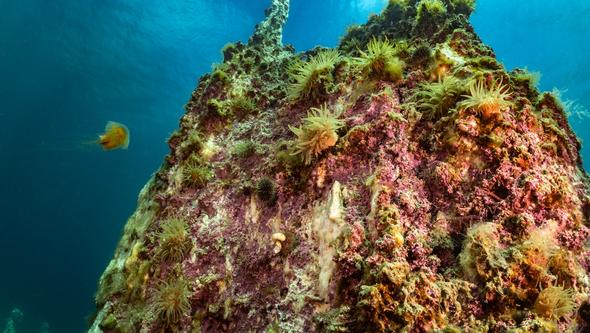
“The ecosystem in the fjord is unique,” says marine biologist Lina Rasmusson, a member of the research team. "Parts of the ikaite columns are covered with red coralline algae that act as a protective outer skeleton. The structures provide surfaces where many types of sessile animals thrive, such as sea anemones and sponges. Numerous mobile invertebrates — including chitons, sea urchins and brittle stars — also seek shelter and food on the turn attract a wide columns, which in variety of fish."
Risk of collapse in a warming climate?
Ikaite is stable up to roughly six degrees Celsius; above that, it transforms into other minerals. The rapid warming rising ocean temperatures of the Arctic and make it crucial for researchers to understand how the Ikka Fjord ecosystem will respond. Are the columns at risk of collapsing?
“In the laboratory, we recently tested how long the pillars remain stable in seawater at four, six, eight, and ten degrees Celsius. As we expected, the pillars can withstand temperatures lower than six degrees. However, tests show that at eight and ten degrees, they collapse completely within two to four weeks,” says Gabrielle Stockmann.
The researchers' latest measurements show that the situation for the ikait pillars is stable so far.
“This is because there have been many storms during the last few winters, which has caused the temperature to drop below six degrees again,” says Gabrielle Stockmann. The warmer seawater has been replaced by new cold seawater. We don't know if this will continue or if it will get warm again. During the last research expedition, we installed loggers on the pillars and are monitoring developments."
An unexplored micro world
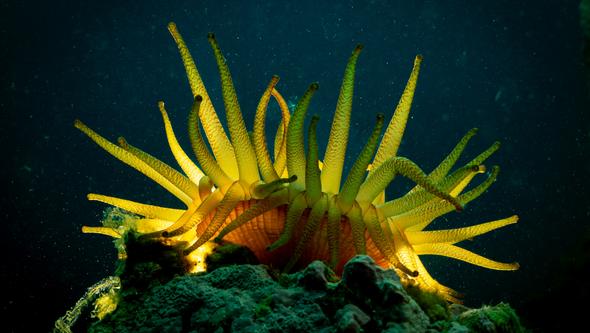
If the ikaite pillars collapse in a warmer climate, a unique ecosystem will be lost. Inside the pillars is a world of microbiology with bacteria and enzymes that are found nowhere else. Some of these enzymes have been tested for industrial use in detergents and for lactose splitting. There are also studies showing that carbon dioxide can be stored through ikaite mineralization, where the mineral is converted into very pure lime when heated.
"It is precisely this heating process that we want to avoid in the Ikka Fjord. In an industrial environment, however, it can produce a sought-after lime product, for example for manufacturing paint", says Gabrielle Stockmann.
"This micro world has not yet been fully mapped. Who knows what might be hiding in there that could help us industrially or medically?"
For more information about this research, please contact:
Gabrielle Stockmann, affiliated researcher, Department of Earth Sciences, University of Gothenburg, email: gabrielle.stockmann@gu.se
Source: History of Ikkafjorden: Bengt Liljebladh, research engineer, Department of Earth Sciences, Havsutsikt
The research team consists of geophysicists, geologists, marine biologists, oceanographers, scientific divers, and underwater photographers.
The mapping of the fjord bottom was done using marine geophysics. The researchers have also described the biological life on the pillars and how the pillars are formed in a geological process. During the fieldwork carried out over the past year, the researchers placed 15 data loggers on three ikait pillars, which continuously measure temperatures and salinity levels in the seawater. With the help of these loggers in the water and a weather station on land, they can monitor variations over an entire year and track climate change in the Ikkafjord.
IKKA project: Ikaite experiments at the IceLab University of Gothenburg