
From the conference WTO: Survival or Revival
At the conference WTO: Survival or Revival?, international researchers and stakeholders gathered to discuss the present and future of global trade. The conference was organised by the School of Business, Economics and Law at the University of Gothenburg in collaboration with the National Board of Trade Sweden.
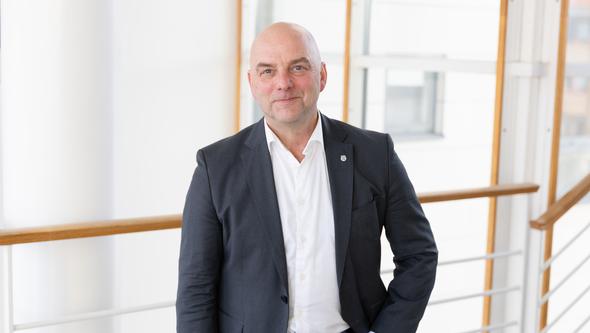
Ola Bergström is Vice Dean at the School of Business, Economics and Law and Professor in Management and Organisation
“Together with the National Board of Trade Sweden, the School organised the conference as part of our strategy for international impact, where we contribute to the development of knowledge and dialogue that can help create a more sustainable world. In this case, it involves contributing to dialogue on reforming the global trading system, which has been hollowed out and eroded, partly as a result of the United States’ trade conflict with the rest of the world, particularly China. The situation is challenging, and the costs of reduced global trade are significant. Our role as a business school is to contribute knowledge and understanding of the challenges at hand - and perhaps help bring us a step closer to a reformed WTO that can offer stability and predictability for the benefit of global trade.”
What topics were addressed during the seminar?
“A key part of the discussion was to involve representatives from export-oriented companies in Western Sweden (Volvo Cars, Volvo Group and Stena) as well as the West Sweden Chamber of Commerce. Gothenburg and Western Sweden are the parts of Sweden most dependent on international trade. We are vulnerable. Tariffs and uncertainty regarding the rules of the game have a major impact on companies in Western Sweden.”
“It is difficult for companies to make their voices heard. There is no natural interface between those engaged in negotiations and the companies affected by the unpredictability of a global trade conflict. The School of Business, Economics and Law can offer a neutral arena for discussion and dialogue on these issues that is unique. Some of the world’s leading experts on trade come to Gothenburg and hear firsthand about the experiences of export companies in Western Sweden. This may help increase understanding of the consequences of a fragmented trading system and create inspiration and momentum to find new, innovative solutions. This is especially important for small countries like Sweden, which struggle to assert themselves in a world where power, size and even military strength are part of the negotiating landscape.”
What did you take away from the discussions?
“That it is crucial to stimulate discussions about the importance of a well-functioning trading system—and that the School of Business, Economics and Law, despite being a relatively small player, can make a difference in issues that affect the entire world.”
Can you describe the collaboration with the National Board of Trade Sweden, and why it is important for the School?
“The National Board of Trade Sweden plays an important role in representing Sweden in relation to the EU and the WTO. We see it as an important task for the School to contribute our research and international networks to their work. Together, we can move a little closer to a better-functioning global trading system.”
Participants at the conference
National Board of Trade Sweden, Stena Group, Mannheimer Swartling, Georgetown University, Volvo Group, Volvo Cars, Columbia University, World Trade Organization, West Sweden Chamber of Commerce, The School of Business, Economics and Law at the University of Gothenburg.