
From Play to Elder Care: New Research Highlights the Contribution of Art to Society
How can children and young people participate in urban development? Does public art have an “afterlife”? And how can older adults influence their living environments? These are some of the questions explored by three HDK-Valand research projects since receiving funding in 2020 to investigate the role of art in shaping society.
The projects are now approaching their conclusion. But researcher and artist Maddie Leach is not quite finished yet. She still has a book to complete, a film being produced by a collaborator in Lund, and a special issue of Art & the Public Sphere to edit together with two colleagues.
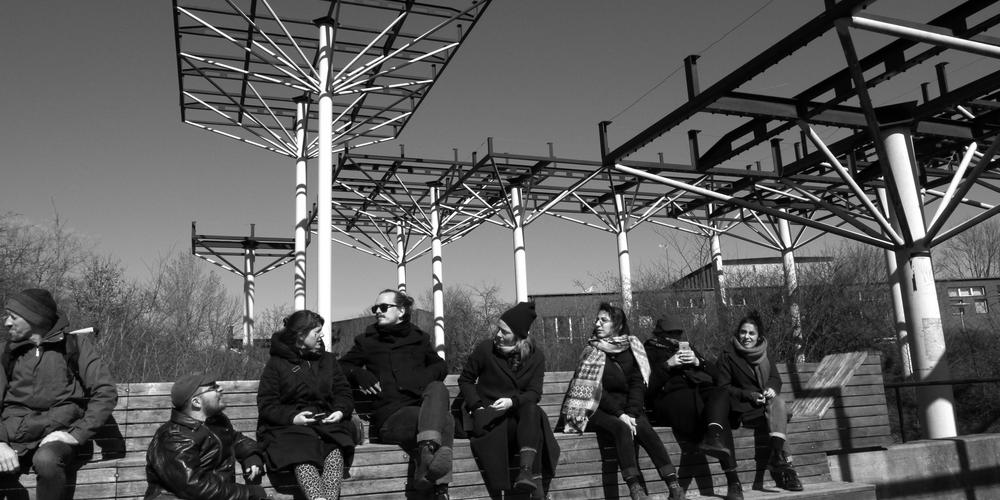
Leach leads The Fountain: An Art-Technological-Social Drama, one of three HDK-Valand projects funded through the Swedish Research Council Formas’ call Designed Living Environment – Architecture, Design, Art and Cultural Heritage in Public Spaces.
Loved and Ridiculed
At the centre of the project is the so-called LTH Fountain, a large-scale former water sculpture that has not functioned as intended for almost thirty years—if it ever truly did.
− Already when it was inaugurated in 1970, it suffered from cracks and leaks. By the 1990s, the water had been turned off completely, so it has not functioned as a fountain for a very long time, says Maddie Leach.
Since then, the structure has remained in place without any clear purpose. It has been both loved and ridiculed, acquired numerous nicknames, and become a familiar part of its surroundings.
− Our intention has never been to restore it to its original condition. Instead, we have explored the idea of ‘reactivation’—whether it could become the basis for a new artwork, she says.
Future Cultural Heritage
Leach believes the project offers many insights, particularly regarding how we might care for our shared public artworks, both existing works and those yet to be created.
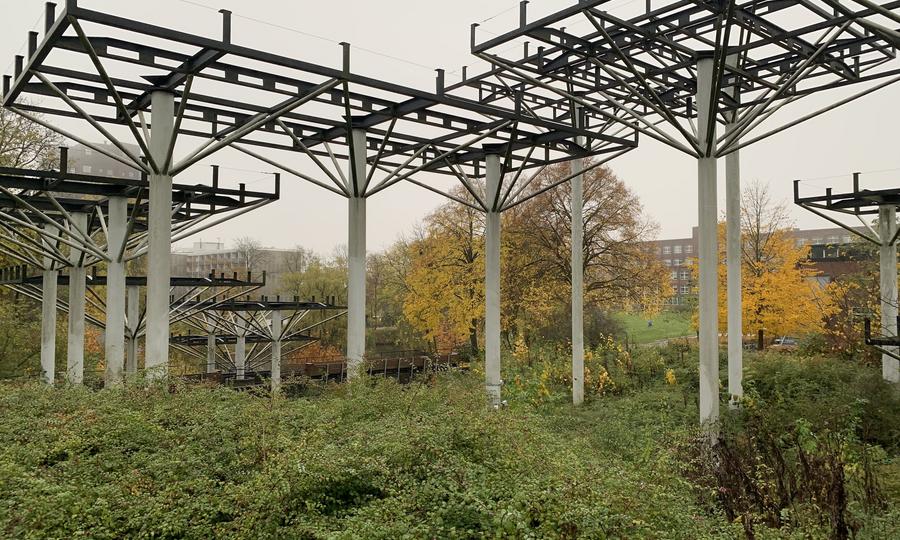
One conclusion is that we need to consider the “afterlife” of public art—ideally before new works are commissioned. This is especially relevant given Sweden’s one-percent rule, which allocates a portion of publicly funded building projects to art.
− What we are really talking about is future cultural heritage. Who gets to decide over it? Should it be the relatives of an artist who is no longer alive? Or should someone act as an advocate for the artwork itself, as though it were autonomous and possessed its own agency?” she asks.
− I think that is a suitable role for contemporary artists. They are trained to adopt an artistic perspective and could act as representatives for artworks.”
Involving Children Through Play
Another Formas-funded project is Transforming the city for play. In practice, it consists of two parallel subprojects united by an experimental search for co-creative design methods that can increase the participation of children and young people in urban development processes.
One subproject, carried out in collaboration with students from the Child Culture Design programme, explored how play can involve younger children. Through practical workshops, children used “hacking” methods to intervene in existing structures such as benches, fences and waste bins by adding their own modifications.
−We wanted to create a sense of influence and belonging for children in environments that are not really designed for them. Above all, we wanted to develop the co-design methods we already use—both to integrate them into education, which we have done, and to use them in collaborations with other institutions and organisations, says Johnny Friberg, who led the project and is Programme Coordinator for Child Culture Design
Young People as Co-Creators
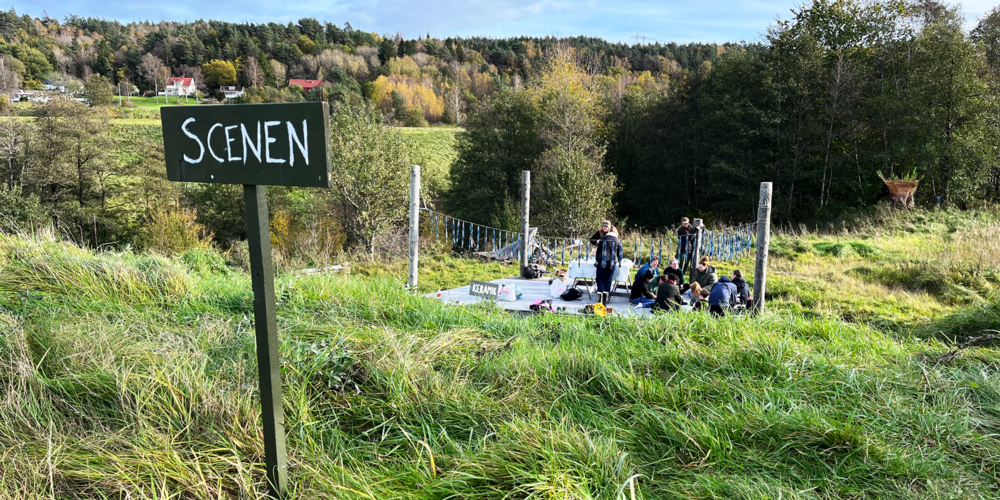
The second subproject took place in Linnarhult in north-eastern Gothenburg and focused on co-crafting—making things together. Participating young people built a simple temporary stage and cultivated willow intended for future construction materials.
Project leader and design researcher Helena Hansson is pleased with the outcomes, particularly the fact that the participation methods genuinely worked.
−Sometimes participation becomes little more than a box-ticking exercise, but here we achieved real involvement. The young people were active co-creators throughout the entire process, she says.
What contributed to that?
− Among other things, we developed tools and methods that physically required collaboration. For example, we used a two-person saw that ideally required four people to operate, and when we were driving piles into the ground, at least eight people had to work together. We also made sure to start making things immediately, so that change became tangible here and now, which sparked interest in continuing.
Both subprojects are now formally completed. Some of the tools were exhibited at the Röhsska Museum in May, and two methodological guides are currently being developed.
− They will be useful for everyone from students to municipal commissioners—really anyone working with questions related to designed living environments, says Hansson
Gave feedback
A Co-Created Artistic Intervention’s Contribution to Social Engagement and Sustainable Living Environments is the third Formas-funded project at HDK-Valand. It explores the role of design, art and architecture in the creation of a new residential care home and spans the entire building process.
The aim is for residents themselves to participate in shaping their living environment.
− Since we did not know who would move into the new care home, we began with a pilot study at another facility. We wanted to understand what the residents considered important in a home environment. They gave feedback on colours and materials, looked at images, sketches and drawings, and also created drawings themselves, says artist and researcher Maja Gunn, who leads the project.
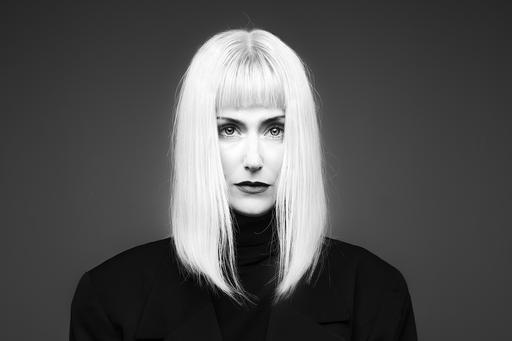
Because of delays caused by the pandemic, the project has been extended. While cautious about drawing final conclusions, Gunn highlights several insights, including the value of collaborating across disciplines.
−It brings challenges, but it also creates dynamism and discussion, she says.
She also advocates rethinking the kinds of art displayed in public and communal spaces, and involving residents more directly in the selection process.
− Many older adults spend a great deal of time in these environments. That makes it important what hangs on the walls. We noticed a tendency to choose neutral art that is assumed to appeal to everyone, but that means missing out on the richness and diversity that different artistic expressions and materials can bring to a space.
Positive values created by art
Formas is pleased with the outcomes of the projects. While the organisation has long supported research related to the built environment, this was the first time it explicitly invited artists and artistic research to participate.
− One of our goals was to generate new knowledge about what art can contribute to sustainable societal development. We have certainly achieved that. I would say these projects have increased our understanding of the positive values created by art, its importance for wellbeing, and have helped us articulate those contributions, says Kristina Laurell at Formas.
By: Camilla Adolfsson
In 2020, the Swedish Research Council Formas awarded approximately SEK 40 million to ten research projects across Sweden, three of which are affiliated with HDK-Valand.
The call was the first of its kind and was carried out in collaboration with the National Board of Housing, Building and Planning (Boverket), ArkDes, the Swedish National Heritage Board, and Public Art Agency Sweden. It was primarily aimed at researchers and practitioners in art, architecture and design, and required that at least one artist be included in each project.
Want to learn more? In 2024, a conference brought together all ten funded projects and highlighted discussions with experts in the field.
Ten Research Projects on Art in Designed Living Environments – Final Conference


