CERGU Welcomes Three New Postdocs
CERGU introduces the three new international postdoctoral researchers who were recruited during 2025.
In 2025, CERGU announced a call for new postdoctoral researchers in European Studies. The response was remarkable: more than 140 applicants from around the world applied for the opportunity to work at the Centre for European Research at the University of Gothenburg (CERGU).
The first new postdoc to begin is Benjamin Rosher, who is employed by the School of Global Studies, in the Faculty of Social Sciences. CERGU's research administrator Angie Sohlberg spoke with Ben about his background and future plans. Each week we will introduce you to one of the new postdocs who has joined the network. Next week, we will introduce Tobias Wuttke, followed by Natalia Volvach. Welcome!
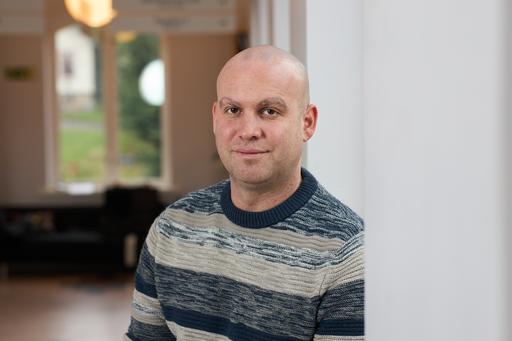
Angie Sohlberg: Welcome to CERGU and congratulations! We received over 140 applications for three CERGU postdoc positions, and you made the final cut! How did you hear about CERGU and what made you apply for a postdoc here?
Benjamin Rosher: My partner, Zoë, sent me the advert for the position. The interdisciplinarity and thematic nature of the centre really spoke to me, particularly its focus on Cultural Borders and Mobility and Migration in Europe, both of which have always sat at the heart of my research.
AS: Where were you before you became a CERGU postdoc, and what were you doing?
BR: I completed my PhD at Queen's University Belfast where my thesis examined what "taking back control" of the Irish border after Brexit meant in practice. Before moving to GU I worked as a Postdoctoral Researcher at the University of Liverpool on the Northern Ireland General Election Survey, and at the University of Glasgow as an affiliate researcher.
AS: The CERGU network is very international and multidisciplinary. What do you hope to contribute to and gain from being a part of a centre with a large, international group of researchers from lots of different disciplines?
BR: One of my main research interests is ontological security studies. I am co-founder of the Ontological Security Research Network alongside Lauren Rogers and hope to be able to bring some speakers in for guest sessions and workshops. I am finding that being based across CERGU and the School of Global Studies is giving me incredible opportunities to learn from border and migration scholars who approach their research from a variety of backgrounds and are opening up my research to new perspectives.
AS: Onto your postdoc project. Tell us briefly what your plan is for your two years as a CERGU postdoc.
BR: My main project examines affective attachments to borders. Simply put, for reasons of conflict, globalisation, and climate change, the ways in which we currently organise and enforce state borders are unsustainable. Nevertheless, our current border imaginaries provide a sense of belonging and ontological security for much of the population. Through this project I am seeking to understand the emotional and ontologcal security needs that borders fulfill in order to begin to conceive of alternative, less violent, border(less) imaginaries that are still able to satisfy these emotional needs.
AS: And finally, what do you like to do in your free time?
BR: I spend most of my free time swallowed by existential despair over the state of the world. I also swim a bit.