
Among the Sihanaka, the divine is physically present
For the Sihanaka people of Madagascar, the divine is not found in the heavens – but embodied in things like wetlands, rice, and rituals. A new doctoral thesis from the University of Gothenburg explores how to understand and represent worlds that don’t fit neatly into familiar Western concepts.
For his doctoral thesis in Social Anthropology, Anders Norge investigated ritual and cosmology among the Sihanaka of Madagascar, a rice-farming people living in the wetlands around Lake Alaotra. This is the first full-scale anthropological study of the Sihanaka society within Western research.
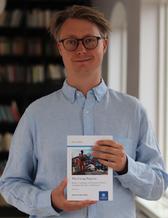
“My study focuses on the Malagasy concept of hasina, which can be translated to divine power. At the heart of the thesis is Feraomby, a large-scale royal fertility ritual, through which hasina is gathered, preserved and transmitted. These ritual acts are central to ensuring rice abundance, social cohesion, health and collective wellbeing,” says Anders Norge.
Power in places, plants and rituals
The study concludes that Sihanaka cosmology is fundamentally immanentist - meaning that divine power is not seen as external or transcendent, but as something embedded in the world itself. This divine power is embodied in places, bodies, plants, water, and actions. It is accumulated, preserved, and transmitted through rituals, but can never be fully controlled or understood.
“While hasina is invisible and ultimately unknowable, it’s handled through ritual: through song, possession, water aspersion, and the gathering of potent wetland plants,” explains Anders Norge.
He has carried out six ethnographic fieldworks in the community of Anororo between 2015 and 2022. He lived with a Sihanaka host family, learned Malagasy, participated in daily life and ritual cycles and worked closely with elders and ritual experts.
“Between fieldworks, I also delved into historical sources, such as explorers’ accounts, missionary records and colonial archives. This helped me reconstruct how the Sihanka world has taken shape over time,” says Anders Norge.
Despite centuries of contact with outside influences - including Indic, Islamic, Christian and colonial powers - the Sihanaka have maintained their core cosmological structure. By tracing their ritual life back to Austronesian origins, Anders Norge shows how hasina remains the central force animating the Sihanaka world.
When Western concepts fall short
In addition to providing a detailed account of how ritual and cosmology continue to structure everyday life of the Sihanaka people, the study also brings light to a broader anthropological challenge: How to understand and represent world’s that don’t fit neatly into familiar Western categories.
“Rather than forcing concepts like ’religion’ or ’the supernatural’ onto Sihanaka life, I explore what we learn by working with local terms like hasina and by using new theoretical ideas such as immanentism. I think these approaches offer a more accurate and respectful way of engaging with cultural realities that are very different from our own. It suggests new ways of thinking about how humans relate to power, place and the unseen,” says Anders Norge.
Text: Linda Genborg
Anders Norge defended his doctoral thesis The Living Papyrus: Ritual, Cosmology and Immanent Divinity among the Sihanaka of Madagascar on 9 May 2025 at the School of Global Studies, University of Gothenburg.
Abstract of the thesis is uploaded to the University of Gothenburg's database GUPEA:
