
Meet Izabella – exploring Applied Biostatistics in Sweden
She was looking for a way to apply her math skills in a meaningful way. That journey brought Izabella from the USA to Gothenburg, a city that soon started feeling like home. In this interview, she shares what it’s like to study, live and grow as an international student in Sweden.
Hello Izabella! What made you apply to our Master's Programme in Applied Biostatistics?
“I wanted to apply math in a meaningful way. When I was looking through the programme page, the courses seemed super interesting to me, and I wanted to learn more about the statistical methods and how they’re practically used.”
Why did you choose to study in Sweden?
“Because Sweden is great! I think it’s a really good place for international students. Although you can take Swedish classes for free, you can still communicate in English for very important thing.”
What’s it like to study in Sweden, compared to your home country?
“In Sweden, you can call teachers by their first name, which took some time to get used to. The study periods are much shorter (about 2 months), and the classroom is very interactive and encouraging!”
What’s the best/most challenging part of studying your programme?
“Learning more about statistics! Throughout the programme, concepts start to click more and more. We have a cosy number of people in class, so we really get to know each other and the teachers as well. The most challenging part is studying for the exams. They come quite frequently, and it requires a lot of revision after the lectures, but it is very rewarding when you feel you’ve mastered a concept.”
What’s the best thing about your teachers?
“Our teachers are very knowledgeable and involved in research, so it really feels like you are getting the information from an expert. I find it very inspiring to hear the lectures, and they are very willing to help you understand, even if it takes a few explanations.”
Is the programme easier or harder than you expected? Do you need to be an expert in maths to manage?
“The programme is challenging and theoretically intense, but if you sit with the material and have a bit of passion for the topic, it is very manageable. You definitely don’t need to be an expert in maths as long as you’re willing to ask questions and have the will to learn.”
Have you participated in statistical consulting at Akademistatistik? Tell us more!
“Yes! We have had the opportunity to join consulting meetings, where statisticians advise on clients’ research questions. This is where all the course material gets to shine, and it’s really motivating when you hear a concept from class mentioned in the meeting! I think it’s one of my favourite parts of the program.”
What’s student life like?
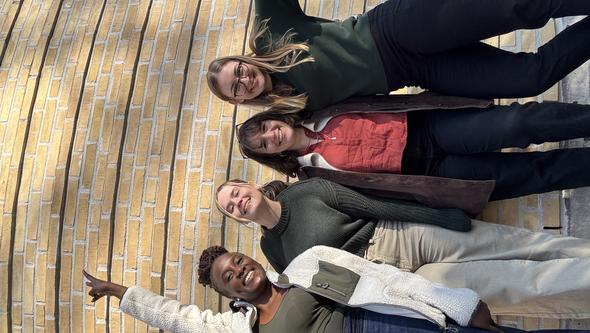
“The city has so much to offer, cafés, parks, accessible nature, and rooftops that have great views. I recommend exploring “touristy things“ often with your friends. You can also join affordable gyms with student discounts, which offers sports classes and 24/7 access. This is where I met a lot of my friends!”
Any advice for someone thinking about applying to the programme?
“Don't worry if you don't know everything about statistics. The teachers are very willing to help you! The classroom is where you can ask a lot of “dumb“ questions, as our teachers say, “there's no such thing as a dumb question!”
What do you wish someone had told you when you were a new student?
“Move in early if you can! It gives you time to get a personal number, bank account, etc. Don’t be afraid to ask people for help, especially your Swedish classmates. They know a lot about how the country works! It may take some time to adjust, but very soon it will feel like home.”
What do you want to do in the future?
“In some way or another, I want to continue working with statistics and keep learning. I’d like to do a PhD to dive deeper into the methods, and I’m also open to work as a biostatistician or consultant. I really enjoy my life in Sweden and hope to stay here after the Master's.”
PHOTOS: PRIVATE
Izabella’s tips: Five things all student in Gothenburg should do
1. Join a gym/class/group or some hobby that gets you out of the house.
2. Take your vitamin D tablets in the autumn and winter.
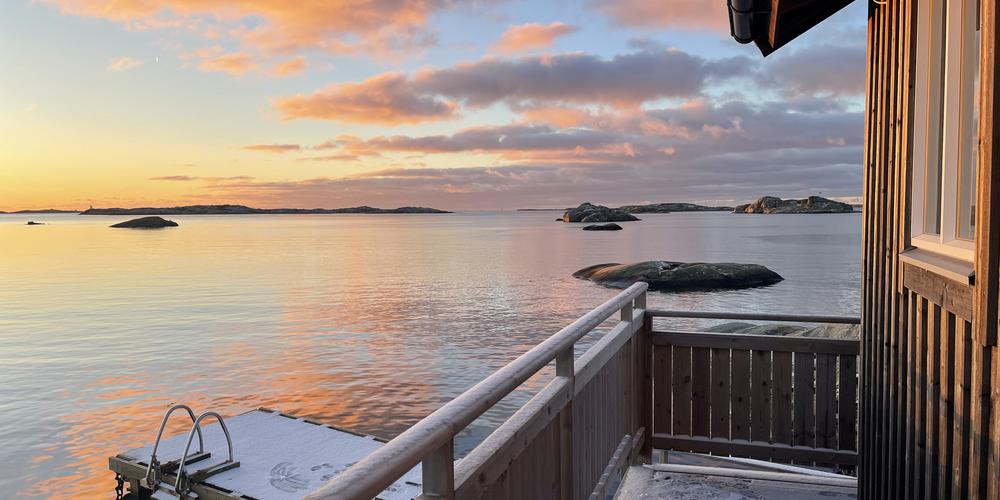
3. Do a sauna and dip at one of the islands, like Hönö. Or a sunny day at Delsjön or Askim!
4. Go to the toilet on Draken rooftop, it has a nice view!
5. Make it a goal once a week to explore one new place, and soon Gothenburg will feel like home!
About Izabella
From: USA
Currently studying: Master's Programme in Applied Biostatistics
Previous studied in her home country: Mathematics
Izabella in three words: Optimistic, curious, active.
Leisure interests: Baking, volleyball, climbing, hiking, café-hopping