She researches how learning can change society
When there are no ready-made solutions, people need to learn together in a focused way. This is one of the starting points for Annalisa Sannino’s research into how collectives can develop the agency to tackle difficult societal challenges. She has now been appointed this year’s honorary doctor at the Faculty of Education, University of Gothenburg.
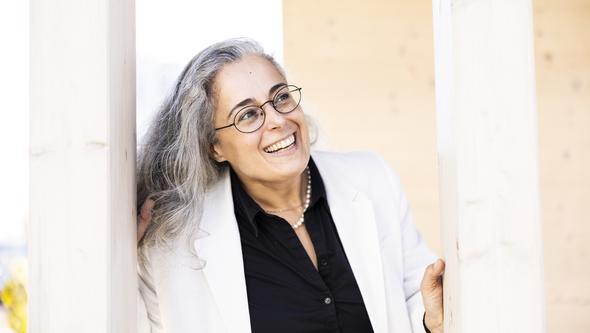
– Learning happens everywhere. The type of learning that I am particularly interested in is learning to find and implement solutions that are not yet known, says Annalisa Sannino.
She is Professor at Tampere University in Finland and conducts research on learning, collective agency and processes of change. One of the key concepts in her work is collective transformative agency: how people can analyse their activities together, identify resources and find ways forward.
– We live in a world in which too often we feel powerless in the face of frightening developments in the world and even in our own immediate contexts of life and work. This happens because we have been conditioned to think and act as isolated individuals, she says.
Learning in the face of complex problems
At the heart of Annalisa Sannino’s research is how collectives can take on difficult, sometimes uncomfortable, challenges together in activities that matter both to individuals and to society.
One example is her work to eradicate homelessness in Finland. This is a societal challenge that requires both financial commitments and collaboration across several areas, including housing, healthcare, social welfare and the criminal sanctions sector.
– Homelessness is a very controversial challenge in society because obviously no one would like to be exposed to this phenomenon in the streets, yet the tendency is to stigmatise those who end up homeless, says Annalisa Sannino.
In her research, she has worked with practitioners at different hierarchical levels and in different sectors to help develop shared solutions.
– The theoretical and methodological tools my colleagues and I develop aim at supporting these cross-sectoral efforts both vertically and horizontally. Overall this is shaped as a collective process of learning and will formation, she says.
Helping people regain agency
Annalisa Sannino has collaborated with researchers at the Faculty of Education for many years. She has previously been a visiting professor at the Department of Education and Special Education, IPS, and has recently begun a new visiting appointment at the same department.
She believes that educational research has a particular responsibility at a time marked by inequality, segregation and sustainability crises. Research needs to help people move out of passivity and regain agency.
The responsibility of optimism
As honorary doctor, she wants to continue developing her collaboration with researchers and students at the Faculty of Education. One issue she is particularly keen to explore further is what she calls the responsibility of optimism.
– Our world is letting down new generations and their right to the future. Education has never been more important than today, says Annalisa Sannino.
To doctoral students and early-career researchers, she wants to pass on two pieces of advice:
– Keep your eyes on the prize, the prize being your research as a means to contribute to the making of a world in which human beings and ecosystems can flourish. And build on the shoulders of giants, meaning on the knowledge laid down by previous researchers you look up to, says Annalisa Sannino.
Text: Ragnhild Larsson
