![[none]](/sites/default/files/styles/100_10_4_xlarge_2x/public/2026-07/Lina%20Bergman%201%20bred%20topp_0.jpg?h=4187b0f8&itok=knsS3Iiy)
Lina Bergman is changing the future of preeclampsia care
When Lina Bergman first became interested in preeclampsia, she was advised to choose a different research field. The disease could neither be predicted nor treated—and that had been the case for more than a century. Today, she is helping move the field forward.
Lina Bergman is the recipient of the 2026 Eric K. Fernström Award for Young, Outstanding Researchers at the University of Gothenburg.
Preeclampsia is one of the most common and serious disorders of pregnancy. Researchers now know that preeclampsia affects not only pregnancy but also increases a woman's long-term risk of high blood pressure, cardiovascular disease, neurological disorders and metabolic diseases. Even so, women who have had preeclampsia are rarely followed after pregnancy. There is still no effective treatment. In many cases, the only way to protect the mother is to deliver the baby preterm.
“I have always believed that women's health is a matter of equity. We can't take continued progress for granted. In parts of the world including high income countries, we're actually moving backward, which makes these issues even more important,” says Lina Bergman.
Roughly one in three women who have had preeclampsia develops high blood pressure within a year, and their long-term risk of heart attack, stroke, and heart failure is two-three times increased.
“If men had a risk factor that caused three out of ten to develop high blood pressure within a year, I think we would know much more about it than we do today.”
For Lina Bergman, changing that has become a powerful driving force.
![[none]](/sites/default/files/styles/50_10_6_small_1x/public/2026-07/Lina%20Bergman%201%20juli%202026.jpg?h=a6678b61&itok=o5d_GQLe)
A field with few answers
Becoming a physician was not an obvious choice for Bergman, who did not come from a family of doctors. At first she enrolled in an engineering program at Chalmers University of Technology but quickly realized it was not the right path for her. Instead, she entered the medical program at Umeå University, where she discovered Obstetrics—a field that demands rapid decision-making while allowing physicians to care for patients throughout pregnancy and beyond.
During her specialist training in Falun, she encountered women with preeclampsia almost every week. At the same time, her interest in research continued to grow.
But the advice she received was discouraging. The most severe cases were rare in Sweden, there were too few patients to study, and the prospects for developing new treatments seemed limited. She was told she would be better off choosing a different research field.
“It is one of the most common disorders of pregnancy, yet we still can't predict which women will become seriously ill, and we have no effective treatments. I couldn't understand why we had simply accepted that.”
Collaboration finds answers
Bergman eventually earned her PhD at Uppsala University. Her dissertation focused on biomarkers that could reveal how preeclampsia affects the brain. But there were simply too few severe cases to provide clear answers.
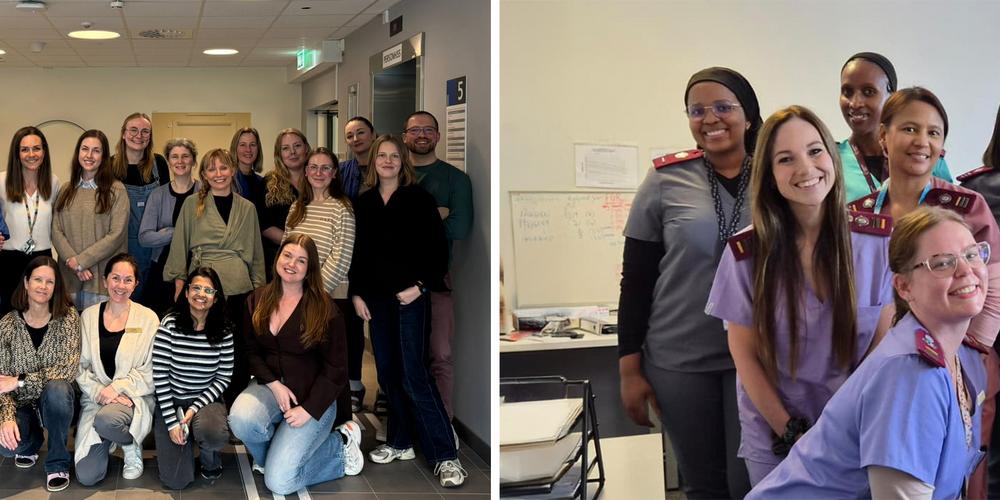
To better understand the disease, she needed access to more patients than the Swedish healthcare system could offer. That marked the beginning of a collaboration with Stellenbosch University in Stellenbosch, South Africa, which has since grown into something much larger.
Today, Bergman is a professor at Stellenbosch University. Together with her South African colleagues, she leads a clinical research group at Tygerberg University Hospital and has built a biobank containing samples from approximately 3,000 women with preeclampsia and eclampsia. The collection now supports multiple international research projects.
Moving the field forward
The research team is investigating whether preeclampsia can cause lasting brain injury and whether blood biomarkers can detect brain involvement before a woman experiences her first seizure. To carry out these analyses, the group collaborates with one of the world's leading neurochemistry research groups in Gothenburg.
At the same time, major clinical trials are underway. A Nordic treatment trial led by Bergman is investigating whether the diabetes drug metformin can slow disease progression and prolong pregnancy in women with early-onset preeclampsia. Meanwhile, entirely new drugs designed to protect blood vessels and the brain from disease-related damage are also being tested within her international group.
Hope on the horizon
When Bergman talks about her research, she often comes back to one thing: time. Even small gains in time can change lives.
Prolonging a pregnancy by just one week can make all the difference for an extremely preterm baby. Identifying a woman just a few days earlier may help prevent serious complications. Detecting brain involvement before the first seizure occurs may give doctors time to intervene.
“Progress is moving remarkably fast now. After decades without any real breakthroughs, we're beginning to see both better diagnostics and new treatments on the horizon. I believe that within ten years we'll have drugs that can change the course of the disease. Wherever research receives attention and resources, progress follows.”
Preeclampsia is a serious disorder of pregnancy that affects approximately 3–5 percent of pregnancies. It is characterized primarily by high blood pressure and damage to one or more organs, most commonly the kidneys. The disease can progress rapidly and poses serious risks to both mother and baby.
Eclampsia is the most severe form of preeclampsia. It causes seizures triggered by the disease. Although eclampsia is rare in Sweden, it remains a major cause of maternal mortality worldwide.
There is currently no cure for preeclampsia. The only definitive treatment is delivery of the baby and the placenta.
