Workshop on Economic History and Business History of the Global South
The Workshop on Economic and Business History of the Global South took place at the Universidad del Pacífico in Lima, Peru, bringing together early-career researchers and established scholars from across the world, to present and discuss their work. Svante Prado and Raisa Rubio represented the School of Business, Economics and Law.
Organized by the Academic Department of Humanities at Universidad del Pacífico in collaboration with the Young Scholars Initiative, the event provided a platform for master’s and PhD students, as well as early postdoctoral researchers, to present and discuss their work on the economic and business history of the Global South. Participants showcased a broad array of methodological approaches, reflecting the diversity and depth of research in the field.
Dynamic and supportive environment for scholarly exchange
The aim of the workshop was to foster academic development among emerging scholars, and the presenters received in-depth feedback from experienced academics representing a range of institutions and research specializations. This mentorship-driven format created a dynamic and supportive environment for scholarly exchange.
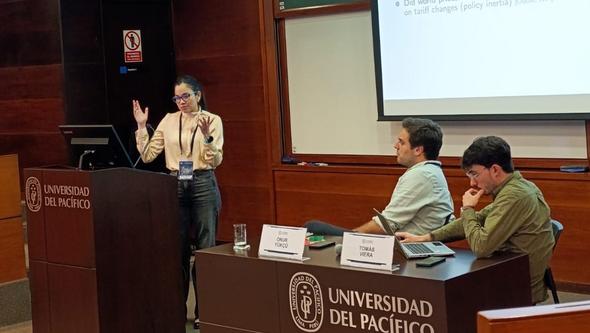
A total of nine Doctoral students presented their ongoing research. One of them was Raisa Rubio, who is a Doctoral student in Economic History at the School of Business, Economics and Law at the University of Gothenburg. She presented her research on “Real Protection and Policy Inertia in Peru, 1900–1940”.
Keynotes and Discussions on Global Economic History
The workshop also included keynote speeches by Svante Prado, Associate Professor of Economic History at the School of Business, Economics and Law, University of Gothenburg, and Beatriz Rodríguez Satizábal from the Universidad del Pacífico, both of whom provided insights into current debates and future directions in global economic history. Svante Prado's speech was more specifically about productivity in an economic historical perspective.
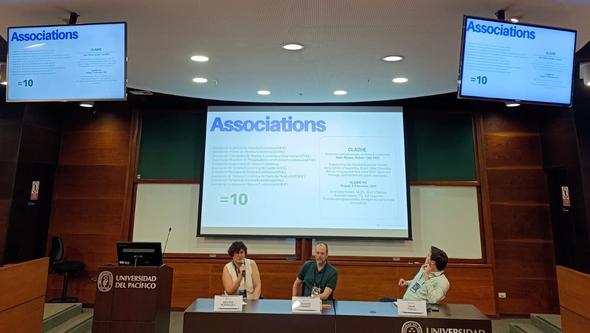
Svante Prado was also a Senior Discussant and participated in a roundtable discussion on the status of the subject in Europe and Latin America, publication strategies, and the job market for younger researchers.
Promoting research and dialogue around economic history and business history
The workshop facilitated collaboration and networking among participants, strengthening international academic connections, and marks another step in advancing research and dialogue on the economic and business histories of regions in the Global South, highlighting the importance of inclusive and globally diverse perspectives in the field.