
New research consortium to develop global standards for midwifery education
How can midwives around the world be trained in both clinical skills and person-centred care, despite widely differing conditions? Researchers at the University of Gothenburg will explore this question together with organisations including WHO, the United Nations Population Fund (UNFPA) and the International Confederation of Midwives.
Both person-centred care and simulation are already included in international frameworks for midwifery education. However, there are no common standards that bring the two approaches together and provide guidance on how they can be applied across different education and healthcare systems.
The new Global Research Consortium for Person-Centred Care and Simulation in Midwifery Education and Practice will bring together research and experience from different parts of the world to develop such standards. A key question is what can be shared across midwifery education globally and what needs to be adapted to local contexts.
Experiences from the Democratic Republic of the Congo
The University of Gothenburg’s involvement builds on a long-term research collaboration in the Democratic Republic of the Congo. Researchers from the Institute of Health and Care Sciences and the University of Gothenburg Centre for Person-Centred Care (GPCC), together with local and international partners, have studied how person-centred care and simulation can be used in midwifery education.
Person-centred care places the woman’s narrative, needs and participation at the centre of care. Simulation also allows students to practise clinical situations, communication and decision-making in a safe environment.
The research shows that combining the two approaches can allow students to practise both clinical and relational skills. At the same time, education is shaped by cultural, organisational and other contextual factors.
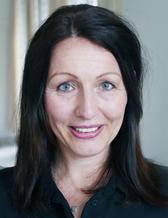
“We saw in the Congo that learning clinical skills alone is not enough. Simulation also gives students the opportunity to practise listening and communication, build partnerships and involve women in decisions about their care. This raised the question of how we can take these experiences further and create the conditions for integrating person-centred care and simulation into midwifery education in very different parts of the world,” says Malin Bogren, midwife and Associate Professor at the Institute of Health and Care Sciences, University of Gothenburg.
Designed for different healthcare and education systems
The consortium’s first joint research programme will develop the standards and guidance on how they can be used in practice. The work will be carried out through an international consensus process involving experts from different parts of the world.
“We cannot develop global solutions from a single university or based on experience from just one country. If the standards are to be relevant in Sweden as well as, for example, the Democratic Republic of the Congo, Rwanda or Bangladesh, they need to be developed together with people representing different education systems, healthcare systems and levels of resources,” says Malin Bogren.
Women and others who use maternity care services will be involved from the outset and throughout the process, including in setting research priorities and developing and evaluating the standards. At the same time, the researchers will study what is needed for the standards to work in different contexts, what needs to be adapted and which factors affect their long-term use.
“It is exciting that a research question that emerged from our work in the Democratic Republic of the Congo is now bringing together some of the leading international organisations in midwifery education and maternal health. Our ambition is not simply to produce a document containing global standards. We want to generate knowledge about how they can actually be put into practice in education and care and make a difference for midwives, women and families,” says Frida Temple, midwife and doctoral student at the Institute of Health and Care Sciences.
Malin Bogren, midwife and Associate Professor at the Institute of Health and Care Sciences, University of Gothenburg
Ewa Carlsson-Lallo, nurse and Associate Professor at the Faculty of Caring Science, Work Life and Social Welfare, University of Borås
Frida Temple, midwife and doctoral student at the Institute of Health and Care Sciences, University of Gothenburg