Hans Linderholm elected to the Royal Swedish Academy of Sciences – reading the history of climate in tree rings
What can tree rings tell us about Earth's climate thousands of years ago? Hans Linderholm, Professor of Physical Geography at the University of Gothenburg, has devoted much of his research career to answering this question. He has now been elected a member of the Royal Swedish Academy of Sciences.
"It is a tremendous honour for me and recognition that the climate research we conduct at the University of Gothenburg is relevant," says Hans Linderholm.
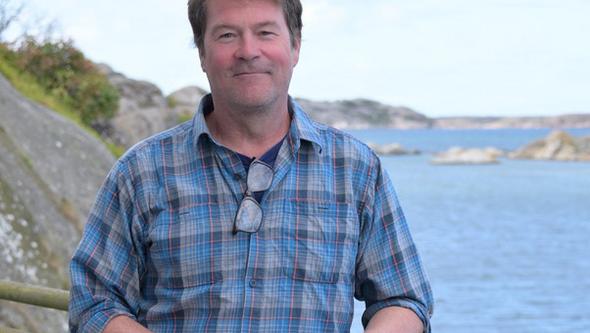
By studying tree rings, Hans Linderholm and his colleagues can investigate how the climate has varied throughout history in different parts of the world. Tree growth is influenced by factors such as temperature, drought and precipitation. These conditions leave traces in the growth rings, providing clues about what the climate was like long before modern meteorological measurements existed. This research method is known as dendrochronology
"Information about past climates can help us understand how the climate system functioned before human activities began to influence it significantly," says Hans Linderholm.
By using high-quality, high-resolution climate data extending further back in time than meteorological observations, researchers can also improve climate models, making them better at simulating future climate conditions.
From volcanoes to tree rings
His interest in nature dates back to childhood, as does his fascination with history. But it was not always clear that tree rings would become the focus of his research.
"When I first became interested in geoscience, I wanted to study volcanoes, then glaciers. It was when I did my master's thesis in dendrochronology that I felt I had found the right field."
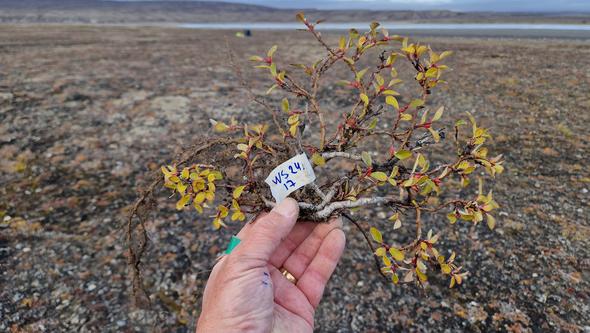
His research has taken Hans Linderholm to some of the most remote places in the world, from the Arctic to tropical Africa. One place that has left a particularly strong impression on him is northern Greenland.
"I have a particular fondness for open, barren landscapes. The fact that shrubs can grow there and live for more than 100 years, despite short, cold summers and grazing by hares and musk oxen, is fascinating and demonstrates remarkable resilience. And the fact that their incredibly thin growth rings can provide information about the conditions in which they grew is really exciting."
International collaborations and polar research
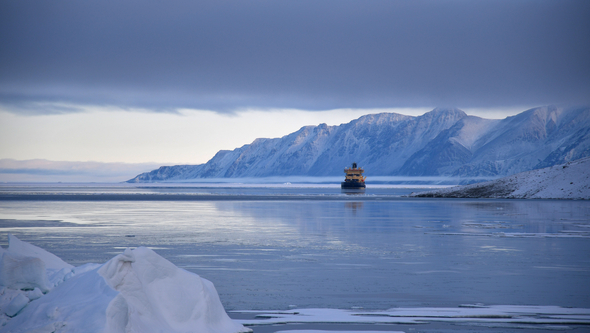
Hans Linderholm has participated in several expeditions to the Arctic, including aboard the Swedish icebreaker Oden. He leads the Sino-Swedish Centre for Tree-Ring Research and has received an award for international collaboration from the China Dendro Society. He is currently Director of Sweden's first national graduate school for polar research, the School of Excellence in Arctic and Antarctic Learning (SEAL). In 2003, he founded the Gothenburg University Laboratory for Dendrochronology (GULD).
As a new member of the Royal Swedish Academy of Sciences, he joins its Geosciences Class.
The Royal Swedish Academy of Sciences (KVA) was founded in 1739 and is an independent organization dedicated to promoting research and the importance of science in society. It has approximately 650 Swedish and international members, organized into ten scientific classes.