
Greenland through an artist’s eyes aboard R/V Skagerak
‘I wanted to understand the human motivation behind the research, not just the science.’ When R/V Skagerak set course for south-east Greenland, artist Siddharth Jain joined the vessel to document a research expedition investigating melting glaciers – sketchbook in hand and his attention focused on the people, the research and life at sea.
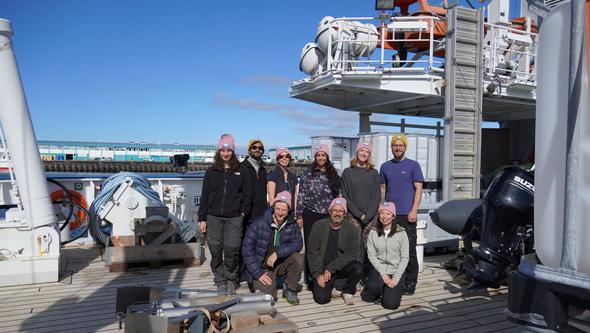
Siddharth Jain joined the two-week expedition aboard the University of Gothenburg’s research vessel R/V Skagerak as the artist on board. While the researchers worked around the clock collecting water, plankton and sediment samples, he followed their work with pen and watercolour.
Art can do things that data and scientific papers often cannot do on their own.
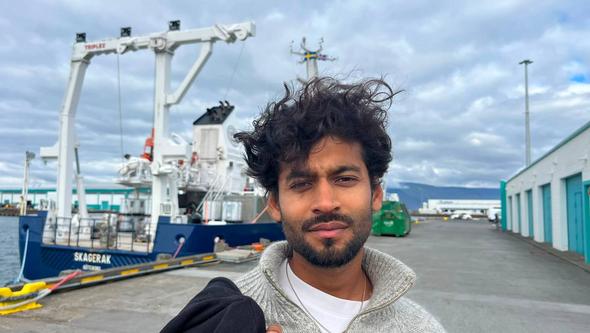
The expedition was part of the GREENCARB research project, which investigates how glacier melt affects the carbon cycle, marine ecosystems and greenhouse gases in Greenland’s fjords.
‘My role was to document the work through sketches – not as a scientist, but as an observer. I tried to translate the research, the people and the experience into something accessible to a wider audience,’ says Siddharth Jain.
What made you want to join the expedition?
‘I was curious about the climate scientists’ work itself – not just the data, but their why. What drives them? What gives them hope? What does fieldwork actually look like?
As an artist, I wanted to understand the human motivation behind the research, not just the science.’

From Reykjavik towards Greenland
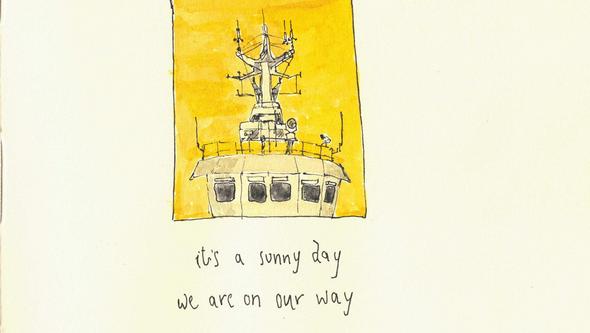
One of Siddharth’s first sketches was made on 26 August, the day R/V Skagerak left Reykjavík and set course for Greenland.
Leaving Reykjavik (26 August 2026)
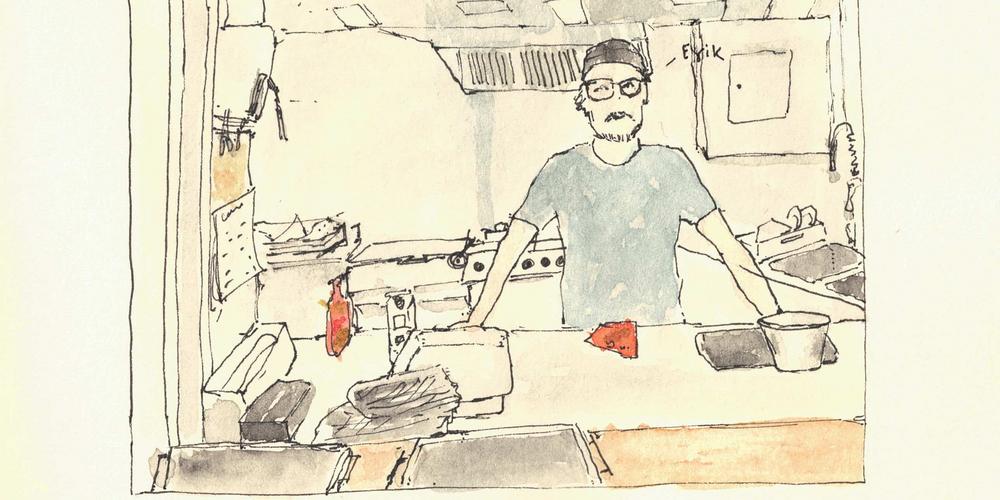
Erik in the Kitchen (28 August 2026)
Another early sketch shows the ship’s cook, Erik, in the galley on board.
How did being aboard R/V Skagerak in Greenland’s fjords influence the way you observed and worked?
‘Being on the ship – and even helping with some of the sampling – pulled me into the nitty-gritty first, and then allowed me to zoom back out to the bigger picture.
It was my first long stretch at sea, seasickness included. But the crew’s support kept me creative, curious and engaged throughout the expedition.’
Seeing the research through a sketchbook
Several of Siddharth Jain’s sketches capture the scientific work taking place on board. One shows the view through the opening of the ship’s hangar as the CTD rosette is lowered into the water for sampling.
‘I was fascinated by the frame created by the opening of the hangar – the water, the landscape and the winch lowering the CTD. It was my first time seeing the CTD in action and really grasping what we were there to do.’
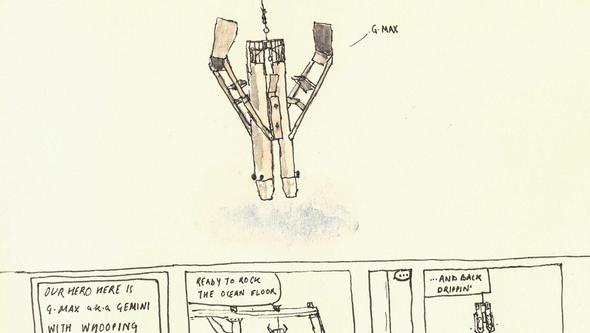
In Mission Sediment Sampling, the focus shifts to collecting sediment from the seabed.
Mission Sediment Sampling (30 August 2026)
What caught your attention when deciding what to sketch?
‘I was drawn to moments that helped me understand what was actually happening on board. Sometimes that was the scientific work itself, but it could also be the people, the places where we met, or the landscape around us.
Drawing became a way of slowing down and observing details that might otherwise disappear when so much is happening at once.’
The landscape beyond the windows
Greenland’s landscape became a recurring subject during the expedition.
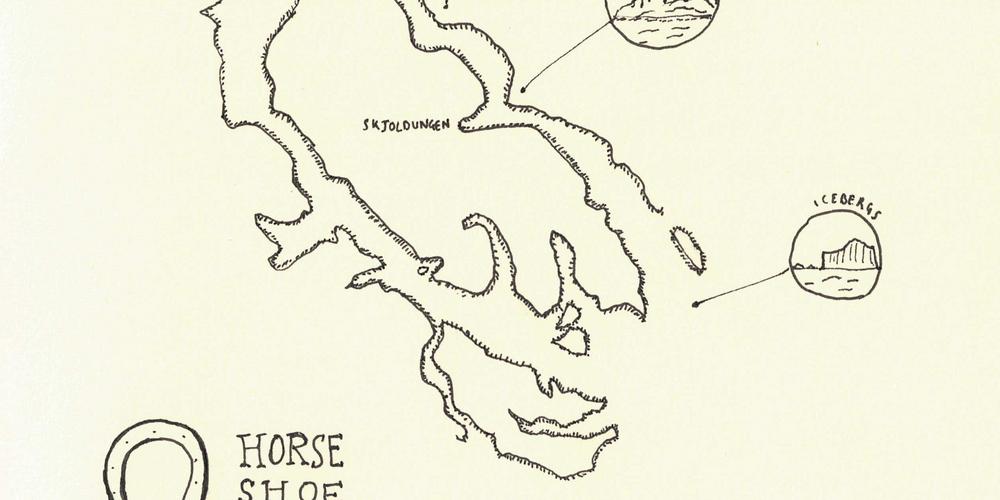
In Horse Shoe Fjord, Siddharth depicts a place where R/V Skagerak spent a significant amount of time sheltering from storms at sea.
Horse Shoe Fjord (1 September 2026)
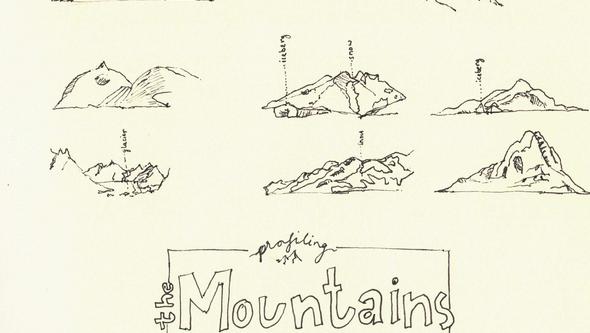
In Mountains that saw us move, he captured the mountains the vessel passed.
Mountains that saw us move (2 September 2026)
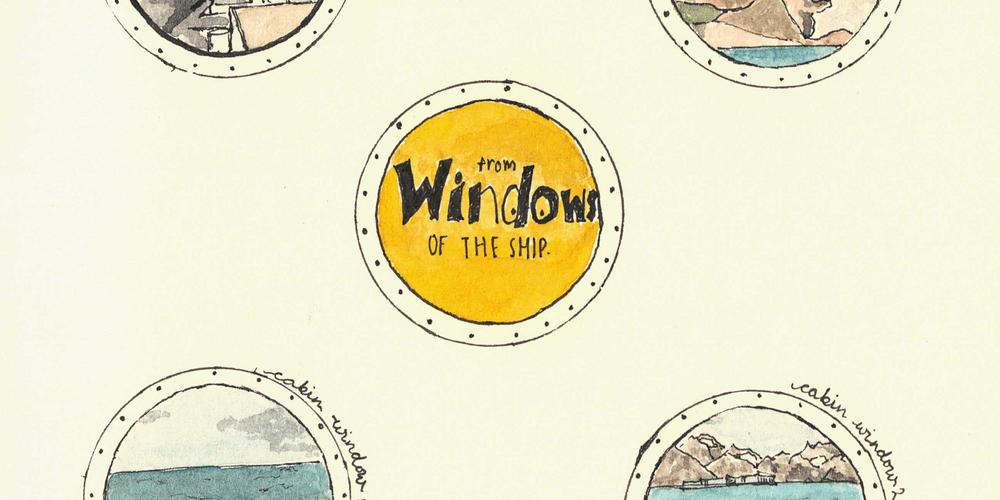
In Windows of Skagerak, he brought together some of the landscapes and seascapes seen through the vessel’s windows.
Windows of Skagerak (4 September 2026)
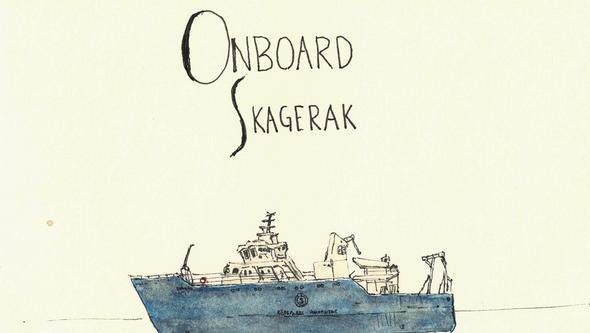
And in Onboard Skagerak, the research vessel itself became the subject.
Onboard Skagerak (3 September 2026)
What do you hope the expedition and these sketches might lead to?
‘I’m imagining a booklet – part documentation, part open questions. An attempt to capture the essence of the research alongside what was happening in my own mind and body during the expedition.
Whether it grows into an exhibition or an ongoing collaboration with the researchers is still open.’
What do you think can emerge from bringing art and science together?
‘Art can do things that data and scientific papers often cannot do on their own. It can build a narrative, evoke feeling and bridge the gap between complex science and people outside the research community.
It is a way of making complex research more visually and emotionally accessible.’
Artwork © Siddharth Jain. Reproduced with permission.
By: Agnes Faxén
Expedition: East Greenland Fjords Carbon Budget – GREENCARB
Location: Fjords of south-east Greenland
Dates: 26 August–9 September 2026
Expedition leader: Julie Lattaud, Stockholm University
Research vessel: R/V Skagerak, University of Gothenburg
GREENCARB investigates how glacier melt affects carbon cycling, marine ecosystems and greenhouse-gas exchange in Greenland’s fjords. During the expedition, the researchers collected water samples, plankton and sediment cores to trace carbon from glacial meltwater through the fjords’ water masses, ecosystems and sediments.
The project is a collaborative initiative led by researchers at Stockholm University. Ship time aboard R/V Skagerak was funded through SWERVE – the Swedish Research Vessel Infrastructure for Marine Research.