
Elizabeth Schepke named Childhood Cancer Researcher of the Year
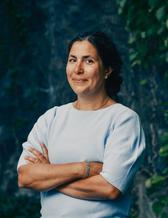
For the second year in a row, the Swedish Childhood Cancer Fund’s Childhood Cancer Researcher of the Year award goes to a researcher at the University of Gothenburg. Elizabeth Schepke studies how late complications after treatment for childhood brain tumors can be prevented and recovery improved.
Elizabeth Schepke is a researcher in pediatrics at the Institute of Clinical Sciences and senior consultant at the Childhood Cancer Centre at Sahlgrenska University Hospital. Her research focuses on children and young people treated for medulloblastoma, the most common malignant brain tumor in children.
Today, 88 percent of children diagnosed with cancer survive. However, both the disease and its treatment can cause complications long after the cancer is gone.
“We have become increasingly successful at curing children with cancer, but the next major challenge is to ensure that they can also live long and as healthy lives as possible afterwards,” Elizabeth Schepke tells Sahlgrenskaliv.

Exercise and biological aging
In the MOVE study, children and adolescents treated for medulloblastoma take part in an individualized home-based exercise program with a physiotherapist via video. The researchers are investigating whether exercise can improve physical function, motor skills, and quality of life, among other outcomes. The model could also make rehabilitation more accessible, regardless of where the children live.
The research also includes epigenetic analyses to investigate whether cancer treatment can accelerate biological aging. The researchers are also studying whether physical activity can influence this process. In the longer term, the findings could help prevent or reduce late complications after treatment.
Research rooted in patient care
Elizabeth Schepke combines her research at the University of Gothenburg with her work as a senior consultant in pediatric oncology at Queen Silvia Children’s Hospital. She recently returned from a postdoctoral research year in Germany and is also involved in international projects studying the long-term consequences of brain tumor treatment in children and young people.
“For me, it is a meaningful recognition of the research that my colleagues and I have conducted over many years.”
The Childhood Cancer Researcher of the Year award is presented to a young and promising researcher who has received support from the Swedish Childhood Cancer Fund and is considered to have the potential to establish an independent research program in childhood cancer. Last year, the award went to Lars Karlsson, whose research focuses on the aggressive brain tumor diffuse intrinsic pontine glioma.
Award citation in brief
The Swedish Childhood Cancer Fund highlights Elizabeth Schepke’s work on one of the major challenges in childhood cancer care: preventing late complications and improving recovery after treatment. The award citation emphasizes the strong clinical foundation of her research and its combination of epigenetic studies and remote exercise training. The research could contribute to better function and well-being for children and young people who have survived cancer.