
Changes in vegetation could affect the tundra’s vast carbon stores
The tundra is becoming both greener and taller as the climate warms. This could increase the amount of carbon dioxide taken up by plants, but at the same time, changes in plant material could cause carbon to be released back into the atmosphere more quickly. These are the findings of a new doctoral thesis from the University of Gothenburg.
The cold soils of the tundra contain vast amounts of carbon that have accumulated over thousands of years. Low temperatures mean that dead organic matter decomposes slowly, allowing it to build up in the soil.

But as the climate warms, tundra vegetation is changing. Some species are expanding while others are declining. In her doctoral thesis, Katrín Björnsdottir, a doctoral student at the Department of Biological and Environmental Sciences, has investigated what these changes could mean for the tundra’s carbon balance.
“What happens to vegetation above ground can also have consequences below the surface. Different plant species produce organic matter that decomposes at different rates, which in turn affects how carbon cycles through the ecosystem,” says Katrín Björnsdottir.
Warming makes plants grow taller
One of the clearest changes in the tundra is that taller plant species are becoming more common. The thesis shows that this is not only because taller species are expanding, but also because a warmer climate can cause individual plants to grow taller.
Together, these changes are increasing the overall height of tundra vegetation. This could result in more carbon dioxide being taken up from the atmosphere and more carbon being stored in living plant biomass.
“A taller and greener tundra has the potential to store more carbon in its vegetation. But to understand what is happening to the tundra’s overall carbon balance, we also need to know what happens when plant material dies and enters the soil,” Katrín Björnsdottir continues.
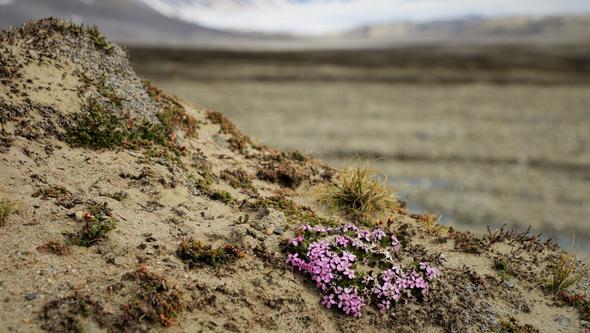
Plant material may decompose more quickly
In a large-scale synthesis, the researchers analysed data from nearly 200 sites across the tundra. The results show that changes in which plants dominate also affect how readily dead plant material decomposes.
One important change is the shift from bryophytes, whose plant material decomposes slowly, towards graminoids, which produce more readily decomposable material. This could accelerate carbon cycling and cause more carbon to be returned to the atmosphere through decomposition.
“We are therefore seeing two processes that could act in opposite directions. More abundant and taller vegetation could increase the amount of carbon stored, while changes in plant communities could make organic matter easier to decompose,” says Katrín Björnsdottir.
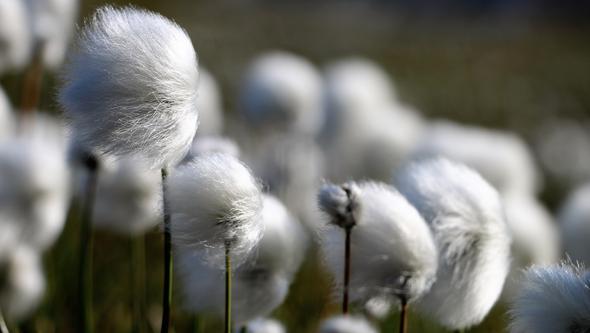
Important for the future climate
Which of these processes has the greater impact could determine whether the tundra continues to act as a carbon sink in the future or whether more of its stored carbon is eventually released into the atmosphere.
The results therefore show that it is not enough simply to study how much vegetation there is in the tundra. Researchers also need to understand which plants become more dominant as the climate changes and what characteristics those plants have.
“To predict the role of the tundra in a warmer climate, we need to understand the entire chain of events, from how plant communities change to how those changes affect processes in the soil. This is important because changes in the tundra’s carbon stores could, in turn, influence future climate change,” Katrín Björnsdottir concludes.
Thesis: Consequences of climate change for ecosystem functioning mediated by plant responses across the tundra
Author: Katrín Björnsdottir
Department: Department of Biological and Environmental Sciences, University of Gothenburg

