AI speed up the use of optical tweezers
By teaching an AI to use optical tweezers, researchers from the University of Gothenburg and Chalmers University of Technology, have sped up the analysis of life’s smallest components. The AI platform captures particles, takes measurements and loads new samples, all without human intervention.
Just as self-driving cars navigate traffic without a human behind the wheel, laboratory instruments are now being developed that can design, carry out and repeat experiments independently, 24 hours a day.
Researchers at the University of Gothenburg and other institutions have now developed an AI system capable of speeding up the operation of optical tweezers, dubbed SmartTrap.
Nobel Prize
Optical tweezers use finely focused laser beams to grasp and manipulate objects that are a thousand times thinner than a human hair – individual DNA molecules, living cells and microscopic particles. In 2018, Arthur Ashkin was awarded the Nobel Prize in Physics for the development of optical tweezers.
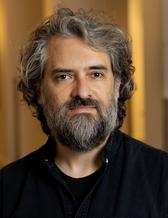
“The optical tweezers have revealed how molecular motors power our cells, how DNA is copied and repaired, and how diseases such as malaria and sickle cell anaemia affect the function of red blood cells,” says Giovanni Volpe, research leader at the University of Gothenburg.
Low throughput
Until now, these powerful instruments have required a trained researcher to oversee every step and make all the decisions. This limitation results in low throughput, long working days and experiments that may vary slightly from one researcher to another.
The researchers’ AI eliminates this problem. By combining image analysis with real-time deep learning, customised electronics, precise fluid control and feedback within a closed system, the AI platform operates completely autonomously. SmartTrap captures the particles, positions them with nanometre precision in three dimensions, performs measurements and loads new samples for the next test.

Doesn’t get bored
The AI platform underwent several rigorous tests. The AI sorted and characterised hundreds of particles per hour. It performed single-molecule DNA stretching, one of the most technically demanding analyses in biophysics. The AI managed to carry out 10–15 experiments per hour. It also investigated the mechanical stiffness of red blood cells and mapped nanoscale electrostatic forces between particle pairs at different salt concentrations.
“For a human operator of optical tweezers, these experiments take much longer, like ten or one hundred times longer, assuming the operator doesn’t get bored or need to take some breaks. We also found that the AI performed as well as or better than a skilled human operator in every case,” says Giovanni Volpe.
The SmartTrap AI is built on open-source software and designed to serve as a shared platform for the industry. As smart microscopy matures, AI platforms such as this will transform laboratories in the same way that automation transformed the manufacturing industry, according to Giovanni Volpe.
Scientific article in Nature Methods: SmartTrap: Automated Precision Experiments with Optical Tweezers
Contact: Giovanni Volpe, Professor at the Department of Physics, University of Gothenburg, telephone: 076-622 91 37, email: giovanni.volpe@physics.gu.se
