
80 students tackled Gothenburg’s sustainability challenges
Engaged students, cross-border collaboration, and ideas grounded in real-world challenges. When the University of Gothenburg hosted the EUTOPIA Innovation Challenge, the outcome exceeded expectations, according to project manager Anna Bellomi.
“It all went very smoothly. The collaboration with both external partners and colleagues within the university worked extremely well, and the students were highly motivated,” she says.
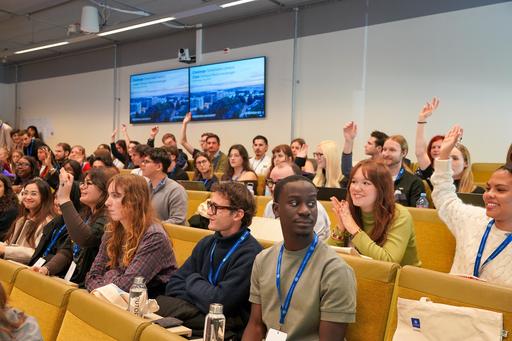
In total, 80 students from ten European universities within the EUTOPIA alliance took part. Competition for places was fierce – more than 120 students applied – and each university selected a group with a mix of academic backgrounds and levels of study.
“These are very motivated students, and the dynamics within the interdisciplinary groups worked really well,” says Anna Bellomi.
Real sustainability challenges in focus
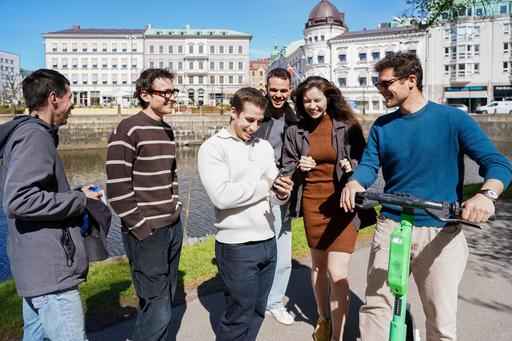
The challenges the students worked on were linked to real needs in Gothenburg, focusing on sustainability in tourism on Brännö, campus development, physical activity in schools, and the issue of e-scooter parking in the city centre. According to Anna Bellomi, the aim is to strengthen the connection between academia and society, while also giving students the opportunity to develop their entrepreneurial and problem-solving skills.
“They get to work on real cases and feel that they can genuinely make a difference. At the same time, it’s about building international networks and getting a taste of working life. Not least, through these projects they have also had the chance to discover Gothenburg, a city renowned for its sustainability work.”
Design thinking shaped the ideas
The methodology used in the Gothenburg projects is based on design thinking, with students developing ideas step by step through workshops and group work – from brainstorming to final proposals. Timeframes were tight, particularly during the final presentations.
“We were quite strict about the three-minute limit for each pitch. It’s about being able to spark interest and communicate your idea clearly,” she says.
The dialogue with the external partners also continues after the competition.
It is important that the ideas do not stop here. We want to continue developing them and see what can actually be implemented.
The EUTOPIA Innovation Challenge is one of the activities carried out within the EUTOPIA More project, which is funded by the European Commission. Going forward, the University of Gothenburg aims to further develop the concept, including through digital elements and additional collaborations.
“It has been a fantastic few days. Seeing the students’ engagement and creativity has been a joy. The format is intensive, but also incredibly rewarding,” says Anna Bellomi.
Text by: Allan Eriksson
EUTOPIA is an alliance of ten European universities. The collaboration aims to prepare Europe for future local and global challenges. Projects within EUTOPIA receive funding from the European Union.


