Manisha Begum Samad – Adiponectin and androgen excess
Dissertation for Medicine Doctoral degree at Sahlgrenska Academy, Institute of Neuroscience and Physiology, Department of Physiology
Full thesis title
Adiponectin and androgen excess: developmental programming and offspring outcomes
Opponent and examining committee
Opponent: Professor Yves Tillet, National Institute for Agronomic Research and the Environment, University of Tours, Tours, France
Examining committee: Professor Per-Arne Svensson (ordf.), professor Erika Roman (SLU) and Associate Professor Cristina Maglio
Good to know
The disputation is held in English
Welcome to attend online via streaming, via Zoom Webinar: link to be announced
Chairperson of the disputation: Associate Professor Linda Engström Ruud
How Early Hormonal Exposure Affects Health
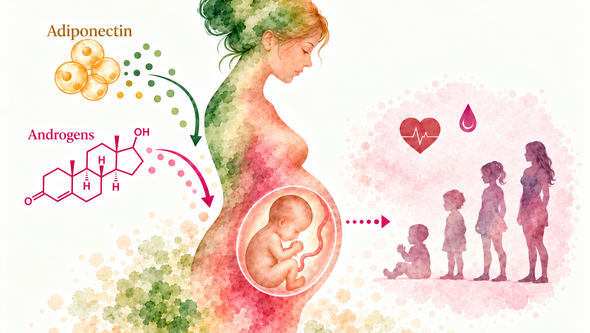
Adverse hormonal and metabolic conditions during development may have lasting effects on health. Adiponectin, a hormone produced by adipose tissue, regulates metabolism and placental function, while androgen excess contributes to polycystic ovary syndrome (PCOS). This thesis investigated how adiponectin status and androgen exposure at different developmental stages influence placental function, fetal development and offspring metabolic, reproductive and behavioural outcomes.
Four studies used complementary mouse models with elevated or reduced adiponectin and androgen exposure during late gestation or continuously from around puberty. Placental nutrient uptake and protein expression, fetal growth and metabolism, glucose homeostasis, reproductive function and anxiety-like behaviour were assessed. One study also examined associations between circulating adiponectin and psychological health in women with and without PCOS.
Elevated maternal adiponectin altered placental protein expression and reduced placental nutrient uptake, accompanied by lower fetal weight in obese pregnancy and increased fetal hepatic triglyceride accumulation. Although elevated adiponectin improved several metabolic outcomes, it did not prevent prenatal androgen-induced anxiety-like behaviour. Partial adiponectin deficiency likewise did not exacerbate this behavioural phenotype. Increased circulating adiponectin did not raise cerebrospinal fluid concentrations, whereas partial deficiency reduced adiponectin in both compartments. Women with PCOS had lower circulating adiponectin, but associations with psychological health were limited to a weak relationship with mental health-related quality of life among women without obesity. Chronic androgen exposure beginning around puberty increased adiposity, impaired glucose homeostasis and disrupted oestrous cyclicity. Prenatal exposure contributed to selected metabolic outcomes and modified the anti-Müllerian hormone response to subsequent androgen exposure. Neither exposure alone nor their combination altered anxiety-like behaviour in young adult mice.
These findings demonstrate distinct, context-dependent effects of adiponectin and androgen excess. Maternal adiponectin influences placental nutrient handling and fetal metabolism, while its metabolic benefits do not necessarily extend to prevent anxiety-like behaviour. Sustained androgen excess drives substantial metabolic and reproductive dysfunction, with prenatal exposure modifying selected responses to later hormonal exposure.