
EUTOPIA Innovation Challenge in Gothenburg
In May 2026, the University of Gothenburg is hosting EUTOPIA Innovation Challenges. During four intensive days, 80 students across Europe will gather in Gothenburg and develop innovative solutions to real-life cases under the theme: The Sustainable City.
Welcome to the EUTOPIA Innovation Challenge! We are delighted to welcome you to the University of Gothenburg and look forward to a collaborative and inspiring experience exploring this year’s theme, The Sustainable City. This page is the main source of information for participating students and will be updated on an ongoing basis.
Programme
| Time | Activity |
|---|---|
| 09:00–09:30 | Registration. Teams and case assigned |
| 09.30-10:30 | Welcome and presentation of case studies 1 and 2 |
| 10:30 | Coffee Break: Swedish Fika |
| 11:00-12:00 | Presentation and case studies 3 and 4 |
| 12:00 | Lunch |
| 13:00 | Lecture: Design Thinking |
| 15:00 | Break: Swedish fika & meet your team |
| 16:00-18:30 | Social activity. Starting point Pedagogen Hus B |
| Time | Activity |
|---|---|
| 08:30-16:30 | Teamwork sessions. Pedagogen Hus B, rooms BE 015, B1 113 and B1 114 |
| 10:00 and 15:00 | Break Swedish Fika |
| 12:00 | Lunch |
| 18:00-21:00 | "Studentsittning" Swedish student dinner. Faculty of Humanities, Renströmsgatan 6 |
| Time | Activity |
|---|---|
| 08:30-16:30 | Teamwork sessions. Pedagogen Hus B, rooms BE 015, B1 113 and B1 114 |
| 10:00, 12:00 and 15:00 | Fika break, Lunch, Fika break |
| Time | Activity |
|---|---|
| 08:45–12:15 | Final presentations (parallel sessions) Pedagogen Hus B, room BE 015 |
| 10:15–10:45 | Break: Swedish fika |
| 11:15–11:45 | Jury deliberation |
| 11:45 | Announcement of winners |
| 12:15 | Lunch |
| 13:30 | Paddan Boat tour starting point Pedagogen |
| 15:00 | End of event |
Cases
Case 1: Sustainable tourism (Göteborg & CO) :
The Gothenburg archipelago is a popular destination, but high visitor numbers during peak season put pressure on local infrastructure and everyday life, creating mixed experiences for residents. How can tourism minimize negative impacts and contribute positively to island life? How can visitors be encouraged to see themselves as guests, understand their impact, and actively support the wellbeing of the local community?
Case 2: Sustainable Campus development (Akademiska Hus)
The University of Gothenburg is undergoing significant campus development and expansion. This creates an opportunity to shape vibrant and sustainable campus environments for the future. How can campus development at GU create attractive, inclusive, and environmentally sustainable places that support wellbeing, foster interaction, and meet the needs of students, researchers, staff, and visitors?
Case 3: Sustainable Movement (SMOVE)
In line with the Swedish curriculum, schools are expected to ensure daily physical activity for all pupils. A municipal school in suburban Gothenburg, with a modern schoolyard and close access to green spaces, serves students aged 6–16. At the same time, social inequalities, diverse experiences and preferences, limited resources, and stretched staff create significant challenges. How can the school develop sustainable and inclusive movement strategies that are meaningfully integrated throughout the entire school day?
Case 4: Sustainable Mobility (Göteborg Stad)
Shared e-scooters in Gothenburg support sustainable, car-free mobility and reduce public transport strain, but improper user behaviour—especially poor parking—creates challenges for the urban environment. Existing solutions like geofencing or manual enforcement are either ineffective, costly, or unsustainable, so the challenge is to improve parking practices without reducing usability or environmental benefits.
Venue information
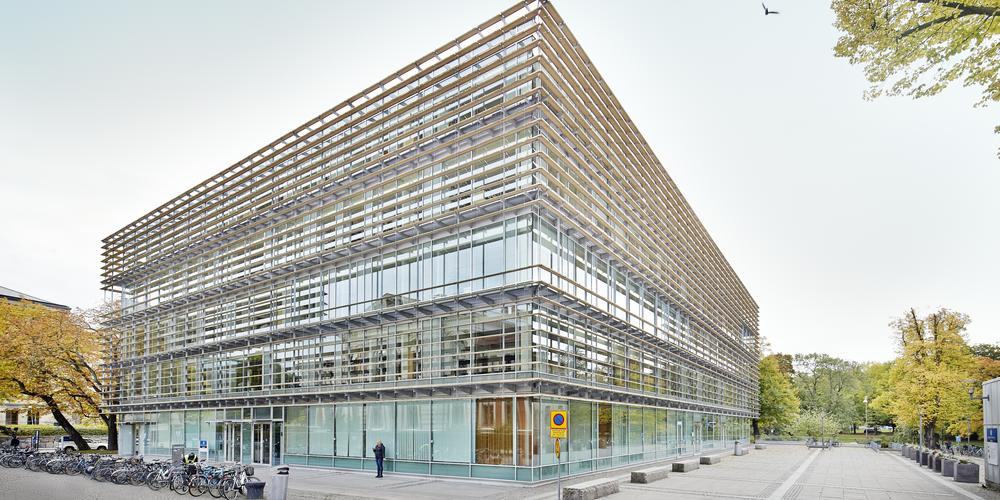
The event will take place at Pedagogen Hus B, home to the University of Gothenburg’s Faculty of Education. Situated in central Gothenburg, the venue is easily reached by public transport and offers a welcoming space for exchange, creativity, and teamwork. Its central location also provides easy access to cafés, restaurants, and key city landmarks.
Nearest tram/bus station: Grönsakstorget
Getting around in Gothenburg
Once in Gothenburg, public transport is efficient and sustainable. The city centre is relatively dense and easy to discover on foot. Rental bikes are conveniently located throughout and operated by Nextbike and “Styr & Ställ”.
The traditional Gothenburg trams, as well as buses and ferries, are all operated by the same regional public transport provider (Västtrafik) and run frequently throughout the city. Tickets are valid for all types of travel and can be purchased via the Västtrafik To Go app.
Watch out for bikes and trams. Always check before crossing. Trams are quiet and cannot stop quickly, so be mindful when walking near tracks.
Discover Gothenburg
Gothenburg is the second largest city in Sweden. It is beautifully situated on the west coast. The city is well known for its friendly locals and laid back atmosphere. Attracting students, academics, and companies from around the world, Gothenburg has an international feel.
If you have some time and would like to explore Gothenburg we’ve gathered a few useful and inspiring links to help you discover the city at your own pace.
- 10 must dos in Gothenburg
- Sustainable experiences in and outside Gothenburg
- 10 most beautiful islands in the Gothenburg archipelago
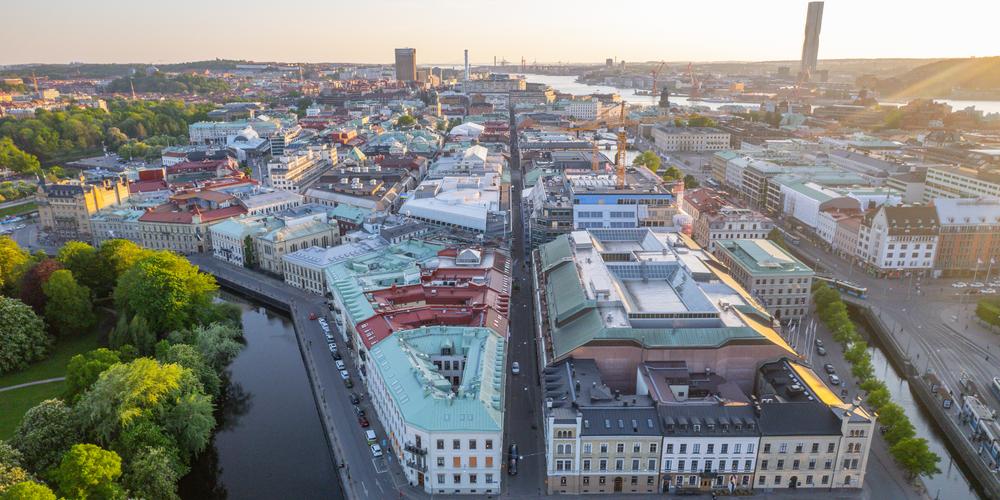
Urban development projects shaping Gothenburg’s future
Gothenburg is growing faster than any other major city in Sweden, and large-scale investments underway to cement the region's position as a hub for business and innovation.
Useful information
Cash-free & easy payments
Sweden is almost entirely cash-free. You can pay everywhere using a debit/credit card or mobile payment (Apple Pay, Google Pay). Many places do not accept cash at all.
Pack for the weather
Swedish weather can change quickly, sometimes several times within the same day. We recommend you bring the following:
- A light rain jacket
- Comfortable shoes
- Sunglasses & sunscreen
Good to know
- English works everywhere
- Tap water is safe and free
- Tipping is optional (round up if you like)
- Free Wi-Fi is common in public places