
Allan Lidström: Infrastructures of knowing – Disability in care, governance and STS
Disputation for Ph.D. in Theory of Science at the Faculty of Humanities, Department of Philosophy, Linguistics and Theory of Science.
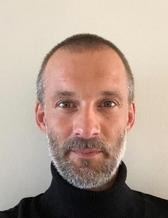
Respondent:
Allan Lidström, Department of Philosophy, Linguistics and Theory of Science
Thesis title:
Infrastructures of knowing – Disability in care, governance and STS
Examining committee:
Docent Myriam Winance, Université Paris Cité
Professor Kristin Asdal, University of Oslo
Professor Niels Mossfeldt Nickelsen, University of South-Eastern Norway
Substitute if member in the committee is missing:
Docent Jesper Peterson, Göteborgs universitet
Opponent:
Professor Jeannette Pols, University of Amsterdam
Chair:
Docent Doris Lydahl, Göteborgs universitet
Abstract
This thesis investigates how infrastructures of knowing organise voice, legibility, and concerns in sites of disability governance, care, and knowledge-making. It asks how actors, experiences, and concerns are rendered present, how they come to register in particular settings, and under what conditions they are made to matter or left at a distance. Intellectual disability, and in particular profound intellectual and multiple disabilities, serves as a critical lens for engaging questions of mediation, uneven representation, and selective visibility. Empirically, the thesis moves across welfare governance, participatory quality work, user involvement initiatives, ethnographic encounters in disability care, and STS publication ecologies. Across these sites, it traces how knowing is organised not only through documents, standards, categories, and procedures, but also through affective orientations, tacit expectations, and situated attachments.
The thesis contributes conceptually to STS by extending infrastructure studies through a sustained engagement with work on affect, orientation, and attachment; empirically by bringing intellectual disability more centrally into view across governance, care, participation, and scholarship; and reflexively by approaching STS itself as an infrastructure of knowing in its own right.