

IGE Learning Portal
This learning portal is a forum where you can find informational and educational material on policies for an Inclusive Green Economy in different formats - videos, policy briefs, reports - and presented in thematic areas.
Climate-smart agriculture
Climate-smart agriculture (CSA) is an integrated approach to managing landscapes – cropland, livestock, forests, and fisheries – that addresses the interlinked challenges of food security and climate change.
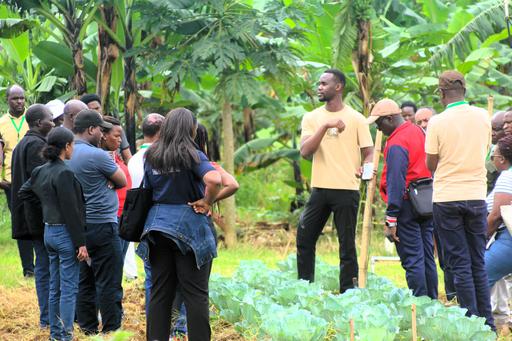
Importance and use of climate-smart agricultural practices in Uganda Dr Peter Babyenda discusses the importance of climate-smart agricultural practices and policy instruments to promote them. (Video)
Market failure and climate-smart agriculture in Africa Dr Amin Karimu from the University of Cape Town talks about market failure and climate-smart agriculture in Africa. (Video)
Carbon markets for financing climate-smart agriculture practices Aloyce Hepelwa from the University of Dar es Salaam talks about how carbon markets can help finance CSA practices. (Video)
Unpredictable shifts in climate patterns and limited adaptive capacity are adversely affecting agriculture and, in turn, the livelihoods of Uganda's population. To this end, the Government of Uganda has promoted the uptake of Climate-Smart Agriculture. (Policy brief)
Transport and e-mobility
Electrification of the transportation sector is crucial to reducing dependence on fossil fuels. This sector covers different aspects of transportation and e-mobility.
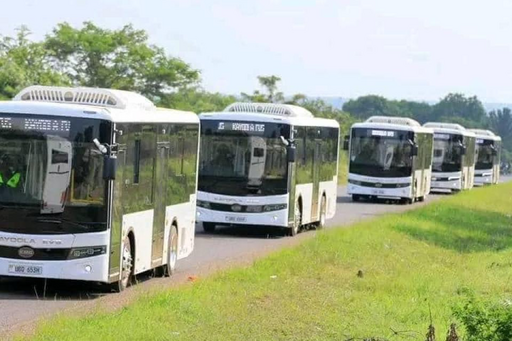
E-Mobility for sustainable transports – opportunities, challenges and pathways: Insights from Eastern Africa Professor Edward Bbaale explains why the transition to sustainable transport is so important for Africa and the job opportunities it can provide. He also gives examples of policies that can promote a just transition. (Video)
Urban e-mobility transitions in Kenya: challenges and opportunities Professor Richard Mulwa talks about experiences and evidence on urban e-mobility in Kenya, challenges as well as opportunities. (Video)
EfD researchers, in collaboration with civil servants participating in the Inclusive Green Economy Program (IGE), have assessed the current state of e-mobility, awareness, and perceptions about the dangers of using fossil fuel-powered engines and the benefits and challenges associated with e-mobility systems. (Policy brief)
Sustainable energy transitions
This is a very broad topic. It includes, among many other things, a transition away from biomass and fossil fuels to sustainable fuels.

Sustainable energy transitions: Why do urban households in Ethiopia still depend on multiple fuels? Doctor Abebe Beyene talks about why urban households in Ethiopia still depend on multiple fuels. (Video)
Sustainable energy transitions in Uganda: The role of energy efficiency. Professor Edward Bbaale talks about how the concepts of sustainable energy transitions and energy efficiency are interlinked and the importance of energy efficiency to achieve a sustainable energy transition. (Video)
Embracing clean cooking for greener Uganda Dr Peter Babyenda talk about embracing clean cooking for a greener Uganda. (Video)
This report summarizes lessons learned from the IGE cross-country workshop held in Arusha, Tanzania, from April 15 to 18, 2024. (Report)
This policy report aims to support policymakers and practitioners in understanding and advancing the nexus between sustainable energy transitions and social inclusion in Eastern Africa (Report)
We have studied people’s perceptions of cooking energy systems in Uganda through a document review and Focus Group Discussions (FGD), their level of knowledge about the possible effects of using energy systems, the challenges they face when using various energy systems, and their suggestions for promoting the use of clean energy. (Policy brief)
Based on a survey with 4,766 respondents, we identify the level of public acceptability for climate policy instruments and their determinants in Ethiopia, Kenya, Rwanda, Tanzania, and Uganda. (Peer-reviewed article in Climate Policy 2024)
Energy efficiency
It's important, but not sufficient, to switch to sustainable energy sources. For a truly sustainable society, you also need to use your energy sources efficiently.
Energy efficiency in the Kenyan manufacturing sector. Dr Kenneth Kigundu talks about how to achieve energy efficiency in the Kenyan manufacturing industry. (Video)
Policy instruments for energy efficiencyDr Aloyce Hepelwa talks about the problems with energy waste and highlights some policy instruments to address them. (Video)
Innovation, energy efficiency, and productivity in women-led enterprises Dr Laura Bara talks about innovation, energy efficiency, and productivity in women-led enterprises - the case of Ethiopia, Ghana, Kenya, and Nigeria. (Video)
This synthesis report brings together insights from the Transformation Initiative (TI) processes implemented within the Inclusive Green Economy (IGE) program during 2024–2025 in Ethiopia, Kenya, Rwanda, Tanzania, and Uganda. (Report)
Waste - circular economy
Textile, electronic, plastic, and other waste is overflowing the Global South, which calls for implementing policies to promote better waste management and a circular economy.

Circular economy options for fast fashion and textile industry waste Professor Richard Mulwa talks about policies to promote circular economy practices for textile waste. (Video)
Forest management
Under the theme of forest management, we cover many aspects of forestry, including policies on deforestation, reforestation, biodiversity, climate finance, and local empowerment.

Inclusive green economy, forest vs farms: Striking a sustainable balance Robel Sifemichael, PSI, Ethiopia, talks about the conflicts that can occur when allocating land areas for forestry and agriculture. Both are crucial for a sustainable society, and finding a balance that takes into account social aspects as well as food security, biodiversity, and climate change requires knowledge and evidence-based policies. (Video)
Public acceptance of policies to reduce forest loss: Evidence from a large-N cross-national survey in East Africa While environmental policy acceptance has been extensively studied in OECD contexts, comparative evidence on how different forest policy instruments are perceived across low- and middle-income countries remains limited, particularly regarding the interaction between individual attitudes and national governance conditions. This study addresses this gap by analyzing stated support for four policies aimed at reducing forest loss across five East African countries: Ethiopia, Kenya, Rwanda, Tanzania, and Uganda. (Peer-reviewed article in Forest Policy and Economics)
More assets
This report reflects on experiences in East Africa in addressing three key environmental and social challenges: the use of fossil fuels, plastic pollution, and deforestation.
(IGE cross-country workshop report 2023.)
This report reflects on experiences in Eastern Africa on policy instruments to achieve an inclusive green economy in the agriculture-, energy-, forest- and urbanization sectors.
(IGE cross-country workshop report 2022.)